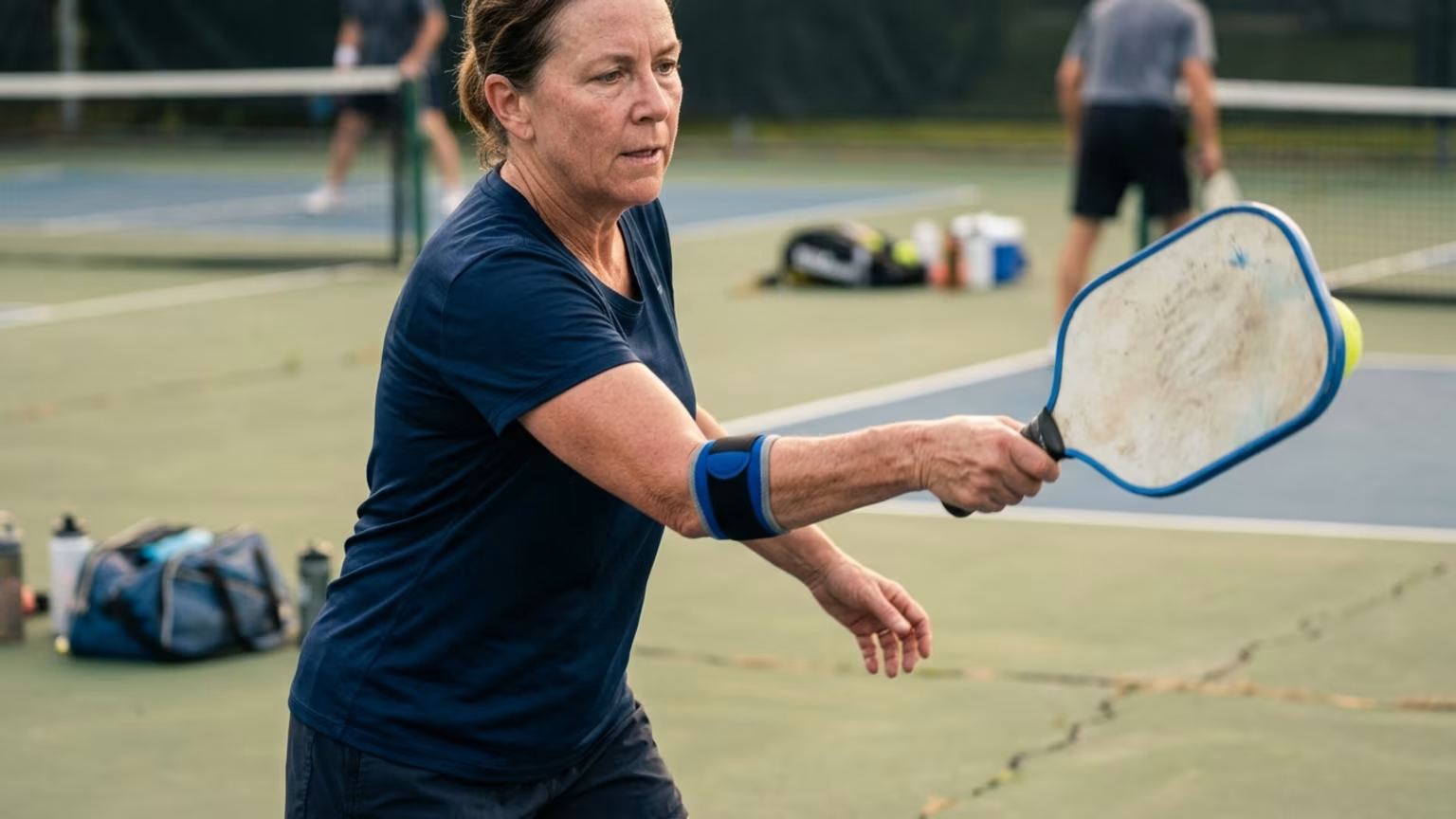

Explore why repetitive paddle strokes cause pickleball elbow and discover evidence-based rehabilitation strategies for healthy aging on the court.




Rest is rarely a permanent cure for a persistently painful joint. The racquet sports community often treats complete inactivity as a reliable remedy for tendon pain. We see adult players put their paddles away for a month and expect a full recovery. "Why does my elbow pain return as soon as I get back on the pickleball court?" Persistent pickleball elbow often requires structured rehabilitation because repetitive strokes overwhelm tendon capacity over time.
Let us start with a question from Sarah about court size and joint strain. She asks why her elbow hurts after playing pickleball when the court is so compact. The assumption is that smaller courts automatically protect your body from serious wear. An August 2026 article from Best Version Media challenges this idea directly.
The publication argues that repeated paddle strokes and forearm loading may contribute to pickleball-related elbow pain. Players execute hundreds of strokes per session during a standard match. These repeated drives, dinks, and volleys load the forearm tendons attached around the elbow. The Best Version Media article notes that this repeated tissue stress can exceed your physical recovery limits.
This is not about a single traumatic swing or an accidental fall. It is about the subtle accumulation of stress over many consecutive hours of play. A cross-sectional survey of 383 Korean recreational tournament players explored recent injury patterns. The researchers found that 38.1 percent of participants reported a pickleball-related injury during the previous year.
Among reported injuries with valid onset data, gradual-onset overuse injuries were slightly more common than traumatic injuries. The study identified reported elbow and forearm complaints, but it did not medically diagnose elbow tendinopathy. This means players must respect the hidden physical toll of surging racquet sports. Industry reporting from GCN cites Sports and Fitness Industry Association data on player growth.
GCN reported 24.3 million United States pickleball participants in 2025, up from 4.2 million in 2020. This massive figure represents a sharp rise in collective court time. The sheer volume of new participants creates a huge surge in total matches played. Many of these players are adopting the sport later in life and jumping straight into daily competition.
This enthusiasm is wonderful for the community, but it often outpaces the physical conditioning required. The hidden physical toll of tennis, pickleball and padel requires honest assessment and deliberate physical preparation.
Our next mailbag question comes from David regarding basic recovery tactics. He asks if he should just ice his elbow and wait for the pain to fade completely. The short answer is that waiting is simply not a comprehensive strategy for healthy aging. Best Version Media notes that players should not rely indefinitely on rest or ice without a clear diagnosis.
A temporary break might calm a painful flare, but it does not rebuild tissue strength. The publication advises players to seek evaluation when pain persists beyond two to three weeks. You should also consult a professional if the pain keeps you off the court or worsens despite rest. Dr. Gayan Poovendran is an expert contributor to the Best Version Media article.
He is identified as a regenerative sports-medicine specialist associated with PRO Institute. The article highlights his approach of combining sport-specific rehabilitation with advanced clinical evaluation. You need to know what you are actually treating before starting a recovery plan. Elbow pain could indicate lateral elbow tendinopathy or a completely different underlying issue.
This is why self-diagnosis often leads to frustrating setbacks and wasted time away from the sport. A proper clinical consultation should review your grip demands, paddle technique, and recent changes in playing frequency. I remember finishing a tough two-hour padel match on a cold Tuesday night and waking up the next morning feeling like my lower back was locked in concrete. For a long time, I just accepted this as the price of playing hard in my forties.
But once I started spending just ten minutes on targeted hip mobility before heading to the club, the stiffness almost completely vanished. It taught me that we do not have to accept pain as a default state of aging. Taking proactive steps to address the root of the problem changes the entire longevity trajectory. Proper diagnosis gives you a clear path forward.
Another reader named Elena struggles with managing multiple racquet sports in one week. She asks how to balance playing tennis on weekends and pickleball during the week without getting hurt. This is a common challenge for athletes switching between tennis, pickleball, and padel. You must count your total racquet-sport exposure rather than treating each sport as a completely separate workload.
The physical demands of each game overlap heavily on your dominant arm. A heavy tennis serve taxes your shoulder while a repetitive pickleball dink isolates your forearm. The Korean study reported higher injury odds with each additional weekly playing hour, although the authors urged cautious interpretation. The trend highlights the vital importance of careful workload management for recreational athletes.
Adding a padel match to an already full tennis schedule increases your total repetitive arm load. Players need to monitor any sudden increase in their weekly court hours. If you normally play three hours a week, jumping to six hours is a highly significant spike. Managing these volume jumps is a crucial part of our injury-prevention playbook.
Your body needs adequate time to adapt to the specific forces of each distinct racquet sport. We know that court availability and group scheduling often dictate when we play our matches. It is tempting to jump into an unexpected Thursday night game just because a spot opened up. However, disciplined players understand that workload management is the key to staying healthy throughout the season.
Saying no to an extra match today can keep you playing consistently for the next ten years. When you transition between court sizes, adjust your playing volume very carefully. Many players who read our resources on cross-training across courts learn how to balance their schedules safely. We also cover targeted warm-up routines that help prepare your joints for these specific workloads.
Our final question comes from Michael regarding modern physical therapy techniques. He asks about eccentric loading and whether it is the definitive way to fix a sore elbow. The Best Version Media article presents structured eccentric loading as one cornerstone of contemporary tendon rehabilitation. This technique involves loading the tendon while the muscle is actively lengthening under tension.
There is solid evidence supporting this specific approach for certain diagnosed conditions. A systematic review summarized by PEDro included six studies involving 429 patients with lateral elbow tendinopathy. The meta-analysis found improved pain and muscle-strength outcomes when eccentric exercise was added to other treatment. It demonstrates that targeted movement is often superior to complete inactivity for long-term healing.
However, players should avoid treating this technique as a magical fix for every elbow ache. The evidence applies to diagnosed lateral elbow tendinopathy rather than all forms of arm pain. You should not download a generic online protocol without getting a professional assessment first. A physical therapist can prescribe the exact exercise dosage your forearm tendons need to recover safely.
Rebuilding your strength takes consistent effort and professional guidance over many weeks. It requires deep patience to rebuild tissue capacity after months of repetitive strain. Temporary reduction of your most aggravating drills is a smart initial step in this journey. You can gradually reintroduce those movements once your tendon capacity improves.
Athletic longevity ultimately depends on recognizing early warning signs and treating physical recovery with the same focus you bring to a match. A resilient player understands that adapting to the demands of the sport is simply part of a lifelong commitment to the court.
Follow Evercourts for practical insights on tennis, pickleball and padel performance, movement, recovery and healthy ageing. Stay connected for new articles, research-led guidance and ideas to help you play well and keep playing for years.


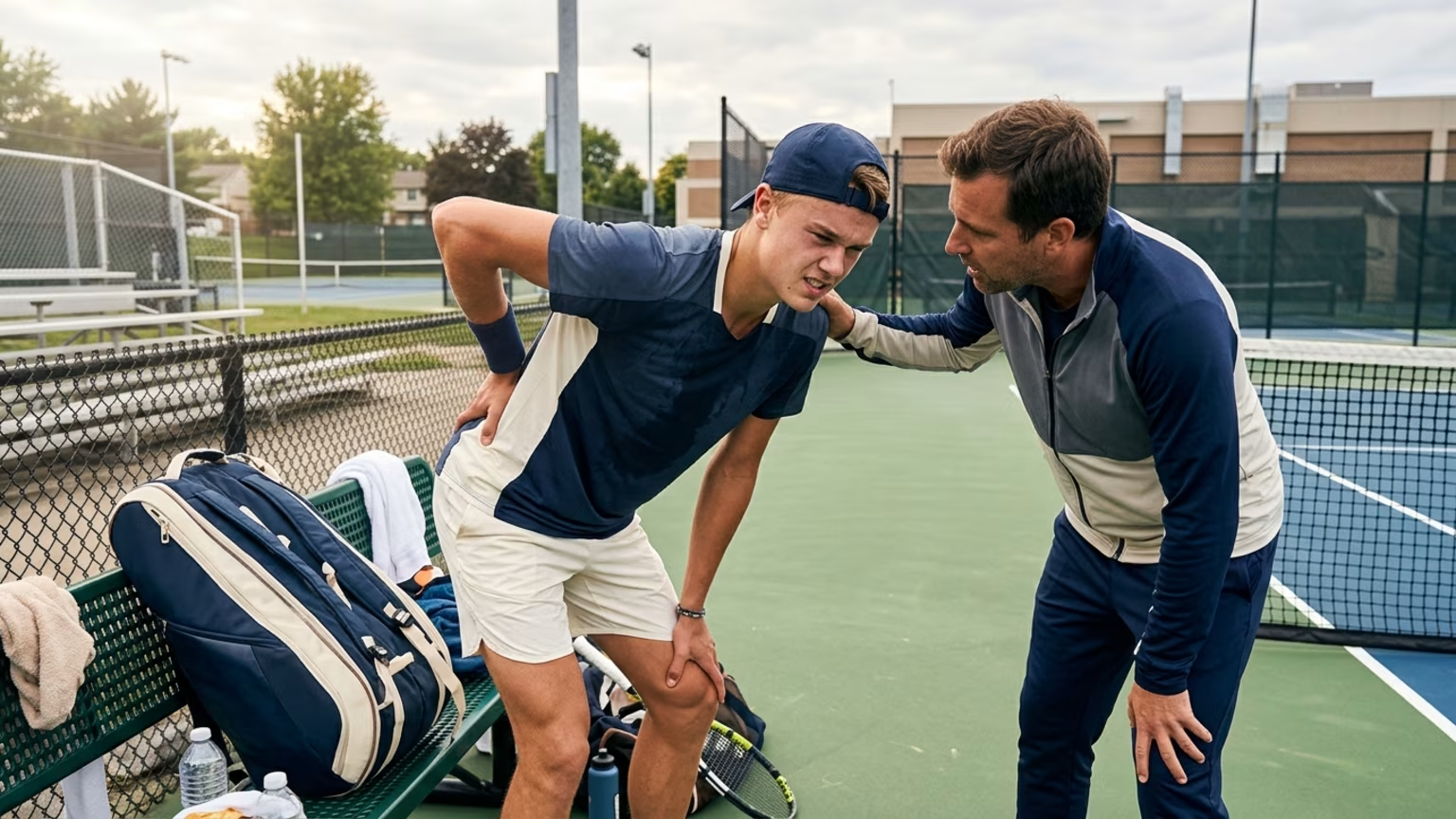
Holger Rune withdrew from the European Open with a back problem. The facts behind his decision and a grounded perspective for recreational players.

The Dink’s October 17 guide emphasizes deep returns, ball-height decisions and positioning against faster pickleball opponents.

A new report outlines padel and tennis gear trends. Learn how to assess adjustable rackets, sensor feedback and smart-court claims.
Read practical guidance for better movement, smarter preparation and a game that keeps working for you.
explore the Blog
