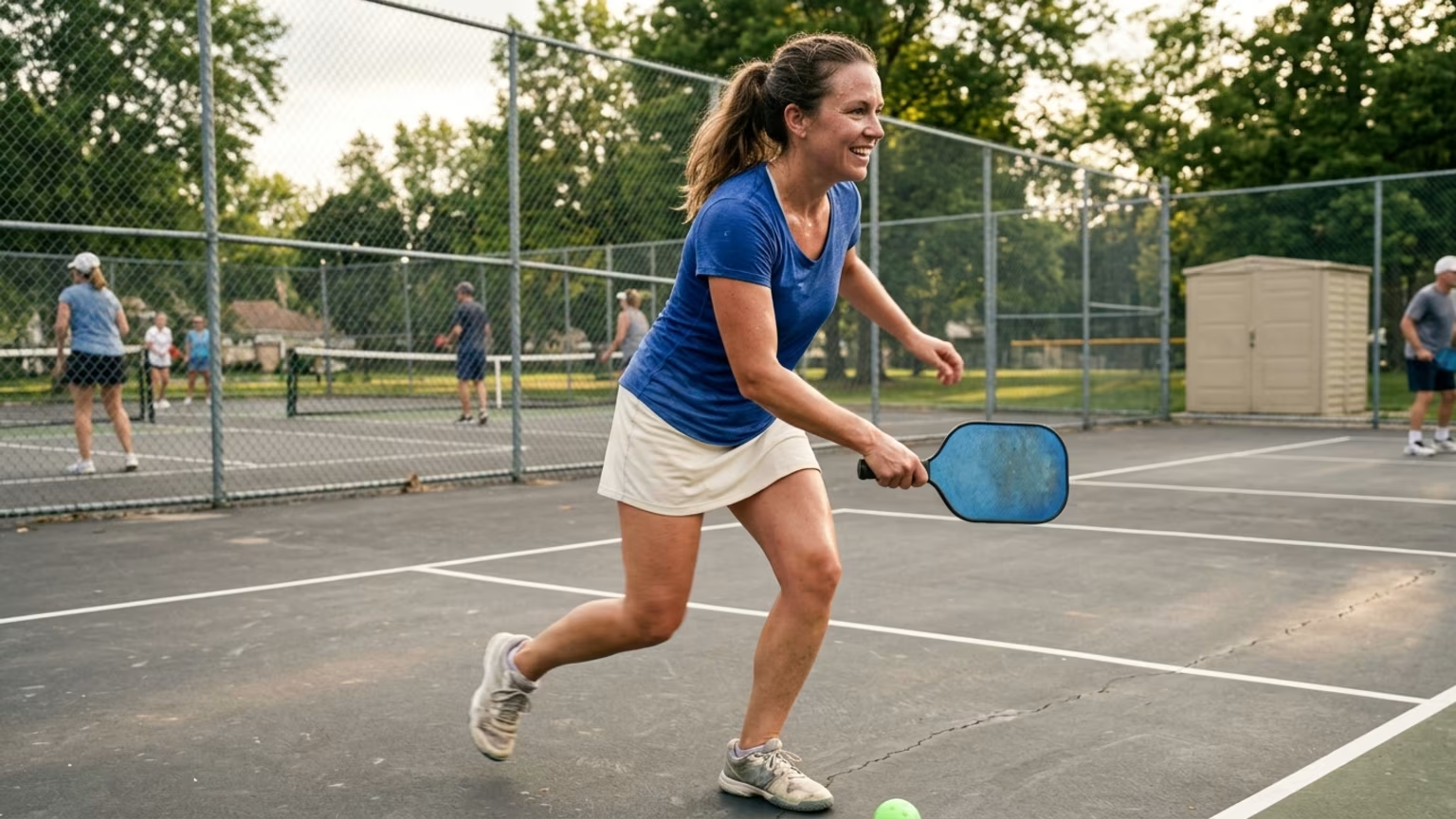

Prepare your body for court sports with a progressive warm-up routine. Learn how to transition safely from basic mobility to sport-specific movement patterns.




Starting a match with stiff joints leaves your body completely unprepared for sudden stops and rapid reaches. This progressive warm-up sequence bridges the physical gap to get you safely ready for the actual demands of court sports.
The primary goal of this routine is athletic longevity and sustained physical capability on the court. A proper warm-up prepares your body to move efficiently without relying on empty fitness hype. Evercourts focuses on practical readiness over extreme flexibility goals. You simply need a reliable way to transition from daily life into competitive play.
Many players mistakenly believe a few casual static stretches are enough to guarantee safety on the court. Evercourts advocates for a research-led approach that respects the true physical toll of racquet sports. You must prepare your body to move dynamically rather than just passively stretching cold muscles. This protocol gives you a pragmatic and highly effective way to transition into intense gameplay.
According to a comprehensive guide from Pickleball.com, warming up does not magically make a player injury-proof. The guide explicitly notes that evidence for neuromuscular warm-ups reducing injuries comes from other sports rather than pickleball-specific trials. A few basic stretches will never function as an absolute guarantee against getting hurt on the court. Preparation is simply about managing your physical readiness and rehearsing necessary mechanics.
However, preparation remains absolutely vital for your joints and active muscles. Following a structured sequence helps you rehearse the exact actions you will need during a match. This systematic approach ensures your body is ready to perform safely. By prioritizing controlled preparation over immediate intensity, you actively support healthy aging and long-term joint function.
A pickleball-specific guide recommends an eight to 10-minute warm-up for optimal on-court preparation. This routine progresses from heart-rate elevation to mobilization. It then moves into dynamic flexibility, activation and sport-specific patterns. The progression ensures every part of your body wakes up in a logical order.
For players who are short on time, a shorter option includes 60 to 90 seconds of easy movement. This is followed by two minutes of joint mobilization and 60 to 90 seconds of sport-specific patterns.
Your first objective is to raise your heart rate without forcing sudden physical exertion. Spend three to five minutes on easy movements to start the preparation process. You can utilize a light jog, skipping, jumping jacks or side-to-side shuffles. Gradually increase your physical effort until you begin to feel lightly warm.
Once your baseline heart rate is increased, you should immediately focus on increasing your range of motion. Spend another three to five minutes on dedicated joint mobilization movements. Start with a very comfortable range of motion and increase it gradually as you loosen up. Effective movements include arm circles, ankle rolls, knee circles and hip rotations.
The next critical step integrates multiple joints to prepare for the specific functional demands of play. The Pickleball.com guide recommends forward, lateral or reverse lunge variations to build strength. These dynamic movements help you move your hips, knees and ankles smoothly together. Building structural stability in your lower half helps manage the stress of sudden twists.
For essential reaching practice, a separate injury-prevention article recommends moving side to side across the court. It also suggests using controlled calf raises and sit-to-stands to build leg stability. You should always practice easy swings during this phase before engaging in any competitive rallies. This methodical approach ensures your legs can safely support difficult shots.
Court sports require frequent stopping, which places immense structural stress on your lower body. You must rehearse these precise braking mechanics before a match officially begins. The preparation guide includes snap downs and lateral bounds with controlled landings to build resilience. It also recommends practicing lateral shuffles and controlled stops to mimic gameplay.
The final phase transitions you directly into the technical aspects of the sport itself. You should never treat your very first rally as an all-out competitive effort. Instead, start with easy dinks to comfortably establish your timing and rhythm. Slowly progress to half-court exchanges before finally moving into your fuller swings.
Some players prefer a much lower-intensity approach to their daily court preparation. A source aimed specifically at older adults recommends five to 10 minutes of gentle movement before play. This routine includes gentle walking, side steps and arm circles. You should also incorporate shoulder rolls and torso turns.
You can successfully add heel raises, practice swings and short-court dinks to finish. This alternative effectively rehearses movement demands without requiring any high-impact bounds or aggressive jumps. The sequence offers a smart baseline for players looking to start their session carefully.
The core principles of court preparation apply universally across all modern racquet sports. However, you should adjust the specific physical movements to match the unique geometric demands of your chosen game. Developing highly solid court movement skills requires specialized and intentional preparation. You must think about where you will spend the most time during a standard point.
Tennis demands significantly longer sprints and heavy baseline rotation from every player. To properly prepare for wide forehands, you must emphasize much larger lateral lunges during your warm-up. Incorporating comprehensive multi-planar movement strategies will better prepare your hips for aggressive baseline rallies. Spend extra time actively rehearsing full deceleration over these much longer physical distances.
Pickleball focuses heavily on short explosive bursts and forward reaches at the kitchen line. Use the controlled calf raises and sit-to-stands to effectively prepare for a sustained low dinking posture. Practice very quick lateral shuffles in a highly restricted physical space. Establishing a reliable base is crucial when adapting your movement to singles and doubles on the pickleball court.
Padel demands constant turning to properly read the glass and frequent overhead swings during every rally. You should intentionally increase the range of your torso turns and shoulder rolls to prepare. Practice rapid backpedaling and explosive vertical movements to prepare your body for defensive lobs. A dedicated preparation routine for the first point in padel must deeply account for these continuous rotational shifts.
Follow Evercourts for practical insights on tennis, pickleball and padel performance, movement, recovery and healthy ageing. Stay connected for new articles, research-led guidance and ideas to help you play well and keep playing for years.


An evidence check on sports supplements like tart cherry juice. Learn why racquet sports players should prioritize core nutrition over functional foods.
In late 2026, Oura analyzed wearable data to see how recreational tennis impacts heart health and recovery. Learn what this means for your athletic longevity.
Recent guidelines emphasize gradual progression, dynamic warm-ups, and scheduled recovery to help adult racquet sports players maintain athletic longevity.
Read practical guidance for better movement, smarter preparation and a game that keeps working for you.
explore the Blog
