

Build a tennis strength plan for legs, hips, trunk, shoulders and forearms, with progressions that fit your training history and court time.




A whole-body tennis strength plan is a gym routine that prepares your legs, hips, trunk and racquet arm for the work they do together on court. It starts with the point you play, not a list of muscles to train. A serve asks you to produce force. A wide ball asks you to move, hit and get ready to move again. Those are different jobs, and a useful plan makes room for both.
The International Tennis Federation (ITF) describes tennis strokes as bursts of power involving the legs, trunk and upper body. A stroke may come before or after a run, depending on the situation. That makes the movement around the shot part of the strength discussion: getting to the ball, changing direction and recovering into position for the next shot.
Start by thinking about where your own points ask the most of you. Is it pushing out towards a wide ball, staying steady as you hit on the move or getting back into position? The ITF advises tailoring training to factors such as playing style, level and court surface. That is a better starting point for choosing gym work around court tasks than copying another player's exercise list.
The same questions are useful in pickleball and padel. Look at where your points ask for repeated quick efforts or a sharp change of direction, then consider what happens just before and after the shot. The questions carry across the three sports. The tennis exercise choices don't have to.
The ITF's Fitness Training guide distinguishes between strength that helps support a joint and strength used to propel the body. In plain terms, a plan can make room for both staying steady and producing force. The guide offers principles and exercise progressions, but it does not establish that the particular mix below prevents injury. Treat it as a way to organise training rather than a fixed programme.
The squat is one example from the guide. Its progression can come from more repetitions or greater depth, with single-leg squats introduced when the player is able. Those are different ways to make the work more demanding. Moving straight to a single-leg version is not the only way to make progress.
For the hips, the guide gives a side-lying ball-abduction exercise, which involves moving the leg out to the side. The ball is part of that example, not a reason to build a routine around equipment. The planning question is whether the routine gives hip control some attention alongside leg strength for starts and stops.
The ITF uses a wider definition of the core than just the muscles at the front of the stomach. It includes the hips and pelvis as well as the spine, ribs and shoulder-blade region. That matters for how you organise a session: trunk work belongs alongside the legs and upper body rather than as an unrelated task at the end.
Look at whether your plan gives you a chance to practise staying steady as the limbs move. That is a different aim from making a movement feel harder or trying to copy a forehand in the gym. It also gives hip and trunk work a shared purpose without making them interchangeable.
The ITF discusses support from the rotator cuff and the muscles around the shoulder blade. That gives shoulder work a place in the whole movement, rather than treating the serving arm as if it worked alone. Think about the shots you repeat as well as the biggest serve you hit.
Put forearm capacity on the planning list too. The useful distinction is between making room for the racquet arm and assuming that every player needs the same isolated forearm exercise. Use the work your arm does in your game to frame that choice, rather than adding a drill simply to tick a box.
Progress should reflect what you can do now. If strength training is new to you, the simpler version of a movement gives you a place to learn it before making it more demanding. If you're returning after time away, your old routine is a reference point, not a starting requirement. If you already lift regularly, a change in repetitions, depth or difficulty can be more useful than replacing an exercise you know well.
The same judgement applies to the calendar. The ITF gives three to five days per week as broad guidance for strength and power, while saying frequency should vary with the player's goals and training period. It also counts on-court and off-court work as part of the same workload. That range is not a starting target for every adult player.
In a week with more tennis, keeping a familiar exercise at its current difficulty is a reasonable alternative to progressing it. In a quieter stretch, there may be more room to work on a movement that needs attention. The point of planning gym work and recovery together is to make those decisions with the whole week in view.
For long-term play, the aim is to keep practising the abilities you want available on court: pushing off, controlling a change of direction and contributing to a stroke through more than the racquet arm. A plan can look different in a busy match period and a quieter training period without losing that purpose.
If you're dealing with pain or managing a health condition, a qualified physiotherapist or healthcare provider can help you decide what strength work is appropriate for you. Individual advice can also be useful after a long break from strength training, when the routine you remember may not be the right starting point.
The gym plan is there to serve the tennis you want to keep playing. It doesn't have to prove anything on its own.
Follow Evercourts for practical insights on tennis, pickleball and padel performance, movement, recovery and healthy ageing. Stay connected for new articles, research-led guidance and ideas to help you play well and keep playing for years.


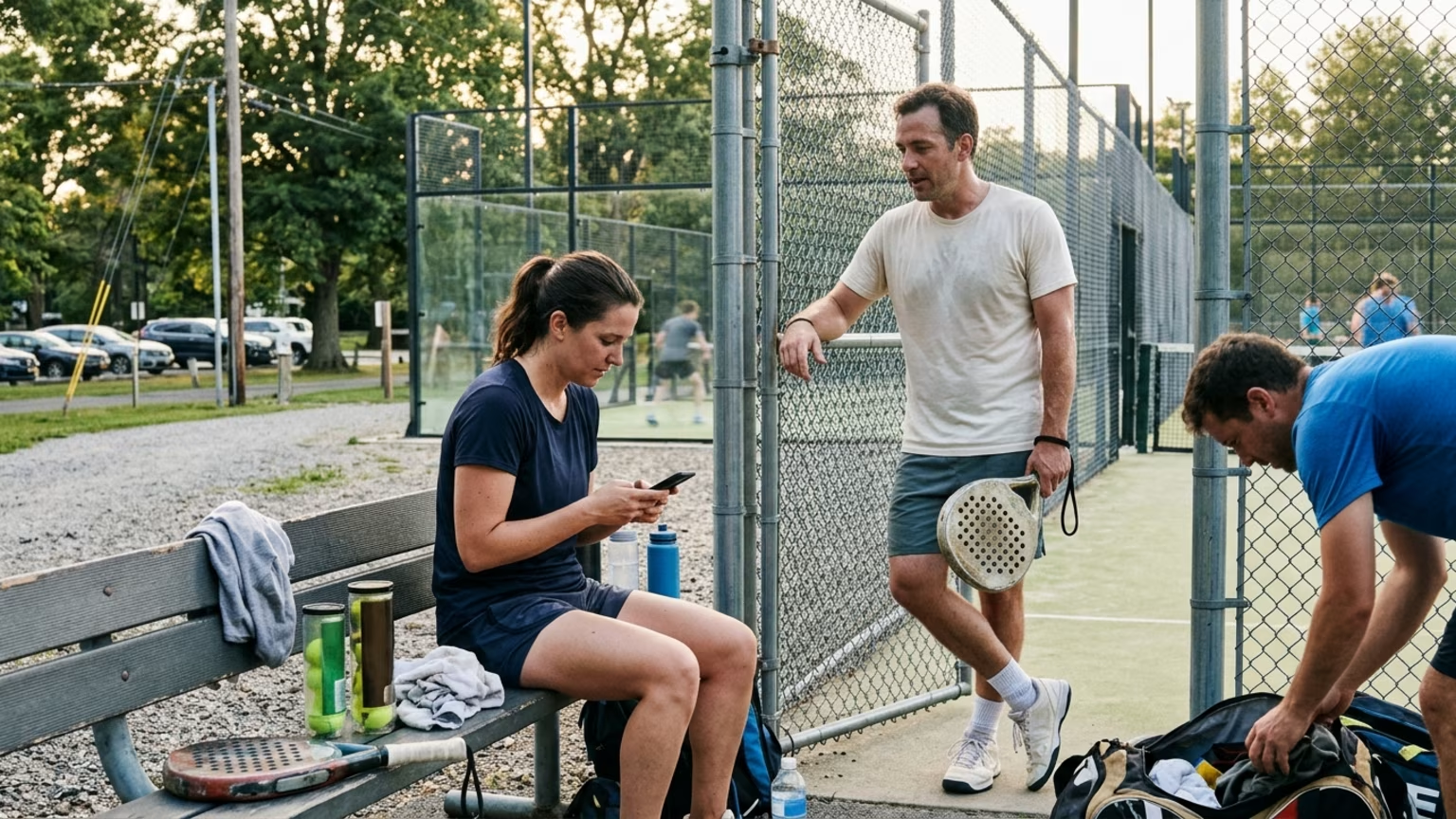
Build up your padel week by tracking match length and effort, then make small changes based on how you respond.
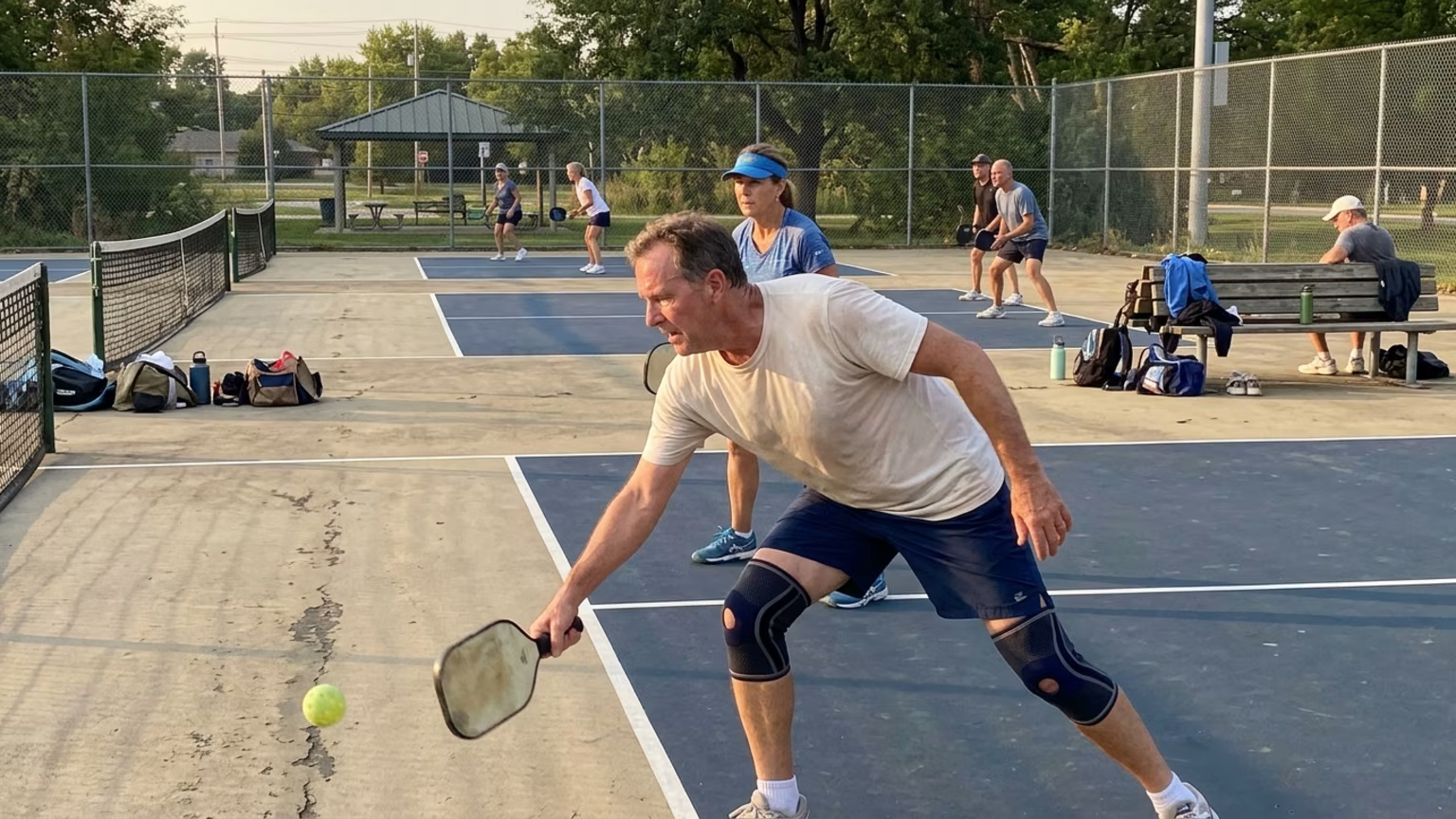
Falls led pickleball and tennis injury cases seen in U.S. emergency departments. Here’s how recreational players can put the findings in context.

Moving from tennis to padel? Keep the compact volley, learn when to use the back glass and see how partner movement and lobs change the point.
Read practical guidance for better movement, smarter preparation and a game that keeps working for you.
explore the Blog
