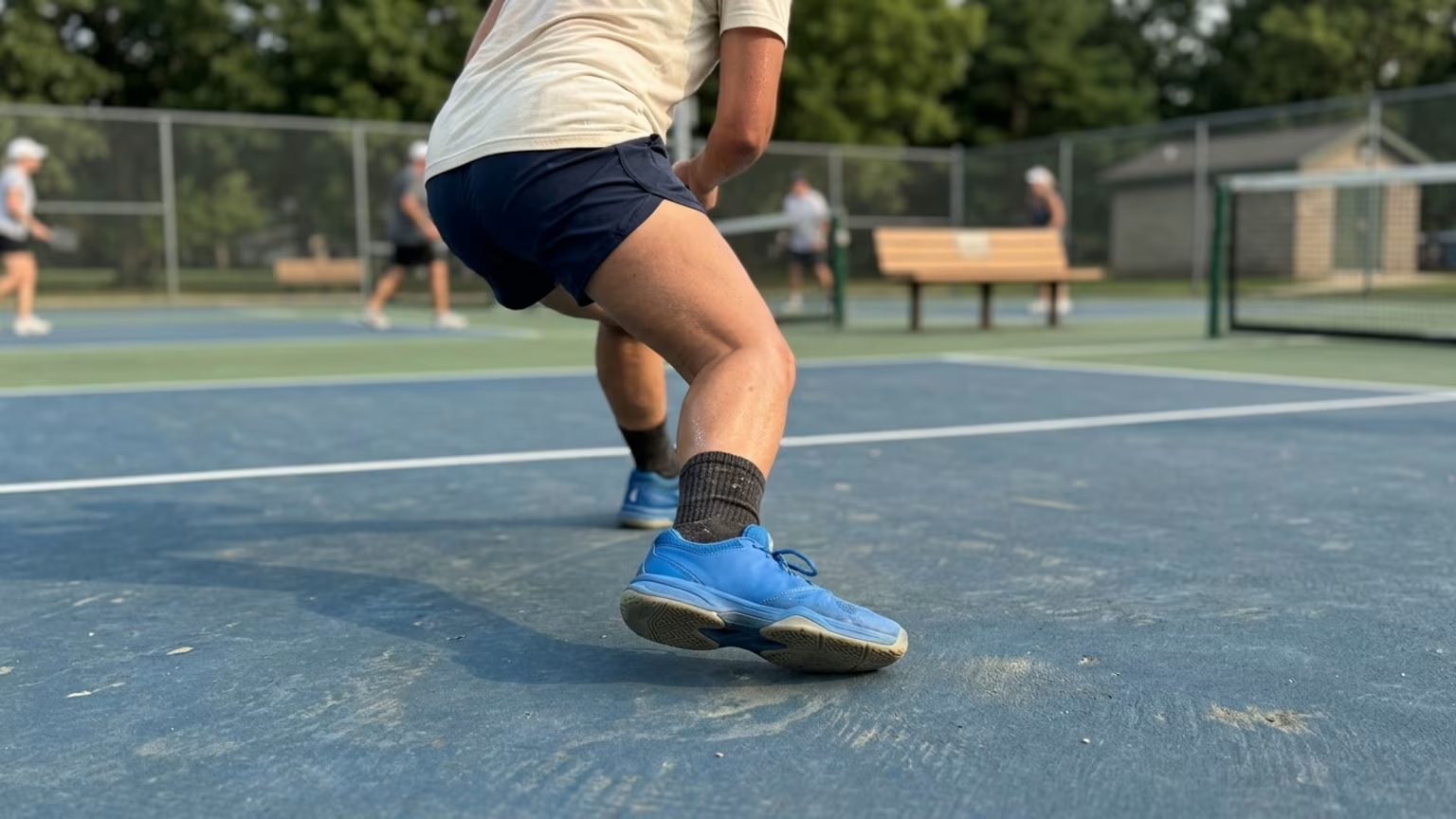

Understand why standard running shoes lack the lateral stability required for pickleball. A complete guide to court footwear, traction, and athletic longevity.




Court footwear is specialized athletic equipment built to provide lateral stability and traction for multidirectional movement. Many adult players transition to racquet sports wearing standard running shoes. Those shoes are engineered for heel-to-toe progression rather than side-to-side stability. Understanding this functional difference is the first step in preparing your body for the physical demands of the court. We want to outline exactly why pickleball challenges your lower body. Proper equipment sets a foundation for better movement habits.
Pickleball requires short accelerations, sudden stops, lunges and lateral reaches outside your base of support. Points are constructed around repeated split steps and rapid recovery movements rather than long forward runs. According to sports-physical-therapy guidance, these actions repeatedly move a player's center of mass outside their base of support. You must constantly regain your balance while preparing for the next shot.
Pickleball is deceptively demanding because the court size forces rapid and continuous movement. You spend the vast majority of your time moving laterally or diagonally. The constant starting and stopping creates a high mechanical load on your lower body. Every time you plant your foot to change direction, your joints and connective tissues must absorb that kinetic energy.
The kitchen-line exchange intensifies this workload significantly. Players react from a compact stance, take adjustment steps, accelerate over a short distance and then brake before hitting the ball. In practical terms, you must repeatedly produce force, absorb force and redirect force. This intense cycle often happens within the exact same rally.
That braking demand challenges the ankle, knee, calf and Achilles tendon. This is especially true when you reach beyond a stable stance or become fatigued late in a match. You need proper support to handle these rapid transitions safely. If you wear footwear designed for linear jogging, you ask your ankles to do extra work to stabilize your body.
The strongest defensible distinction between shoe types is functional rather than absolute. Running shoes are optimized for forward movement. A running shoe may feel comfortable during a pre-match walk, but its geometry is a poor match for repeated lateral loading. A curved or elevated sole can encourage your foot to roll forward.
A running shoe is built with a specific goal in mind. It is designed to propel you forward in a straight line with maximum efficiency. The cushioning is concentrated in the heel to absorb the impact of a running stride. This design is highly effective for jogging, but it becomes a liability on the pickleball court. The court demands constant lateral stability instead of forward propulsion. When you move laterally in a running shoe, the thick heel can create an unstable pivot point.
This forward bias is excellent for a running stride but problematic when you need to step sideways. In contrast, a flatter and wider court-shoe platform is intended to resist unwanted tipping during side-to-side movement. The flatter base keeps you securely connected to the court surface.
The available evidence supports recommending court-specific footwear, but it does not establish that switching shoes alone prevents every injury. Hospital for Special Surgery guidance recommends court shoes because their flatter platforms are better suited to lateral movement than typical running-shoe geometry. A tennis or squash court shoe can be a reasonable alternative if a pickleball-specific model is unavailable. Proper equipment simply gives you a safer foundation for explosive court play.
To find the right footwear, you should follow a simple checklist focused on function. This ensures you evaluate shoes based on performance rather than appearance. Selecting the right gear is a core part of preventing beginner pickleball injuries as you learn the game.
Look for a shoe that feels stable when you move side to side. It should feature a secure heel, a firm midfoot and a base that stops the foot from rolling easily over the edge. Court shoes are preferable to running shoes because they are designed for multidirectional rather than primarily forward movement.
Perform controlled side steps and a shallow lateral lunge at the fitting stage. The shoe should keep your heel centered. Your foot should not slide across the footbed.
Match the outsole to the playing surface. Indoor courts generally require appropriate non-marking traction, while outdoor shoes need an outsole durable enough for rougher surfaces. Traction should help you push off and brake without excessive slipping. It should not feel so sticky that your foot stops abruptly while your body continues moving.
Cushioning should make repeated landings and braking more comfortable. However, softness alone is not the primary goal. You need a combination of impact comfort and a stable platform. An overly soft or tall shoe may feel less secure during lateral loading.
Players with persistent foot, knee, calf or Achilles symptoms should treat cushioning as an individual comfort issue. Do not assume that the thickest shoe available is automatically the safest choice. Excessive cushioning can diminish your court feel and slow down your reaction time.
The heel should remain secure without pressure, and the midfoot should feel held rather than squeezed. Leave enough room for the toes to move without allowing the foot to slide forward during braking. Try shoes with the socks you normally wear for pickleball. Walk, shuffle and perform controlled stops before buying. A shoe that feels acceptable while standing still may feel unstable during a lateral plant.
Replace court shoes when traction, cushioning, fit or lateral stability has materially deteriorated rather than relying on a universal calendar rule. Inspect the outsole regularly for smooth patches, missing tread or uneven wear. A worn outsole can compromise braking and lateral confidence even when the upper still looks presentable.
Do not judge replacement timing solely by appearance. The internal materials of a court shoe degrade over time. Playing frequency, body mass, court surface and movement style all influence the service life of your footwear. A shoe may lose lateral stability or cushioning long before the exterior looks dramatically damaged.
Understanding the biomechanics of pickleball helps you maintain your physical capabilities over time. For older players, preventing falls matters because a loss of balance can have serious consequences beyond a missed shot. Selecting a stable shoe gives you a reliable platform to practice better movement habits. Playing in supportive gear reduces the mechanical stress placed on your joints during aggressive braking.
When I first started playing pickleball, I noticed how many people skipped warming up entirely. They would jump straight out of their cars and right up to the kitchen line. I tried doing that and immediately pulled a calf muscle. Pickleball requires just as much explosive lateral movement as tennis, just in a tighter space. Since then, I always spend five minutes doing dynamic lunges and ankle rolls. It changes everything about how confident I feel pushing off the baseline.
A proper shoe is just one part of a sustainable routine. You should pair good footwear with a progressive warm-up. Start with easy walking or jogging, side shuffles and gradual court hitting rather than maximal lunges. Building lower-body strength and ankle control helps you master the essential footwork skills required for competitive play.
We often see adult recreational players transition to pickleball from walking or cycling backgrounds. Those activities do not train the side-to-side coordination necessary for racquet sports. Building movement capacity with balance work and ankle strengthening makes a massive difference in your healthy aging journey. Cross-training across courts can also help you develop well-rounded athletic habits. A comprehensive approach to physical preparation keeps the game enjoyable and minimizes unwanted downtime.
Footwear adjustments and a sensible warm-up can solve many minor aches, but they cannot fix underlying joint issues. You should seek a clinical assessment for persistent pain, recurrent ankle giving-way or visible joint swelling. If an injury changes your normal walking or playing mechanics, it is time to consult a qualified physical therapist. They can diagnose the specific root cause of your discomfort.
Seeking professional advice early often prevents a minor strain from becoming a chronic problem. Do not attempt to push through sharp pain in your knee, calf or Achilles tendon. A healthcare provider can assess your specific movement patterns and determine if you need targeted strengthening.
Replacing worn shoes is important, but a medical professional provides personalized guidance that equipment cannot replace. At Evercourts, we always recommend prioritizing your long-term joint health over finishing a casual match. Ignoring early warning signs is a common mistake that keeps players off the court for months.
Check the tread on your current court shoes today, and replace them if the outsole feels smooth to the touch.
Follow Evercourts for practical insights on tennis, pickleball and padel performance, movement, recovery and healthy ageing. Stay connected for new articles, research-led guidance and ideas to help you play well and keep playing for years.


An evidence check on sports supplements like tart cherry juice. Learn why racquet sports players should prioritize core nutrition over functional foods.
In late 2026, Oura analyzed wearable data to see how recreational tennis impacts heart health and recovery. Learn what this means for your athletic longevity.
Recent guidelines emphasize gradual progression, dynamic warm-ups, and scheduled recovery to help adult racquet sports players maintain athletic longevity.
Read practical guidance for better movement, smarter preparation and a game that keeps working for you.
explore the Blog
