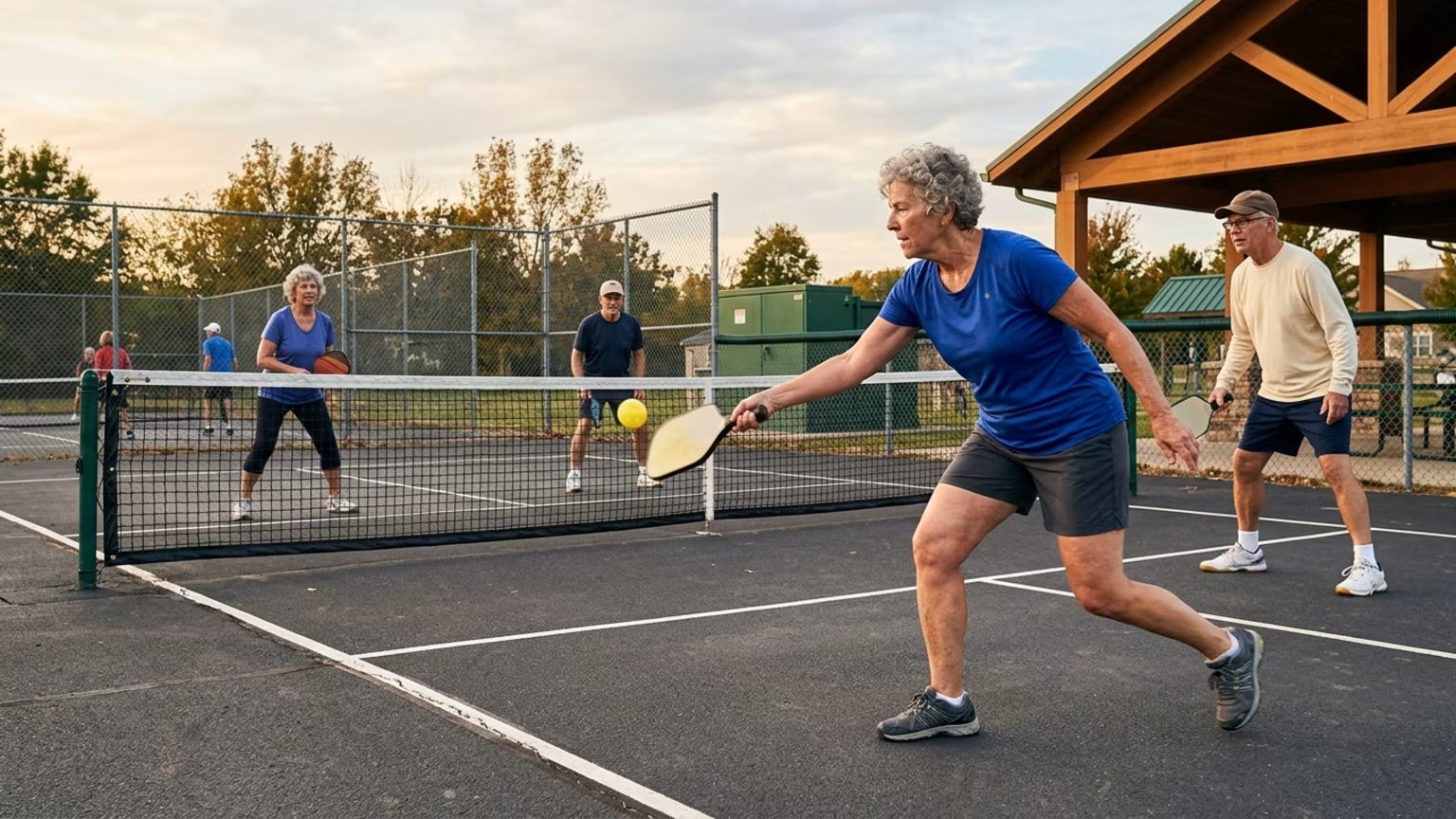

The YMCA of Greater Houston showcased its ForeverWell program on September 9. Learn why combining pickleball with cross-training supports athletic longevity.




On September 9, 2026, the YMCA of Greater Houston hosted a Senior Open House across its regional locations to showcase its healthy aging programs. The event introduced adults aged 55 and older to a varied activity schedule where pickleball sits directly alongside yoga, Pilates, water aerobics and weight training.
YMCA officials announced the open house in an August 27 news release. They positioned the event as part of Healthy Aging Month. The organization invited older adults, as well as their families, friends and caregivers to visit local branches. Visitors experienced a full schedule of facility tours, community-partner vendor fairs and educational programming. The participating locations also provided program demonstrations, giveaways and prize drawings throughout the day.
The primary focus of the event was introducing visitors to ForeverWell. This is the organization's year-round programming for older adults. The published ForeverWell menu includes pickleball, but it deliberately presents the sport as just one element of a comprehensive fitness strategy. The YMCA pairs court time with yoga, Zumba, Pilates and water aerobics. Dedicated weight training is also a core part of the fitness schedule.
Beyond physical activity, the ForeverWell program includes various social, recreational and educational activities. The organization offers gardening groups, book clubs and mahjong. Members can also join volunteer projects and technology skills classes. The event combined physical activities with clubs, hobbies and volunteer opportunities. This indicates that the YMCA presents healthy aging as a broader participation and community-engagement model rather than solely as exercise programming.
The YMCA's event coverage did not identify a single Houston branch as the exclusive host. Instead, it described participation across YMCA locations in the Greater Houston area. The available reporting provided a broad overview of the program categories. However, it did not provide specific attendance targets or branch schedules. Details regarding class times, membership pricing and pickleball session formats were also omitted.
For the everyday adult racquet player, the setup of the ForeverWell program offers an important lesson in activity management. Professional athletes have entire teams dedicated to balancing their court time with mobility work and strength conditioning. They follow highly structured regimens to maintain peak performance and avoid overuse. Adult recreational players often lack that structural support. Many players simply show up and play, treating their chosen racquet sport as their only form of exercise.
When I first started playing pickleball, I noticed how many people skipped warming up entirely. They would jump straight out of their cars and right up to the kitchen line. I tried doing that and immediately pulled a calf muscle. Pickleball requires just as much explosive lateral movement as tennis, just in a tighter space. Since then, I always spend five minutes doing dynamic lunges and ankle rolls. It changes everything about how confident I feel pushing off the baseline.
That sudden strain is a common issue for adult players. Pickleball is often perceived as an easy, low-effort activity. In reality, the quick directional changes place significant stress on the lower body. Taking time to properly prepare the body with dynamic movements is crucial for long-term health. The YMCA's approach addresses this preparation gap by offering a broader training mix.
Presenting pickleball alongside aquatic, strength and mind-body activities encourages older tennis, pickleball and padel players to step off the court. By investigating a broader training mix, players can build the underlying physical capacity needed for sustained play. Incorporating strength and conditioning for healthy aging in racquet sports is essential for handling the physical demands of lateral movements and quick stops.
A mixed activity schedule helps preserve general strength, mobility, cardiovascular conditioning and balance. These are the specific capabilities racquet players commonly want to preserve as they age. Water aerobics provides a resistance environment that spares the joints from constant impact. Pilates focuses on the flexibility and core control that overhead shots demand. Weight training helps maintain the muscle mass required to absorb heavy landings.
This integrated programming reinforces the idea that true court fitness requires complementary work. It highlights the importance of managing racquet sports training load to avoid single-sport overload. However, adult players should evaluate community programs critically. The YMCA's event coverage lists program categories, but players must verify the details locally.
Players should use community open house events as practical investigation sessions. Ask the local branch which ForeverWell activities are actually offered. Inquire whether the pickleball sessions are held indoors or outdoors, and ask how the sessions are structured. It is also important to ask instructors how their classes can be scaled for current ability, previous injuries and existing racquet sports workloads. The event sources do not provide those specific adaptations.
Furthermore, players should not automatically assume that pickleball is a universally low-impact or joint-friendly option. Indoor courts change environmental conditions, scheduling norms and surface characteristics. The available event reports do not establish that indoor pickleball produces fewer injuries or less joint stress than tennis or padel. Pickleball should be treated as one possible component of a weekly routine, not necessarily a replacement for other sports.
Building a new routine requires patience and observation. It is crucial to monitor how new classes interact with court volume, recovery timelines, sleep quality and persistent joint pain. Focusing on healthy aging through injury prevention means adapting your schedule based on how your body responds to the workload.
The event is an open house, not a reported clinical intervention or published training study. The sources do not demonstrate that attending it will automatically improve balance, strength, mobility or racquet sports performance. The target age is described as 55 and older. However, the event coverage does not distinguish between beginners, experienced recreational players, competitive players or people returning from injury.
Anyone managing arthritis, prior injuries, cardiovascular conditions or balance limitations should consult an appropriate health professional. Obtaining individualized medical advice is prudent before changing training loads or joining new classes. Family members or caregivers can also assist with activity planning, transportation or health decisions. The YMCA explicitly welcomed families and caregivers to the event, acknowledging their role in supporting older adults.
Confirming practical details directly with the relevant YMCA branch is a necessary step before attending future sessions. The published reports establish the event logistics and program menu, but they do not provide independent evaluations of ForeverWell. They also do not list class capacity or registration requirements. The real value for players lies in using the YMCA's integrated model as a template for building their own balanced weekly routines.
Looking ahead, we expect more community facilities to adopt this integrated approach to older adult programming over the coming seasons. Positioning racquet sports within a larger wellness framework helps players avoid the trap of early specialization and excessive repetition. Facilities will likely continue grouping physical fitness with comprehensive social and educational activities.
This broader participation model recognizes that healthy aging and athletic longevity involve community engagement just as much as physical exercise. Over the next year, players should watch for how local clubs and recreation centers structure these mixed menus. The success of these programs will depend on their ability to scale classes for different experience levels. As more older adults seek to stay active on the court, the demand for well-rounded, accessible training routines will continue to shape recreational facility schedules.
Follow Evercourts for practical insights on tennis, pickleball and padel performance, movement, recovery and healthy ageing. Stay connected for new articles, research-led guidance and ideas to help you play well and keep playing for years.


How modest strength work can fit around tennis, pickleball and padel, with adaptable movement patterns and a clear look at the evidence.
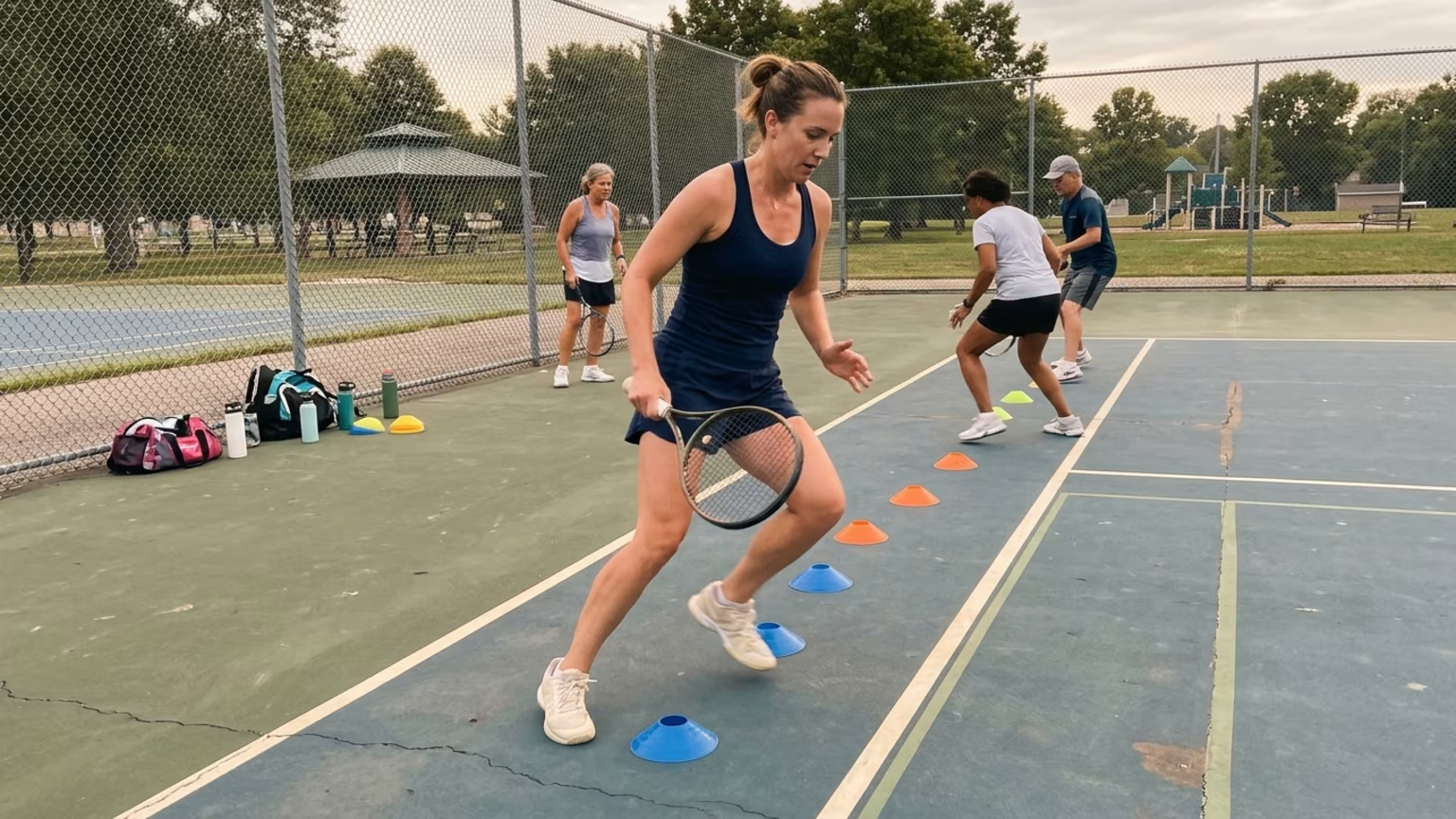
Build a warm-up from easy movement to court footwork and strokes, with clear evidence limits and guidance on when to seek professional advice.
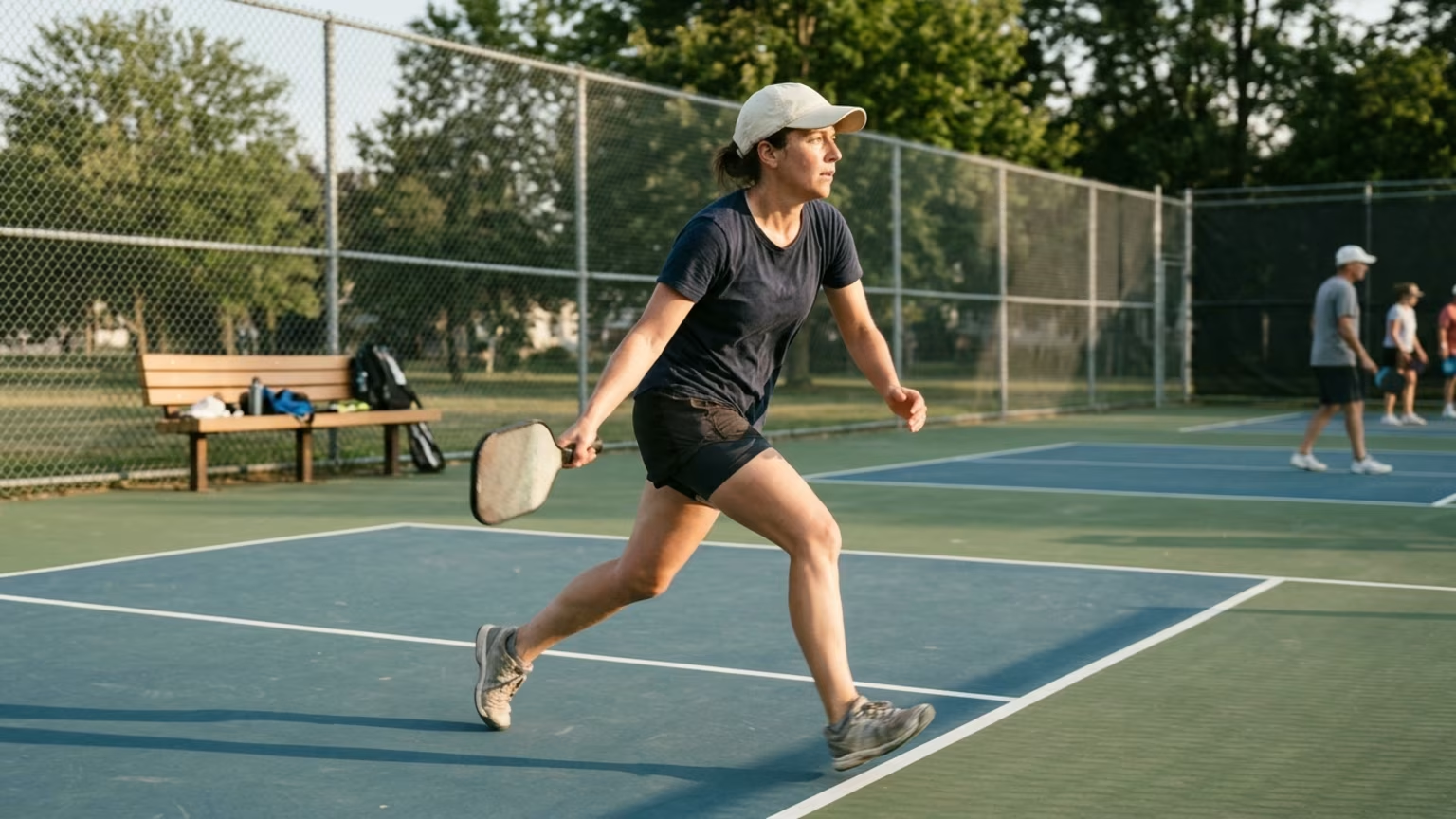
An evidence-led look at pickleball lunges, balanced recovery, movement practice and when to seek professional advice.
Read practical guidance for better movement, smarter preparation and a game that keeps working for you.
explore the Blog
