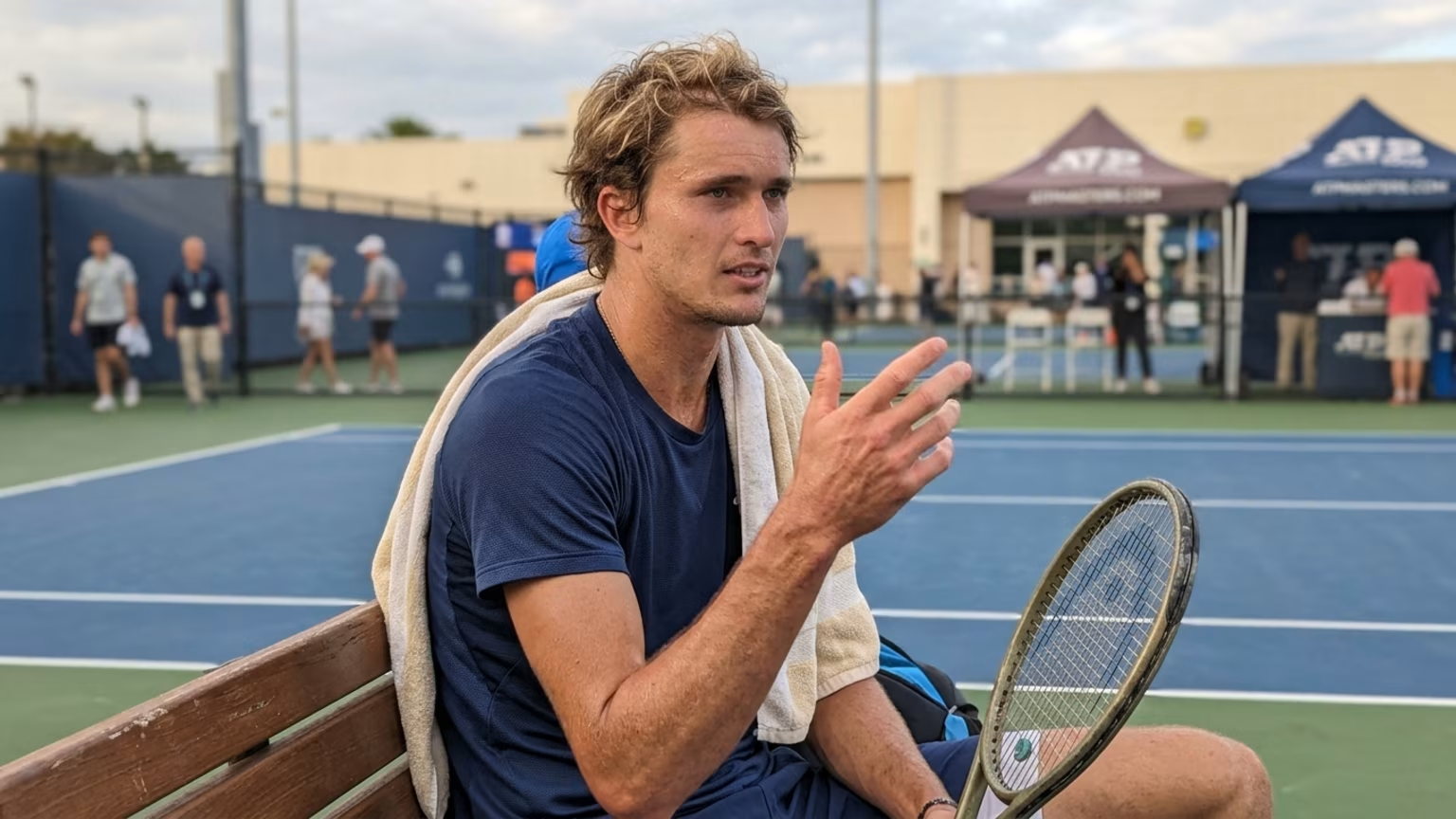

Alexander Zverev recently argued for shortening Masters events to ease physical strain. Learn what this workload debate means for your own court longevity.




Workload management is the strategic balance of competition volume, physical intensity, and recovery time. For Alexander Zverev, that delicate balance recently fractured in Montreal. The world No. 3 and reigning French Open champion had just lost his opening match. Looking at the crowded North American hard court swing, the physical toll of his schedule finally prompted a sharp critique.
The concept of managing workload is not exclusive to professional athletes. Any adult who plays racquet sports regularly must balance the desire to compete with the need to recover. When players ignore this balance, they risk physical exhaustion and joint strain. Understanding how to manage your calendar is the foundation of staying healthy on the court.
Many athletes assume that playing more matches automatically leads to better performance. However, continuous competition without adequate rest often causes the opposite result. A high volume of matches degrades movement mechanics and slows reaction times. This is why professional players are increasingly vocal about the structure of their seasons.
Racquet sports demand explosive movements and repeated changes of direction. Tennis, pickleball, and padel require rapid accelerations to chase down unexpected shots. This taxes the muscular system heavily during back to back competition days. Professional and amateur players face compounding fatigue when high intensity play continues without sufficient recovery.
When athletes compete over extended periods, micro tears in muscle tissue naturally accumulate. The central nervous system also fatigues from the constant visual processing and reaction times needed on the court. Without proper rest, this central fatigue reduces peak performance and places additional stress on joints. Your body simply cannot absorb the same impact forces when your muscles are exhausted.
At the professional level, constant travel and sleep disruption add to the physical demands. This cumulative strain is why elite players often have to choose selectively between events. While adult recreational players do not travel like touring professionals, playing multiple local tournaments creates a similar physical debt. Overplaying eventually forces athletes into unwanted layoffs and stalls their technical progress.
This compounding fatigue is exactly why balancing match play and recovery is so critical. A heavy weekend of padel or a long tennis tournament depletes glycogen stores and stiffens connective tissues. If you head straight back to the practice court on Monday, you interrupt the repair process. Respecting the physical cost of match play is essential for long term health.
The ongoing debate centers on recent structural changes to the professional tennis calendar. According to ATP Tour tournament overviews, seven of the nine ATP Masters 1000 tournaments have been staged over 12 days since 2025. Only Monte-Carlo and the Paris Masters currently remain one week events. Amid these changes, Alexander Zverev argued that ATP Masters 1000 tournaments should return to a one week format.
Zverev suggested this change would help elite players maintain fitness and avoid skipping events. His central complaint concerns the length of the North American hard court swing. He noted that a top player competing throughout the swing can spend approximately seven weeks in North America. He proposed reducing the combined stay for the Montreal and Cincinnati Masters tournaments to roughly two weeks.
Zverev described this adjustment as an easy fix for improving participation by top players. The immediate backdrop of the Montreal event included several notable absences that highlight this workload tension. Jannik Sinner withdrew from the Canadian Open after winning Wimbledon. Novak Djokovic skipped the U.S. Open tune up to manage his workload, while Carlos Alcaraz was sidelined by a wrist injury that had kept him out since April.
Secondary tennis coverage also reported that Zverev questioned the financial return of expanded tournaments. He cited his own comparison between winning Rome in 2017 and winning it again in 2024. Furthermore, coverage noted Zverev's view that additional tournament spending might be directed toward earlier rounds. Meanwhile, the ATP has responded that players control their own schedules and that it is working on incentives to encourage an appropriate number of matches.
For adult racquet sports players, the professional debate offers practical lessons for athletic longevity. Elite athletes have vast medical resources to handle rigorous calendars, but recreational players do not. Amateurs who want to maintain their physical capabilities must actively protect their recovery time. A schedule that allows you to participate regularly supports healthy aging much better than maximizing match counts.
Treating tournament duration as just one part of your total physical load is essential. Total workload also includes match intensity, practice volume, and the number of consecutive competition days. Zverev's complaint about cumulative exposure is a useful reminder that fatigue builds gradually. It happens even when no single match feels excessive at the time.
Many adult players make the mistake of scheduling multiple tournaments in consecutive weeks during the peak season. While this feels like maximizing your court time, it dramatically increases your risk of joint and tendon injuries. A smarter approach involves building a sustainable tournament calendar with active rest weeks between competitive events. Sustainable athletic progression requires patience and deliberate scheduling.
Building rest days into your planning is much smarter than waiting until complete exhaustion sets in. Prioritize consistency over sheer volume to stay on the court for years to come. Adult players should adjust their training around their chosen events. After a demanding weekend, use lower intensity technical work and mobility exercises before returning to full speed drills.
This thoughtful approach is the best way to prevent the recurring injury cycles that frustrate so many players. Breaking the recurring injury cycle requires honesty about your current fitness level and realistic calendar planning. If you want to keep competing in your favorite sports, you must treat recovery as a mandatory session. Your long term availability is your most valuable asset.
Understanding workload management helps you recognize when normal soreness crosses the line into a medical issue. Players can use a simple traffic light system to monitor their physical health throughout the season. Green means normal movement and steady energy levels. Yellow indicates persistent soreness or noticeably declining performance on the court.
Red means sharp pain, localized swelling, or symptoms that alter your natural movement patterns. If you enter the yellow zone, you must reduce your training intensity immediately to allow for adaptation. If you experience red zone symptoms, stop playing right away and seek professional guidance. Persistent joint pain or recurring muscle strains are clear signs that you need a physical assessment.
You should consult a qualified physiotherapist or healthcare provider to evaluate these symptoms. A professional can identify strength deficits, poor movement mechanics, or overtraining patterns that contribute to your pain. Playing through sharp discomfort will only force a longer interruption from the sport you love.
Start keeping a brief log of your match durations and post match soreness today to better track your personal workload limits.
Follow Evercourts for practical insights on tennis, pickleball and padel performance, movement, recovery and healthy ageing. Stay connected for new articles, research-led guidance and ideas to help you play well and keep playing for years.


Holger Rune withdrew from the European Open with a back problem. The facts behind his decision and a grounded perspective for recreational players.

The Dink’s October 17 guide emphasizes deep returns, ball-height decisions and positioning against faster pickleball opponents.

A new report outlines padel and tennis gear trends. Learn how to assess adjustable rackets, sensor feedback and smart-court claims.
Read practical guidance for better movement, smarter preparation and a game that keeps working for you.
explore the Blog
