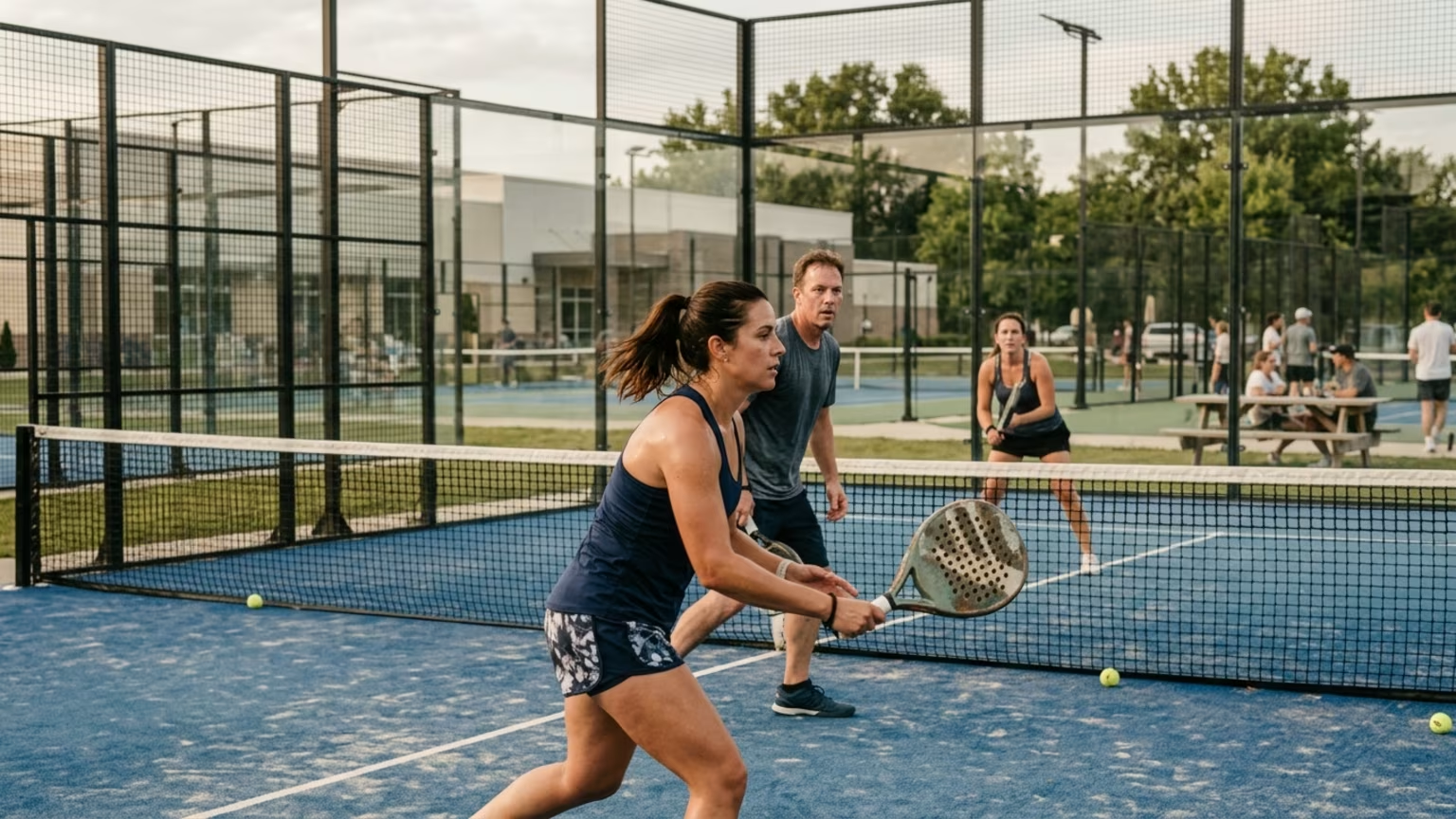

Brisas and The Dunmore recently partnered on a padel and wellness event. Learn why 30-minute instruction blocks offer a sustainable model for adult players.




On Friday, September 4, 2026, Brisas (an East Hampton padel club) and The Dunmore (a Harbour Island resort founded by Gil Besing and Lucy Cuneo) hosted a combined padel-and-wellness afternoon at the Brisas East Hampton club. The event celebrated their upcoming fall partnership. Two courts were used for group padel lessons. The stated goals of the afternoon were building connection between players and improving their games.
Padel and Pilates were organized into 30-minute rotations. This format gave attendees a short and low-commitment introduction to each activity. A third court at the event combined mat Pilates with a healing tent featuring a tarot-card reader. Recovery and hospitality elements were available throughout the afternoon.
Cold-plunge and sauna stations were set up alongside food and beverages. The informal setting allowed guests to move between activities at their own pace. The event was designed around movement and recovery in equal measure. This structure highlights a growing operational model that packages racquet sports with hospitality and wellness.
The partnership is expected to extend to The Dunmore in the Bahamas. Newly redesigned padel courts are scheduled to be unveiled at the Harbour Island property in December 2026. These courts will use Brisas equipment and court design. This demonstrates how a club brand can supply sport-specific infrastructure to a destination resort.
Professional padel players handle high training volumes with the help of dedicated coaching and medical teams. Adult recreational players often try to replicate this volume by booking long weekend clinics. This heavy approach frequently results in stiff joints and declining technique by the second hour. The 30-minute rotation model offers a much more sustainable template for weekend league players.
Short learning blocks keep the mind sharp and the body responsive. I remember finishing a tough two hour padel match on a cold Tuesday night and waking up the next morning feeling like my lower back was locked in concrete. For a long time, I just accepted this as the price of playing hard in my forties. But once I started spending just ten minutes on targeted hip mobility before heading to the club, the stiffness almost completely vanished.
That experience taught me that we do not have to accept pain as a default state of aging. We see similar physical demands across all modern court sports. When I first started playing pickleball, I noticed how many people skipped warming up entirely. They would jump straight out of their cars and right up to the kitchen line.
I tried doing that and immediately pulled a calf muscle. Pickleball requires just as much explosive lateral movement as tennis, just in a tighter space. Since then, I always spend five minutes doing dynamic lunges and ankle rolls. It changes everything about how confident I feel pushing off the baseline.
Pairing a 30-minute technical clinic with low-pressure point play is highly effective. Adult players can test one specific cue at a time without trying to overhaul everything during a competitive match. This structure keeps groups small enough for actionable feedback while reducing the total physical load. A focused session might address ready position and first movement during one rotation, and court positioning during the next.
Ask the coach to make each session outcome-specific. Examples of targeted 30-minute goals include:
A balanced approach to court time must include proper physical preparation. The incorporation of Pilates alongside padel provides an excellent blueprint for athletic longevity on the court. Pilates addresses the core stability and balance needed for efficient lateral movement. Players who learn how to cover the court better without moving faster often do so by improving their postural control.
Off-court habits play an equally massive role in how we perform. I used to think a tough conditioning block was the only way to improve my court endurance. Then I started tracking my sleep. I noticed that on days I slept less than six hours, my reaction time at the net was noticeably sluggish, and I felt gassed by the second set.
Prioritizing consistent rest did more for my late match stamina than any extra sprints ever did. Recovery amenities like those at the East Hampton event are helpful additions, but basic rest is the true foundation of performance. A single afternoon of cold plunges cannot replace consistent sleep, hydration, and proper conditioning. Adult players must view these wellness events as supplements to a steady routine.
The physical benefits of racquet sports are documented in large observational studies. A pooled cohort study of 80,306 adults in England and Scotland measured the health effects of racquet-sport participation. The study found that playing racquet sports was associated with lower all-cause mortality risk. The researchers calculated a hazard ratio of 0.53 with a 95 percent confidence interval of 0.40 to 0.69.
Cardiovascular health outcomes were equally compelling in the same research cohort. The observational study found an association between racquet sports and lower cardiovascular-disease mortality risk. This finding carried a hazard ratio of 0.44 and a 95 percent confidence interval of 0.24 to 0.83. This data provides a strong foundation for the health benefits of regular court time.
We must carefully interpret these impressive health statistics. The mortality study does not establish that racquet sports independently cause longer life. Because it is an observational cohort analysis, the results may be affected by confounding factors. These factors include a player's baseline health, income level, existing fitness, and general social participation.
Despite these variables, the correlation between court sports and positive health outcomes remains powerful. Healthy aging research increasingly treats physical function, psychological resources, and social connection as interrelated factors. Those looking for advice on how to keep improving your game as you get older should view consistent participation as a central pillar of fitness.
Structuring lessons into brief blocks aligns with sensible activity pacing. Integrating different movement forms ensures that players develop strength alongside their racquet skills. This holistic view is vital for players who want to avoid the padel injury rate surpasses tennis middle-aged players statistics seen at many facilities. Finding a sustainable racquet sport option requires careful management of physical load.
The collaboration between Brisas and The Dunmore signals a broader shift in racquet sports programming. We expect more club operators to adopt modular programming formats over the next season. Combining brief technical instruction with recovery and social elements makes skill development highly accessible. This balanced model will help adult players upgrade their movement habits without risking burnout or injury.
Follow Evercourts for practical insights on tennis, pickleball and padel performance, movement, recovery and healthy ageing. Stay connected for new articles, research-led guidance and ideas to help you play well and keep playing for years.


An evidence check on sports supplements like tart cherry juice. Learn why racquet sports players should prioritize core nutrition over functional foods.
In late 2026, Oura analyzed wearable data to see how recreational tennis impacts heart health and recovery. Learn what this means for your athletic longevity.
Recent guidelines emphasize gradual progression, dynamic warm-ups, and scheduled recovery to help adult racquet sports players maintain athletic longevity.
Read practical guidance for better movement, smarter preparation and a game that keeps working for you.
explore the Blog
