

Fatima Moreira de Melo’s senior padel success highlights the physical demands of midlife competition ahead of the upcoming Rotterdam Premier Padel.




Former Dutch Olympic hockey champion Fatima Moreira de Melo recently represented Team Netherlands at a senior padel world championship in Argentina at the age of 48. Her participation comes just days before the CUPRA Rotterdam Premier Padel tournament. The Rotterdam event is scheduled to take place at Rotterdam Ahoy from 27 September through 4 October. Sportnieuws reports that the world's leading players will gather for this major showcase.
The upcoming event is positioned as a premier Dutch exhibition of professional padel. It highlights high-speed rallies and elite-level competition on a global stage. Moreira de Melo's recent performance creates a timely link between senior-level competitive play and the arrival of the professional tour. Her ongoing presence in the sport bridges the gap between elite international events and committed amateur players.
During the team competition in Argentina, the Dutch women won a decisive tie 3-1. This victory directly followed Moreira de Melo's opening doubles win. The Dutch team advanced to the semifinal round before Spain ultimately eliminated them. Moreira de Melo played a challenging individual semifinal match but lost 6-3, 6-2.
She has played padel for several years and co-owns a dedicated padel venue. Sportnieuws notes that she also serves as an official ambassador for Rotterdam Premier Padel. These specific roles reflect a deep ongoing commitment to the sport's growth in the Netherlands. Her active involvement connects the elite professional circuit with the expanding base of dedicated amateur players.
A senior world championship is not directly comparable with the professional Premier Padel circuit. However, it provides a highly structured environment for experienced athletes to test their technical skills. It clearly shows that former elite athletes can still compete vigorously on an international court.
Moreira de Melo's story proves that competitive racquet sport can remain a highly worthwhile pursuit in midlife. However, her result should not be viewed as a promise that age has no effect on physical performance. She relies on an exceptional sporting background and access to excellent training resources. For the adult recreational player, staying competitive requires deliberate physical preparation rather than simply relying on past athleticism.
You must train specifically for the demands of the court to keep winning points without unnecessary effort. When our team first started playing pickleball, we noticed how many people skipped warming up entirely. They would jump straight out of their cars and right up to the kitchen line. Trying that casual approach immediately resulted in a pulled calf muscle.
That moment proved that treating racquet sports casually is a fast track to the sidelines. We now spend five minutes doing dynamic lunges and ankle rolls before every single session. This brief court-ready warm-up routine fundamentally improves how confident we feel pushing off the baseline. Proper preparation is the true barrier between aging out of the sport and staying in.
Players transitioning from hockey, tennis, or running must clearly distinguish between general fitness and padel-specific readiness. Athletes crossing over from field sports often assume their existing stamina will carry them through long matches. However, the available evidence does not establish that general endurance from another sport automatically transfers to padel. The unique lateral demands of the court require specific conditioning that straightforward running simply cannot provide.
Lancaster Orthopedic guidance for players over 50 recommends progressive court exposure. You should build court volume progressively rather than abruptly increasing your session frequency, duration, and intensity. The orthopedic guidance specifically recommends increasing only one of those variables at a time. This measured approach to workload management helps older athletes avoid severe overuse injuries during heavy match weeks.
Padel involves repeated accelerations, sudden decelerations, and dynamic lateral reaching. Relying only on static stretching is simply not enough to prepare your body for these dynamic actions. Adult players should warm up with movement-specific actions like brisk walking, lateral movement, controlled calf raises, and easy swings. These active exercises carefully prepare the nervous system for sudden directional changes.
Court movement demands targeted strength and balance work throughout the lower body. You need to maintain strength in the calves, hips, thighs, and trunk. These muscle groups are entirely responsible for stopping, redirecting, and stabilizing your body during rapid exchanges. Balance training should include controlled single-leg balance, tandem walking, and reaching near a stable support.
Mastering these essential footwork skills provides a solid foundation for efficient movement across the court. Appropriate footwear designed specifically for lateral court movement is also absolutely essential. Players should always replace worn shoes and avoid wet, cracked, or cluttered playing surfaces. Treating pain that alters your movement mechanics as a warning sign is crucial for athletic longevity.
You should never simply play through joint pain that changes how you swing or step. Seeking technical coaching and professional assessment when pain persists is the smartest strategy. Modifying your court volume during recovery periods prevents minor aches from becoming chronic limitations.
While padel offers a clear competitive outlet, staying physically active provides measured health benefits for older adults. MedicalXpress reports on important findings from Leiden University Medical Centre. Research led by Diana van Heemst shows an association between higher physical activity and lower type 2 diabetes risk in older adults. This research reinforces the immense value of consistent movement as we age.
Medical professionals encourage adults to be as physically active as they possibly can. Finding a demanding and motivating sport can clearly support your overall systemic health. However, general physical activity research does not mean padel specifically prevents diabetes. It also does not prove that racquet sports will offset all normal age-related physical changes.
Instead, the evidence highlights that deliberate practice and targeted recovery allow players to sustain beneficial activity levels for years. Engaging in complex movement patterns helps older athletes maintain critical metabolic health over the long term. Padel provides a highly social and engaging way to meet these important baseline activity goals.
The competitive landscape for padel is growing rapidly well beyond its traditional European strongholds. The sport is officially scheduled to make its Asian Games debut from 28 September to 3 October 2026. Times Now reports that this inclusion marks a major step forward for international visibility. At the same time, new padel venues are appearing in northern English locations like Manchester and Middlesbrough.
This geographic expansion shows that participation is reaching players outside the sport's traditional upscale club image. As more public and private facilities open, we expect to see more structured senior divisions emerge. Older athletes will have significantly more opportunities to test their skills in formal amateur competition. Proper workload management will be the defining factor for players looking to compete effectively into their fifties.
Follow Evercourts for practical insights on tennis, pickleball and padel performance, movement, recovery and healthy ageing. Stay connected for new articles, research-led guidance and ideas to help you play well and keep playing for years.


An evidence check on sports supplements like tart cherry juice. Learn why racquet sports players should prioritize core nutrition over functional foods.
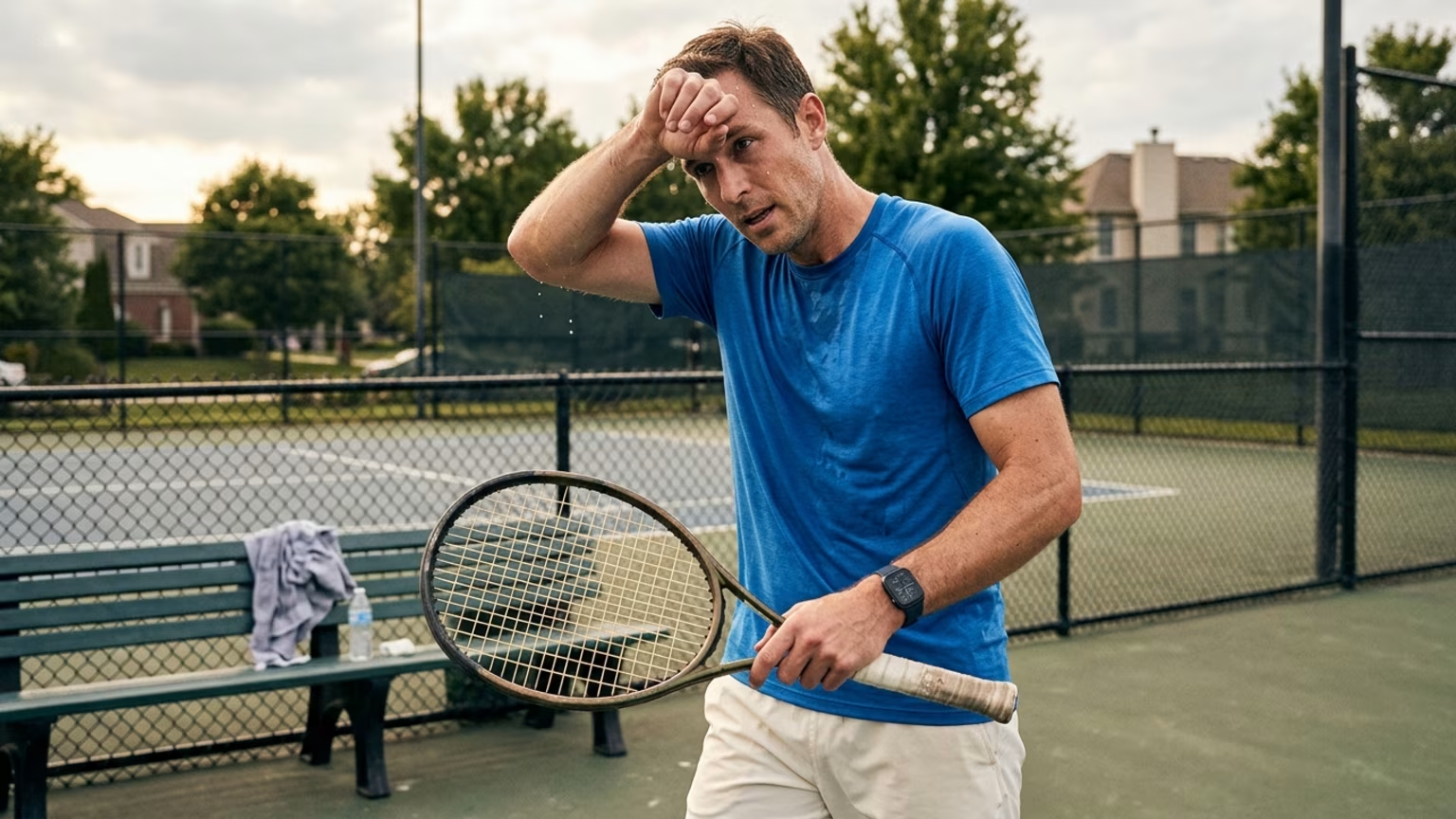
In late 2026, Oura analyzed wearable data to see how recreational tennis impacts heart health and recovery. Learn what this means for your athletic longevity.
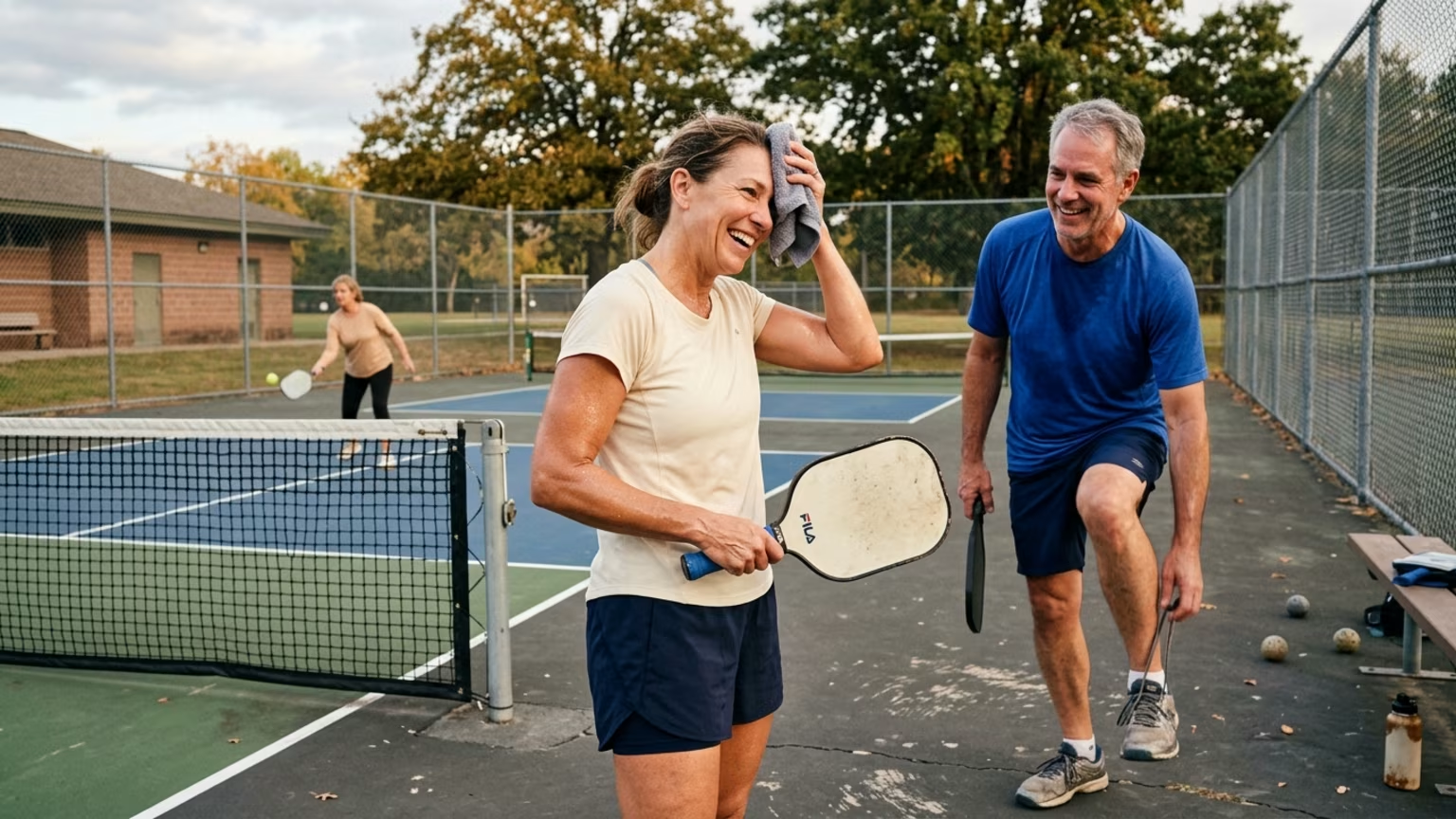
Recent guidelines emphasize gradual progression, dynamic warm-ups, and scheduled recovery to help adult racquet sports players maintain athletic longevity.
Read practical guidance for better movement, smarter preparation and a game that keeps working for you.
explore the Blog
