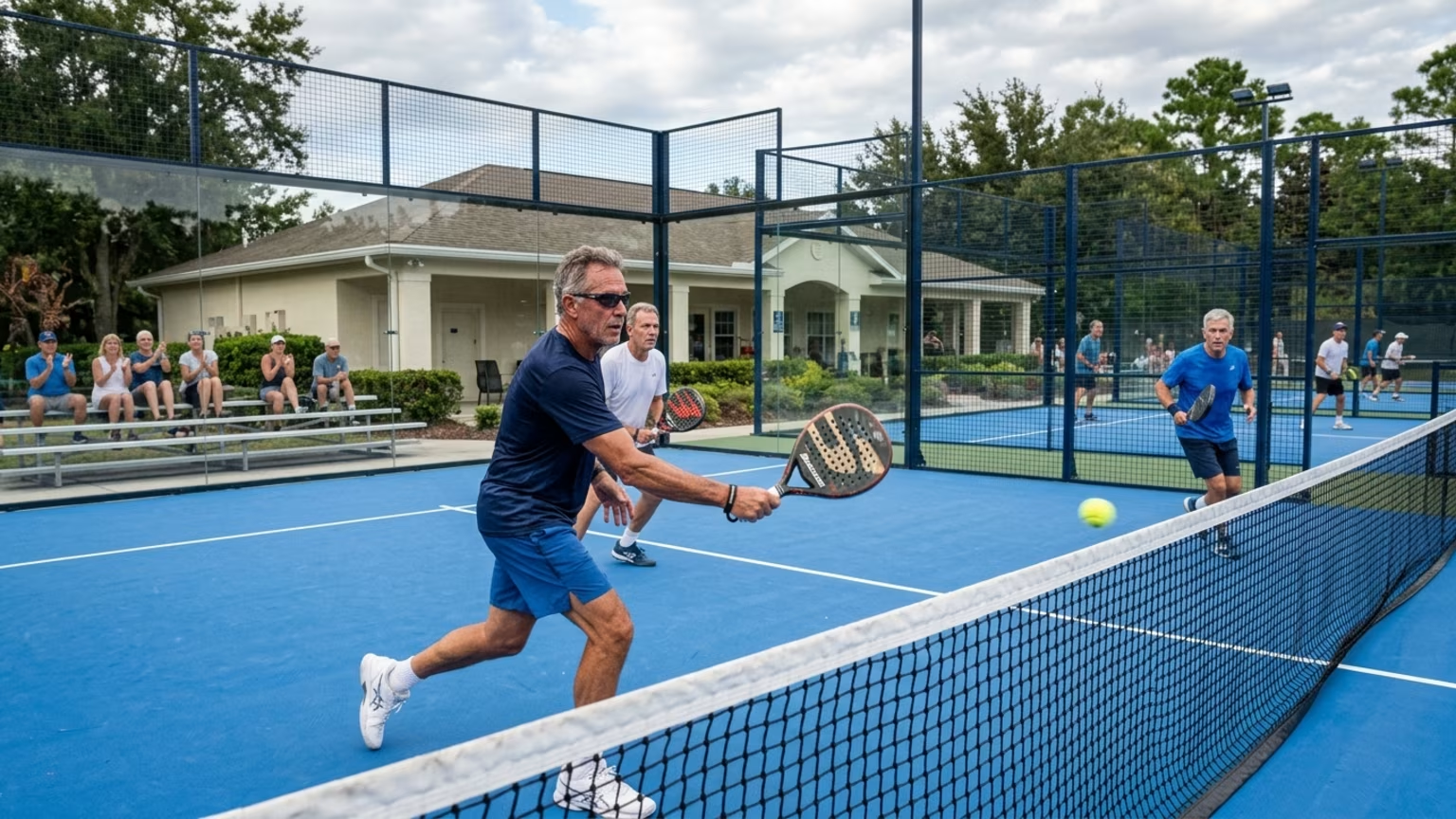

The FIP Senior World Cup 2026 final phase has opened in Buenos Aires. We explain how its 40+ to 60+ team format provides a model for local racquet sports.




On September 14, 2026, the final phase of the FIP Senior World Cup officially began in Buenos Aires. The start of the final phase followed an opening ceremony and group draw that took place on September 13. The event brings together 32 men's teams and 26 women's teams for six days of competition scheduled through September 19. The International Padel Federation is running this structured senior tournament with the Argentinian Padel Association acting as the official organizer.
Argentina is hosting the FIP Senior World Cup for the very first time. The 2026 tournament represents the fourth edition of the international competition. National teams are competing in a format that tests depth across multiple generations of players. Each tie is contested as a best-of-five matchup spread across the 40+, 45+, 50+, 55+ and 60+ categories.
The men's and women's group phases are scheduled to conclude on Wednesday, September 16. The men's final phase and the women's knockout phase will then begin on September 17. The tournament is designed to provide comprehensive rankings for all participating nations. The men's final phase will determine all 32 finishing positions, while the women's knockout phase will determine all 26 positions.
According to the International Padel Federation, Spain's women are seeking a fourth consecutive title. The women's draw placed Spain in Group A alongside Chile and Lithuania. Argentina's women were drawn into Group H with Portugal, Switzerland and Canada. The women's competition includes eight groups, with most containing three teams while Group G and Group H contain four teams. The men's competition features eight groups of four teams.
Argentina's men's team enters the event as the defending champion. They were drawn in Group A with Brazil, Uruguay and Ukraine. Spain's men are competing in Group B with Germany, Egypt and Great Britain. France took the bronze medal at the previous edition and starts in Group C alongside Australia, Canada and Venezuela.
Day one of the event featured 26 matches. Argentina's women were scheduled to face Switzerland from 9 a.m. local time, while Spain's women played Lithuania. The men's teams from Argentina and Spain were scheduled to begin their campaigns later the same day against Uruguay and Egypt respectively. Fans can watch matches on the event's designated Court 1 through the FIP YouTube channel. The tournament rosters feature prominent names like Miguel Lamperti and Agustín Gómez Silingo for Argentina, alongside former world No. 1 Lucía Sainz for Spain.
The tournament offers a very visible example of national-team competition structured around five distinct senior age categories. Many local leagues combine all adult players into one broad masters division. In contrast, the FIP format assesses athletes within narrower five-year age bands. This structured setup can make continued tournament play much more realistic for older players.
For adult recreational players, how to build a sustainable tennis, pickleball, or padel competition season often depends on finding the right level of physical challenge. The best-of-five tie structure provides a clear team framework where success relies on every age group. A country only wins if players across all five divisions perform well. This creates a valuable model for local clubs considering their own age-specific programming.
When viewing tennis, pickleball, and padel competition compared, team formats consistently help maintain higher participation rates among older athletes. Valuing roster depth over a single star player creates a healthier community environment. However, participating in organized team events requires players to manage their bodies carefully over consecutive days.
I remember finishing a tough two hour padel match on a cold Tuesday night and waking up the next morning feeling like my lower back was locked in concrete. For a long time, I just accepted this as the price of playing hard in my forties. But once I started spending just ten minutes on targeted hip mobility before heading to the club, the stiffness almost completely vanished. It taught me that we do not have to accept pain as a default state of aging. Preparing properly is essential when committing to structured multi-day events.
While the FIP event shows that athletes in the 60+ category maintain active competitive schedules, it is not medical guidance. The announcement does not provide evidence about injury rates or health outcomes resulting from this structure. Players should treat age-category competition simply as a participation framework. Adult athletes must always monitor their own soreness, fatigue and movement quality rather than blindly copying professional schedules.
I used to think a tough conditioning block was the only way to improve my court endurance. Then I started tracking my sleep. I noticed that on days I slept less than six hours, my reaction time at the net was noticeably sluggish, and I felt gassed by the second set. Prioritizing consistent rest did more for my late match stamina than any extra sprints ever did. Recovery is the true foundation of performance.
If you want to understand how to structure a padel training week without burning out, you have to prioritize that kind of recovery over simply logging more court hours. Elite players have access to dedicated coaching staffs and sports physiotherapists to manage their daily workloads. Recreational athletes must take personal responsibility for their own physical readiness before signing up for demanding weekend tournaments.
We consistently see players struggle when they jump straight into competitive ties without proper physical preparation. The physical demands of the sport do not magically decrease just because you move into a higher age bracket. Employing a solid 10-minute padel warm-up to prepare for the first point is crucial for anyone playing in these older divisions. Structured divisions give you a place to play, but your daily habits dictate how well you move once you get there.
The global expansion of senior padel indicates a growing demand for age-specific athletic opportunities. As the FIP Senior World Cup concludes its six days of competition on September 19, the results will highlight which nations are successfully developing their older talent pools. The best-of-five format across the 40+ to 60+ divisions provides a clear blueprint for organizing mass participation events.
Over the next season, we expect to see more regional federations and local clubs experimenting with this specific multi-bracket team structure. Moving away from single undifferentiated masters categories allows more players to experience fair, competitive match play. Monitoring how these specific age categories influence local league retention rates will be the next major step for the racquet sports industry.
Follow Evercourts for practical insights on tennis, pickleball and padel performance, movement, recovery and healthy ageing. Stay connected for new articles, research-led guidance and ideas to help you play well and keep playing for years.


An evidence check on sports supplements like tart cherry juice. Learn why racquet sports players should prioritize core nutrition over functional foods.
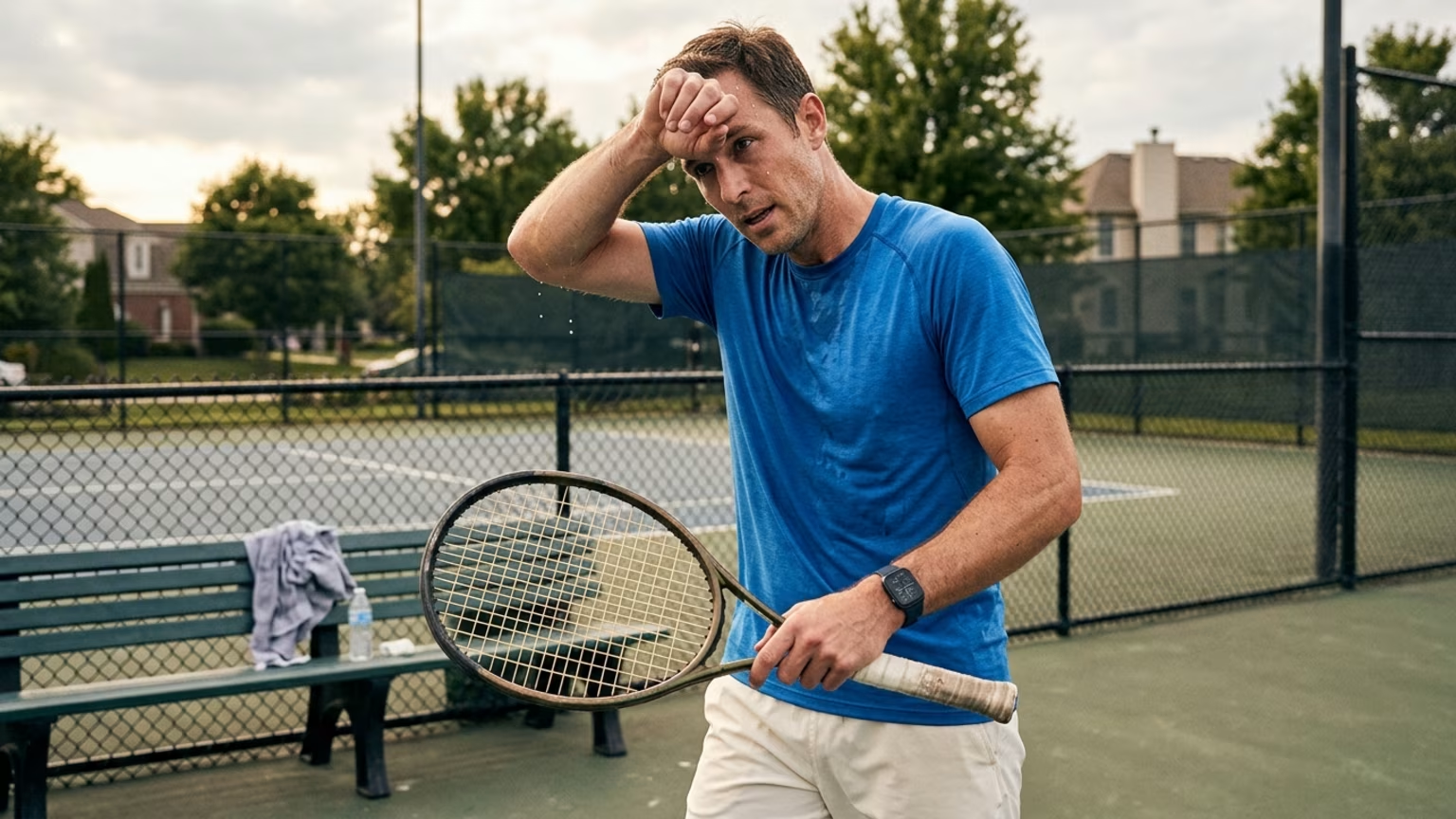
In late 2026, Oura analyzed wearable data to see how recreational tennis impacts heart health and recovery. Learn what this means for your athletic longevity.
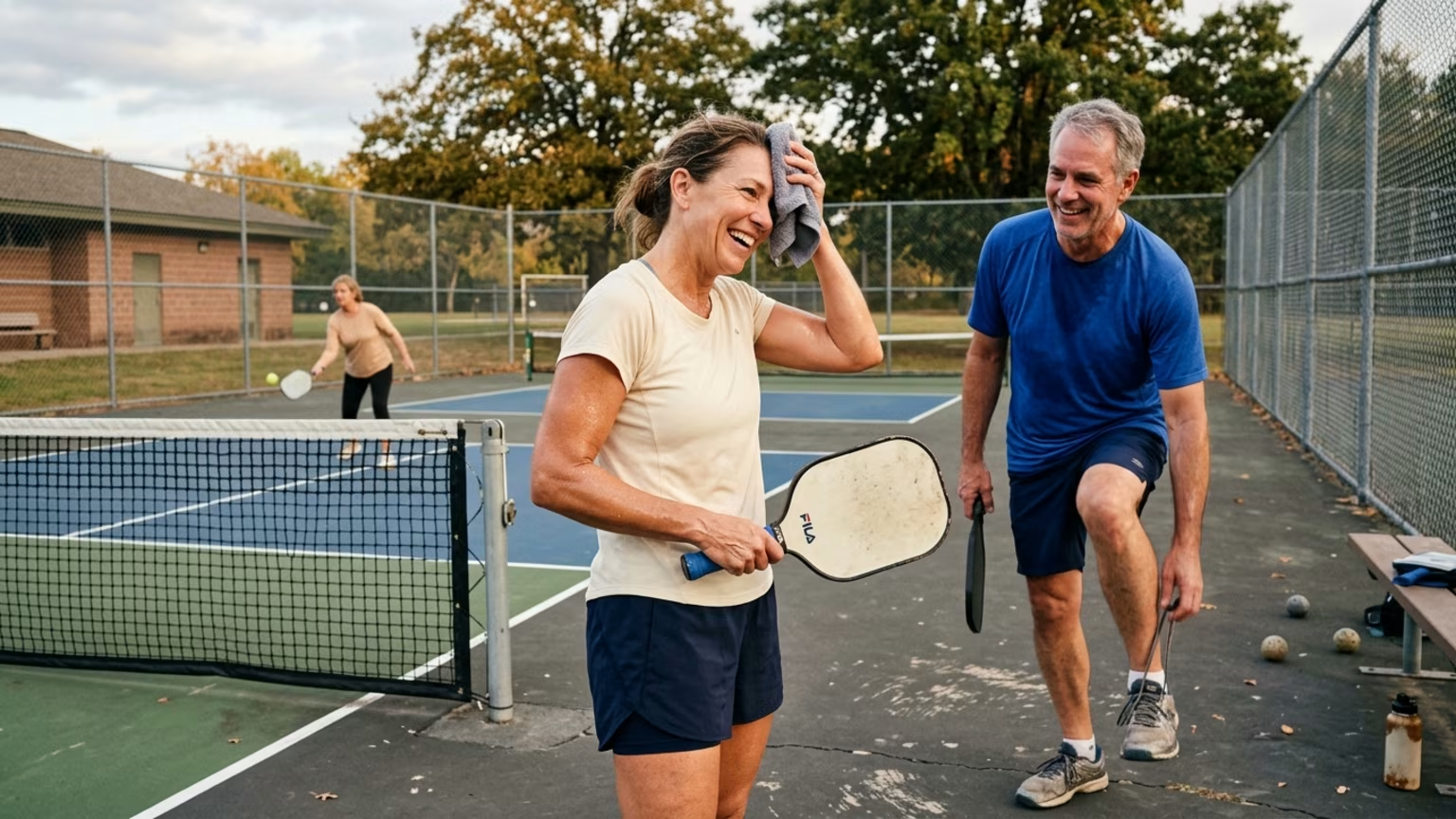
Recent guidelines emphasize gradual progression, dynamic warm-ups, and scheduled recovery to help adult racquet sports players maintain athletic longevity.
Read practical guidance for better movement, smarter preparation and a game that keeps working for you.
explore the Blog
