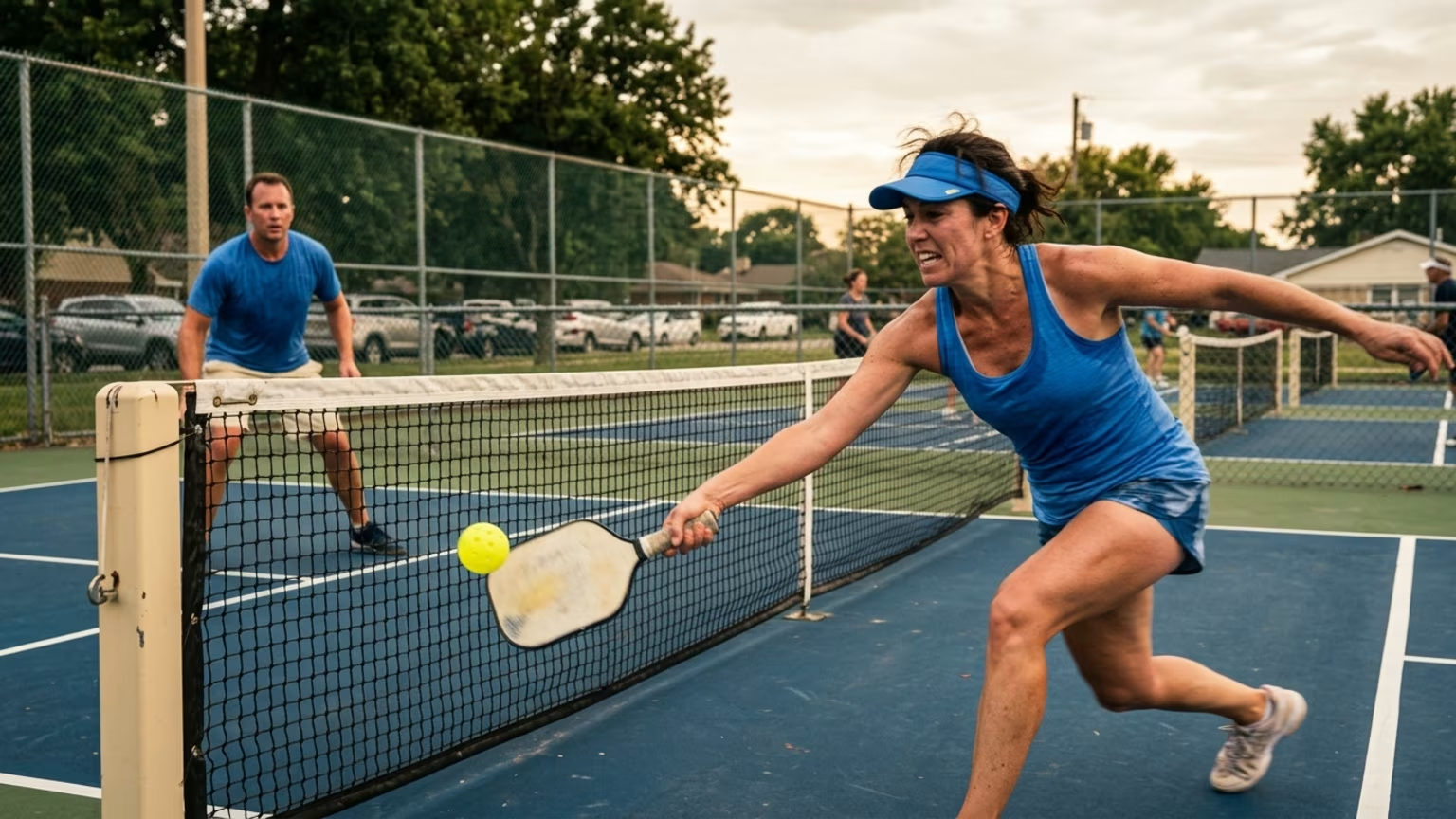

Pickleball.com recently highlighted four mistakes holding players back. Learn why recognizing red flags and stopping before contact reduces unforced errors.




On September 23, 2026, Pickleball.com published a coaching article identifying four correctable mistakes that hold players back on the court. The publication attributes the foundational advice to Professional Pickleball Association Tour professional Ashley Griffith. The focus is squarely on decision-making and court positioning rather than hitting harder. Pickleball.com argues that players can improve their performance simply by recognizing trouble situations and arriving balanced before the next shot.
The article emphasizes that adult players do not need to hit spectacular winners to control a rally. It suggests that a player can gain a significant advantage just by cutting down on avoidable errors. The core premise is that most unforced errors stem from poor setup rather than a flawed swing. By adjusting their movement and choices, players can reduce mistakes without needing a completely new technique.
The Pickleball.com article identifies four specific areas for players to examine during their matches. The first is a failure to recognize personal trouble spots or recurring difficult situations. The source refers to these uncomfortable moments as red flags. Examples include deep overheads, short awkward dinks, and stretched backhands.
When these situations arise, the recommended response is to choose a safer option. Players often make the mistake of forcing an aggressive attack from a weak or compromised position. Pickleball.com advises that recognizing a red flag should trigger a defensive or neutral shot selection. This reduces the likelihood of giving the opponent an easy point.
The second highlighted issue is giving opponents the exact same ball repeatedly. Pickleball.com recommends varying height, speed, and placement to prevent opponents from settling into a comfortable rhythm. The goal is to force an adjustment rather than attempting to hit an outright winner on every single swing. Consistent variation can often produce a more attackable ball from the opponent.
The third mistake involves failing to recover effectively after a poor shot or a popup. After hitting a weak ball, players frequently continue moving forward blindly or simply watch their mistake. Pickleball.com advises immediately switching to a defensive posture to handle the inevitable attack. Players should get low, set their paddle, and prepare for immediate pressure.
During transition play, the Pickleball.com article offers specific guidance for navigating the middle of the court. It advises players not to continue charging forward blindly after hitting a weak transition ball. Instead, players should stop their momentum, defend the next shot, and carefully work their way back into the point. This deliberate pacing prevents opponents from easily hitting the ball at the feet of a moving target.
The final mistake is being unbalanced when the opponent makes contact with the ball. To fix this, the article recommends using a split step or a small hop. This action establishes a balanced base before the opponent hits. This creates a solid foundation from which the player can react efficiently in either direction.
Related coaching coverage from The Dink similarly describes the split step as a pre-contact reset. This small weight transfer helps players stop their forward momentum entirely. The Dink advises remaining low with bent knees while covering the most likely return angle. The consensus is that stopping before the ball is struck is essential for consistent court coverage.
Professional players like Ashley Griffith rely on elite reaction times and intensive conditioning to recover from difficult court positions. Adult recreational players face a different physical reality when trying to maintain athletic longevity. The recent coaching coverage highlights that adult players do not necessarily need faster hands to win points. They simply need to recognize preparation and movement mistakes and become ready sooner.
Elite professionals can sometimes get away with lunging for a shot and relying on sheer athleticism to recover. Recreational players who attempt the same off-balance saves often risk tweaking a joint or losing the point entirely. Applying the Pickleball.com guidance means making your lower body base the absolute priority. If you are reaching or lunging from an unstable position, you must favor a lower-risk shot.
When I first started playing pickleball, I noticed how many people skipped warming up entirely. They would jump straight out of their cars and right up to the kitchen line. I tried doing that and immediately pulled a calf muscle. Pickleball requires just as much explosive lateral movement as tennis, just in a tighter space.
Since then, I always spend five minutes doing dynamic lunges and ankle rolls. It changes everything about how confident I feel pushing off the baseline. This physical readiness is specifically required to execute a proper split step safely. Stopping your momentum repeatedly requires basic lower body strength and disciplined footwork.
You can learn ways to prepare your body with a 12-minute court-ready warm-up before stepping onto the court. The Dink notes that players should be settled and balanced just before the opponent makes contact. Drifting through a shot is a major cause of late reactions and awkward contact. You can learn more about building a solid court foundation through formal basics training designed for recreational players.
It is worth noting that this advice is presented as practical professional guidance rather than independently verified performance science. The primary Pickleball.com article does not provide match data, a controlled training study, or a quantified improvement in DUPR. While the author mentions that cutting just a few unforced errors can change results, no specific reduction is measured. Adult players should view these tips as sensible coaching cues rather than proven rating boosters.
Players can practice stopping before contact during their regular warmups. Treat every weak ball as a clear cue to recover defensively rather than rushing the net. A recreational player who arrives balanced will consistently outplay someone who relies entirely on rushed reflexes. Better preparation keeps the game enjoyable and physically sustainable for years to come.
The coaching emphasis in pickleball is clearly shifting away from raw power and spectacular shot-making. Instructional content now prioritizes balance, court positioning, and smart decision-making over pure swing speed. This trend will likely continue as more adult players look for ways to improve without risking their joints. A focus on fundamentals allows players to refine their game safely.
Over the next season, expect local clinics and instructional platforms to focus heavily on the mechanics of the split step. Coaches will likely spend less time teaching players how to hit winners from the baseline. Instead, instruction will center on arriving balanced at the kitchen line and resetting after a poor defensive ball. This pragmatic approach supports better play while keeping players healthy on the court.
We will also see a growing appreciation for defensive transitions in recreational leagues. As players realize that blind charges lead to easy passing shots, patience will become a prized skill. The standard for good pickleball will increasingly emphasize smart court management over aggressive attacks. This shift mirrors the structured training models currently redefining recreational play.
Players who adopt these four adjustments now will find themselves better equipped for competitive matches. They will make fewer unforced errors and put less unnecessary strain on their bodies. Ultimately, the future of amateur pickleball lies in smarter movement and precise preparation.
Follow Evercourts for practical insights on tennis, pickleball and padel performance, movement, recovery and healthy ageing. Stay connected for new articles, research-led guidance and ideas to help you play well and keep playing for years.


An evidence check on sports supplements like tart cherry juice. Learn why racquet sports players should prioritize core nutrition over functional foods.
In late 2026, Oura analyzed wearable data to see how recreational tennis impacts heart health and recovery. Learn what this means for your athletic longevity.
Recent guidelines emphasize gradual progression, dynamic warm-ups, and scheduled recovery to help adult racquet sports players maintain athletic longevity.
Read practical guidance for better movement, smarter preparation and a game that keeps working for you.
explore the Blog
