

A French tennis club's recent season restart highlights the importance of structured re-entry for adult players returning to racquet sports after a long break.




La Dépêche du Midi reported on September 11 that the Longages tennis club had officially resumed its activities the previous Saturday. The September 5 restart marked the beginning of a structured re-entry period for local adult players. After a long summer break away from the courts, the facility initiated an organized return rather than simply opening the gates for immediate competition. This calculated resumption highlights a highly practical approach to rebuilding seasonal match fitness.
A local municipal notice showed the Longages tennis club scheduling an open afternoon from 2 p.m. to 4 p.m. on September 5. This dedicated afternoon court session immediately followed a morning association forum for the surrounding community. The accessible evidence does not disclose the club’s full adult training timetable, coaching staff roster, or specific workload progressions. However, this formal early-September restart mirrors a broader organizational pattern across regional French racquet sports facilities.
Other published club schedules show that restart programming is frequently divided by playing level and participation type. Facilities routinely separate competitor training, leisure play, beginners, and specific adult courses onto entirely different dates. This separation ensures that players returning from a long layoff are grouped appropriately for their physical readiness. It prevents the common mistake of placing a rusty recreational player into a high-intensity competitive drill on day one.
The contrast between a casual open house and a formal league night is significant for returning athletes. During an open session, the pressure to chase down wide shots or hit aggressive passing angles drops dramatically. This softer environment encourages players to focus on their footwork and court positioning instead of winning points. Removing the scoreboard from your first day back is a highly effective way to manage physical stress.
The primary focus for clubs during this seasonal transition is clearly on assessment and safe onboarding. By hosting an open afternoon, the Longages club provided a low-pressure environment for members to test their current fitness. Players can gauge their mobility and baseline timing before committing to full league matches. Easing back into the sport through organized events reduces the initial physical shock of sudden lateral movement.
Professional players rarely take complete breaks from active physical conditioning. Their designated off-season consists of carefully managed training blocks to ensure they return to the court fully prepared. For adult recreational players, a summer break often means a complete cessation of racquet sports and intense athletic movement. Transitioning directly from two months of inactivity into a competitive singles match is a reliable way to sustain an injury.
The recreational reality requires a conscious and disciplined easing-in period. We suggest treating the first few weeks of your fall season as a dedicated practice block. Our team at Evercourts emphasizes the need to rebuild your court exposure gradually. Start with controlled hitting sessions before you make every single outing a full competitive match.
Skipping the preparation phase entirely is an incredibly common error among amateur players. As a member of our team noted: "I remember finishing a tough two hour padel match on a cold Tuesday night and waking up the next morning feeling like my lower back was locked in concrete. For a long time, I just accepted this as the price of playing hard in my forties. But once I started spending just ten minutes on targeted hip mobility before heading to the club, the stiffness almost completely vanished. It taught me that we do not have to accept pain as a default state of aging."
A structured return to the court requires intentional warm-ups and highly measured intensity. If your local facility does not offer a formalized re-entry program, you must build one yourself. Securing a complete weekly training blueprint can help properly structure your first month back. Focus heavily on smooth technical work, dynamic movement preparation, and controlled baseline rallies.
Rebuilding your groundstrokes should take precedence over practicing maximum-effort serves during these initial practice days. The serving motion places immense stress on the shoulder and core after a period of prolonged rest. Hitting smooth baseline rallies allows your body to reacquaint itself with the specific rotational demands of the sport. Gradual progression always yields better results than forcing a rusty kinetic chain into aggressive overhead motions.
Accepting a temporary drop in performance is often the hardest part of returning from a seasonal break. Your timing will feel delayed and your court coverage will naturally be slower during those first few outings. Fighting through this rust by overexerting yourself is a primary catalyst for early-season calf and Achilles injuries. Patience during this brief transitional window protects your ability to compete for the entire calendar year.
Using smaller courts can also serve as an excellent bridge for veterans recovering their match fitness. Understanding why smaller courts and slower balls offer older players a sustainable option provides valuable context for pacing your return. It allows you to refine your timing without the exhausting demands of covering a full baseline.
Verifiable data on structured court sessions provides a highly useful framework for returning players. USTA programming examples commonly combine a conditioning warm-up with technical instruction, drills, game-based strategy, practice play and a cool-down. Using this exact progressive sequence during your first few weeks back ensures you are physically prepared before points are tallied. A practice session that visibly includes dedicated physical preparation and a proper cool-down heavily protects vulnerable joints.
Overall weekly activity should always remain appropriate to your specific age and current conditioning level. The Centers for Disease Control and Prevention recommends at least 150 minutes of moderate activity weekly for adults. They explicitly note that individual limitations or underlying health conditions may require adjustments to this baseline. Returning adult players should aim to meet these guidelines gradually rather than hitting that volume in week one.
Translating these CDC activity targets to the court means pacing your sessions carefully during the initial weeks. A single two-hour tennis or pickleball session can easily fulfill a large portion of your weekly moderate activity goal. However, cramming all that activity into one exhaustive weekend outing drastically increases your risk of joint inflammation. Spreading your court time across several shorter sessions provides a much safer pathway back to full match fitness.
The long-term benefits of consistent court time are substantial when you successfully avoid early-season injuries. A 2026 systematic review indexed by PubMed reported that higher physical-activity levels were associated with lower risks of all-cause dementia, Alzheimer’s disease, and vascular dementia. The same review cautioned that associations varied by activity domain and showed substantial heterogeneity. Athletic longevity requires a highly sustainable approach to your training calendar.
Protecting your body while pursuing these activity targets requires intelligent scheduling. Utilizing targeted neuromuscular training to protect adult players during your specific restart phase can further support these goals. Building joint resilience slowly ensures you can stay on the court without medical interruption. Rest and proper load management are just as vital as your forehand mechanics.
Understanding your personal limits is essential when implementing a new activity schedule. Proper training load management for adult players prevents the sudden spikes in intensity that typically lead to tendon issues. A sensible return protocol respects the physical transition from a sedentary summer break back to aggressive lateral movement. Measuring your efforts early on pays immense dividends during the later months of the competitive calendar.
Expect more community tennis, pickleball, and padel facilities to formalize their return-to-play protocols over the next competitive season. The traditional model of simply opening the courts and letting members sort themselves out is slowly fading. Clubs are increasingly recognizing that structured, progressive re-entry sessions keep their adult members healthier and actively engaged longer. As facilities adopt these phased starts, adult recreational players will greatly benefit from a safer bridge between off-season rest and mid-season competition.
The most successful adult players are those who treat their bodies with the same respect as a professional athlete. This does not require spending hours in a gym or hiring a full-time physical therapist. It simply means listening to your joints and respecting the basic principles of athletic recovery. By adopting the structured approach seen in successful club restarts, you can secure many more years of competitive play.
Follow Evercourts for practical insights on tennis, pickleball and padel performance, movement, recovery and healthy ageing. Stay connected for new articles, research-led guidance and ideas to help you play well and keep playing for years.


An evidence check on sports supplements like tart cherry juice. Learn why racquet sports players should prioritize core nutrition over functional foods.
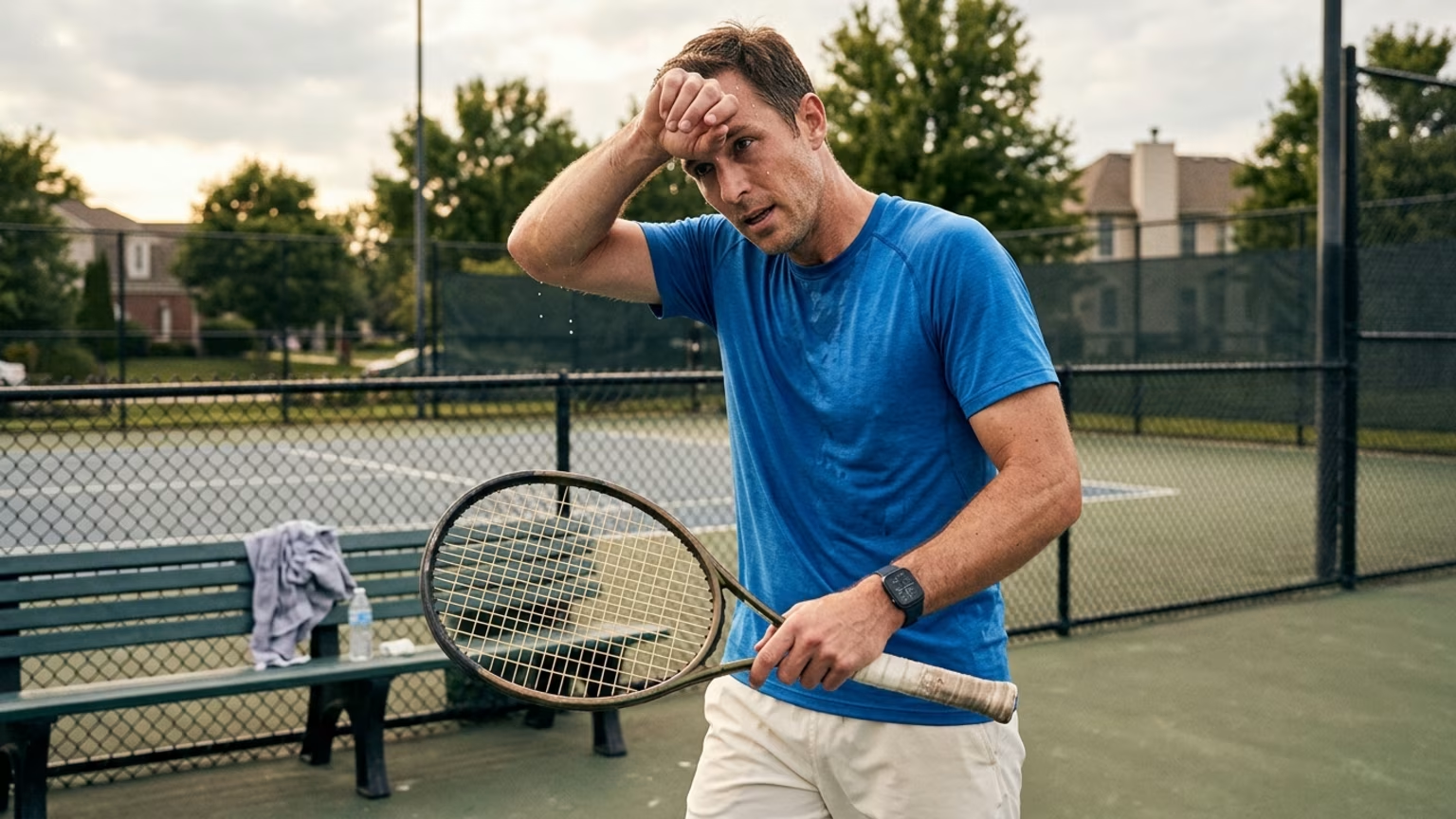
In late 2026, Oura analyzed wearable data to see how recreational tennis impacts heart health and recovery. Learn what this means for your athletic longevity.
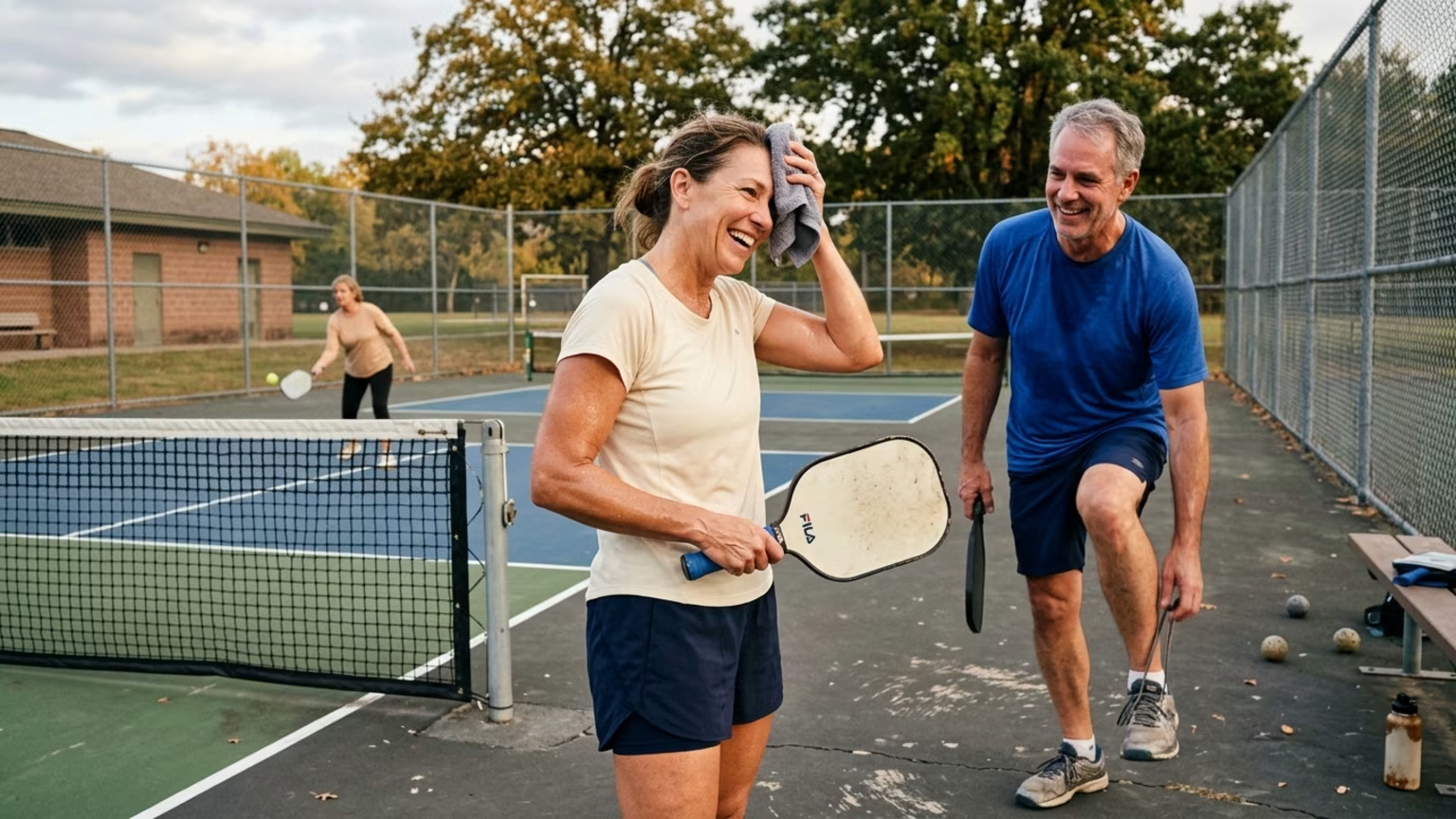
Recent guidelines emphasize gradual progression, dynamic warm-ups, and scheduled recovery to help adult racquet sports players maintain athletic longevity.
Read practical guidance for better movement, smarter preparation and a game that keeps working for you.
explore the Blog
