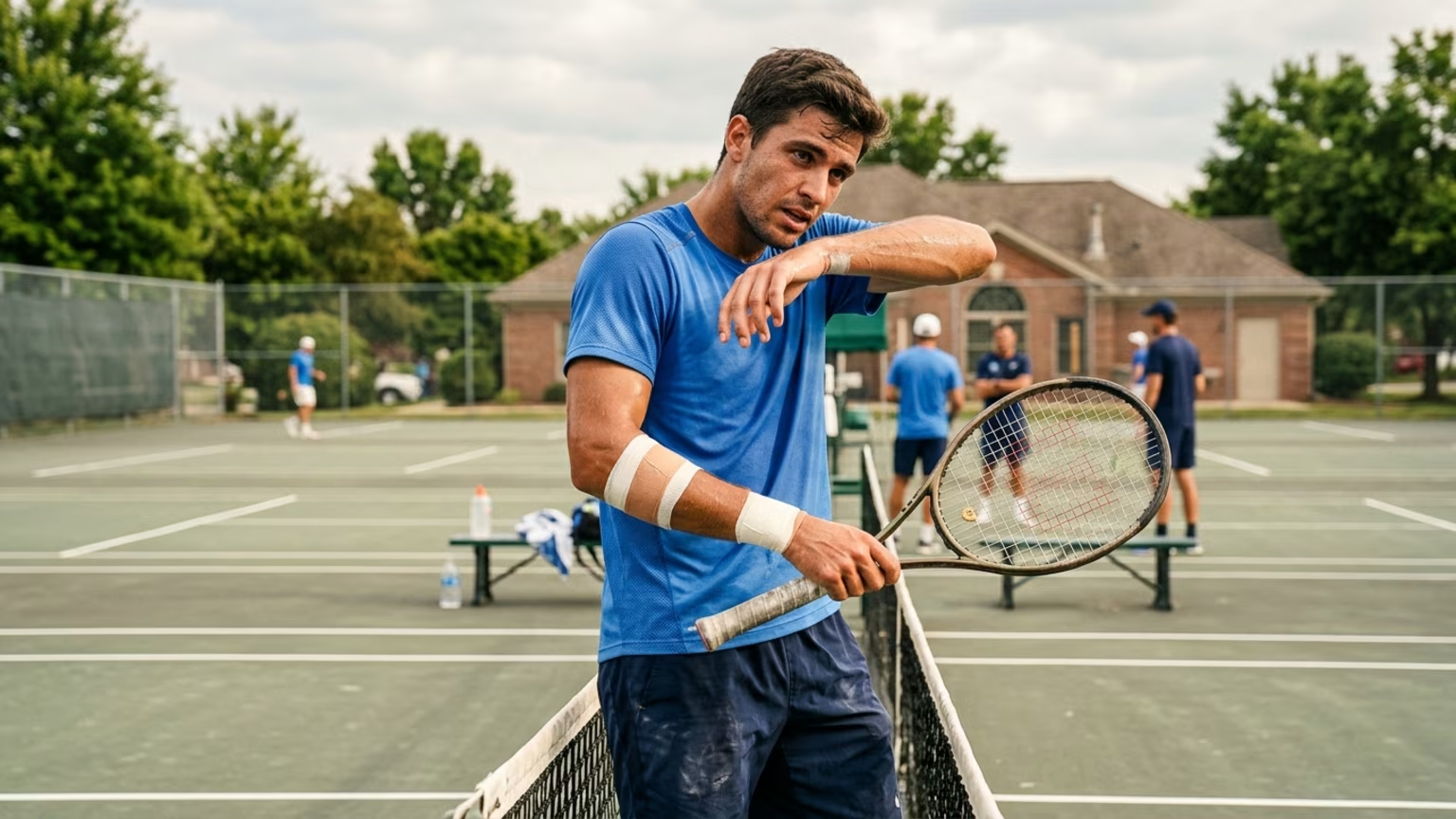

João Fonseca’s emotional Davis Cup return for Brazil highlights the complex balance between emotional motivation and physical readiness for racquet players.




On September 19, 2026, João Fonseca returned to competitive tennis for Brazil in the Davis Cup following an injury-related absence. The 20-year-old defeated Switzerland's Dominic Stricker 4-6, 6-3, 6-2 in Rio de Janeiro to give his country an early lead in the tie. This match marked his first competitive appearance since he retired from the Cincinnati Masters 1000. An abdominal injury had previously forced the young player to skip the 2026 US Open entirely.
Before taking the court for the Davis Cup tie, João Fonseca acknowledged he had not arrived at full fitness. He told reporters he could not guarantee beforehand that he would be able to play at all. The Brazilian player described experiencing a difficult year marked by a lack of confidence and multiple injuries. Reports noted his season included a Roland Garros quarterfinal run and an important comeback against Novak Djokovic before physical setbacks disrupted his progress.
Despite his uncertain physical condition, he chose to compete because representing his country mattered deeply to him. After securing the victory on an indoor hard court at Farmasi Arena, he broke down in tears. Coverage linked this emotional reaction directly to the significance of playing at home and successfully returning from a physical setback. The official Davis Cup player listing noted he was 20 years old and ranked No. 29 in singles at the time of the event.
Fonseca stated that the victory could provide him with vital confidence and maturity for the remainder of his career. However, the available reporting did not present his return as an official medical clearance or proof of full recovery. The coverage instead emphasized his own admission that he was competing below 100 percent capacity. His team supported his decision to play while actively trying to prevent further injuries as much as possible.
Brazil eventually increased their lead to 2-0 when Gustavo Heide defeated Stan Wawrinka 4-6, 7-6, 6-4. The winner of this specific tie was scheduled to advance to the 2027 World Group qualifying rounds. For the Brazilian player, the focus now shifts back to managing his physical condition over the coming weeks. His recent US Open withdrawal due to an abdominal injury remains a crucial factor in his ongoing workload management.
The Davis Cup event highlights a common tension between a strong desire to play and an incomplete state of physical readiness. Elite professionals like João Fonseca operate with dedicated coaching staffs and medical resources that adult recreational players do not possess. When a professional athlete pushes through an injury for national duty, they are making a highly calculated decision within a specific support system. Recreational players should not use this professional example as a medical endorsement to compete through pain.
Weighing personal motivation against medical clearance is a constant challenge for competitive club players. A successful comeback match does not automatically prove that an underlying physical issue has fully resolved. You must clearly separate your emotional readiness from your actual physical capacity when deciding to step onto the court. If you are dealing with worsening or function-limiting symptoms, you should seek an individualized assessment from a qualified health professional.
The tension between physical readiness and the urge to compete is a central issue in all racquet sports. Elite athletes often face intense external pressure and emotional incentives to perform on large stages regardless of their physical state. João Fonseca openly admitted that his strong motivation to represent Brazil drove his decision to take the court. Adult league players often feel similar internal pressure to support their doubles partner or complete a club tournament.
In our experience, adult players often misjudge the difference between normal fatigue and restrictive joint pain. I remember finishing a tough two hour padel match on a cold Tuesday night and waking up the next morning feeling like my lower back was locked in concrete. For a long time, I just accepted this as the price of playing hard in my forties. But once I started spending just ten minutes on targeted hip mobility before heading to the club, the stiffness almost completely vanished and taught me that we do not have to accept pain as a default state of aging.
Understanding your own physical limitations is crucial for sustaining your time on the court over the long term. A history of interrupted seasons usually indicates that a player is returning to competition before fully rehabilitating a physical issue. Building your physical resilience requires dedicated time away from intense match play to allow your body to recover. Engaging in concurrent training for racquet sports allows you to maintain your overall fitness without overloading a vulnerable joint or muscle group.
When recovering from a physical setback, returning to play does not have to be an all-or-nothing choice. You can preserve your court continuity by modifying your session rather than jumping straight into a competitive league match. Reducing your court time or focusing strictly on technical hitting can help you manage your workload safely. Learning how to build a weekly racquet sports routine ensures that you are progressively loading your body rather than risking another setback.
Your decision to play should always center around the next several weeks rather than a single match. Professional players often endure interrupted calendars when they rush back to the court before they are physically prepared. Adult players must treat confidence as a part of the return process rather than a substitute for physical readiness. Reviewing a pragmatic return-to-play framework can help you set realistic expectations for your own recovery timeline and long term performance.
Looking ahead, the tennis community will watch how João Fonseca manages his tournament schedule for the remainder of the season. His candid comments about confidence and physical readiness highlight a growing awareness among players regarding sustainable workload management. He acknowledged that injuries happen in an athletic career and that his team is actively trying to prevent them. We expect to see more professionals openly discussing the complex balance between emotional motivation and absolute medical clearance.
For the adult competitive player, this ongoing trend reinforces the need to prioritize functional readiness over pure emotional drive. The line between competing below absolute fitness and risking a major injury requires careful personal assessment and professional guidance. As players return to indoor courts this season, the primary focus should remain on progressive loading and targeted physical preparation. Prioritizing your physical foundation will ensure you can keep stepping onto the court for years to come.
Follow Evercourts for practical insights on tennis, pickleball and padel performance, movement, recovery and healthy ageing. Stay connected for new articles, research-led guidance and ideas to help you play well and keep playing for years.


An evidence check on sports supplements like tart cherry juice. Learn why racquet sports players should prioritize core nutrition over functional foods.
In late 2026, Oura analyzed wearable data to see how recreational tennis impacts heart health and recovery. Learn what this means for your athletic longevity.
Recent guidelines emphasize gradual progression, dynamic warm-ups, and scheduled recovery to help adult racquet sports players maintain athletic longevity.
Read practical guidance for better movement, smarter preparation and a game that keeps working for you.
explore the Blog
