

A 15-year Swedish study links long meal gaps to faster chronic illness accumulation in adults over 78. Learn practical fueling tips for older racquet players.




In 2026, a 15-year Swedish study reported that long daily gaps between meals are associated with faster chronic disease accumulation in older adults. The research focused on participants aged 78 and older from the Swedish National study on Aging and Care in Kungsholmen. Investigators found that habitual fasting intervals of 14 to 24 hours corresponded with higher rates of cardiovascular and neuropsychiatric diseases over time. This observational research challenges the universal application of extended intermittent fasting routines for older adults.
The longitudinal study examined 2,981 predominantly community-dwelling adults aged 60 and older. Researchers collected dietary information across approximately six years, while chronic-disease data covered approximately 15 years. The objective was to determine whether the longest interval between two typical eating occasions during a 24-hour period affected health outcomes.
The study categorized participants based on their observed meal timing. This included meal skipping caused by appetite loss, illness, or other circumstances rather than just intentional intermittent fasting. Participants were assessed every six years if they were younger than 78, and every three years if they were at least 78. The research found that the longest-gap group averaged approximately 3.21 eating occasions per day, compared with approximately 5.20 in the reference group. The longest-gap group also had a higher average age of approximately 79.4 years, compared with 71.0 years in the reference group.
The modern fitness landscape often promotes intermittent fasting to high-level athletes seeking performance gains. However, this study highlights a different reality for the adult recreational player focused on athletic longevity. Older adults attempting to maintain their court time should be cautious about adopting extreme fasting windows. Tennis, pickleball, and padel place repeated demands on movement, reaction speed, and recovery.
Professional players might experiment with strict eating windows under close medical supervision. For weekend league players, long fasting intervals can unintentionally crowd out the energy and nutrients required for a demanding session. A separate padel nutrition source similarly recommends a carbohydrate-based meal two to three hours before playing, and a small snack during the final hour if the interval before play is long. Attempting to play a competitive match after a 14-hour fast often leaves recreational players under-fueled and vulnerable to fatigue.
Our team at Evercourts has seen the consequences of poor timing firsthand. I used to think a tough conditioning block was the only way to improve my court endurance. Then I started tracking my sleep. I noticed that on days I slept less than six hours, my reaction time at the net was noticeably sluggish, and I felt gassed by the second set.
Prioritizing consistent rest did more for my late match stamina than any extra sprints ever did. Recovery is the true foundation of performance. Similar principles apply to nutrition, where consistent habits beat extreme deprivation. By distributing 25 to 35 grams of high-quality protein across meals, older players can support sustainable training routines without compromising energy levels.
The data reveals a clear segmentation in how older adults space their eating occasions. Participants were divided into four distinct groups based on their longest daily meal gaps. The reference group maintained an interval of 6 to 11.5 hours and made up 23.5 percent of the cohort. The second group held a gap of 11.5 to 12.75 hours, representing 24.8 percent of participants. The third group recorded a 12.75 to 14-hour gap, accounting for 29.7 percent. The final group, which practiced a 14 to 24-hour interval, made up 22.0 percent of the study population.
After adjusting for various health and lifestyle factors, individuals with a 14 to 24-hour habitual gap showed a steeper annual accumulation of total chronic diseases compared to the 6 to 11.5-hour group. The fully adjusted estimate for this association was β = 0.119. The study also reported an association for cardiovascular diseases at β = 0.022, and neuropsychiatric diseases at β = 0.019 compared with the reference group.
Age served as a critical modifier in these findings. Among adults aged 78 and older, the 14 to 24-hour group had a total chronic-disease accumulation estimate of β = 0.099. In the age-stratified analysis, the 12.75 to 14-hour group was also associated with higher total-disease accumulation among adults aged 78 and older. For every additional hour of habitual fasting in this older demographic, there was a β = 0.014 higher annual total-disease accumulation.
When viewing these statistics, it is important to remember the observational nature of the research. Observational research reviewed in racquet-sports coverage has associated racquet-sport participation with lower all-cause and cardiovascular mortality. One cited British cohort followed 80,306 adults for an average of approximately nine years. That study found racquet-sport participation was associated with a 47 percent lower risk of all-cause death, and a 56 percent lower risk of cardiovascular death compared with non-participation.
The researchers suggested several possible explanations for why prolonged meal gaps might correlate with disease in older demographics. These potential factors include reduced digestive capacity, lower nutrient absorption, and age-related anabolic resistance. Older adults often have fewer opportunities to stimulate muscle protein synthesis when eating infrequently. The authors also pointed to blood-glucose vulnerability and sarcopenia as plausible explanations rather than demonstrated causal pathways.
It is crucial to recognize the limitations of this observational research. The study identified an association rather than proving that longer fasting directly caused chronic disease accumulation. Reverse causation remains a strong possibility in this dataset. Existing disease, appetite loss, frailty, or medication use may have contributed to longer meal gaps. Furthermore, meal timing was self-reported, which introduces the possibility of recall error.
The researchers used the longest gap between eating occasions as their primary metric. They treated a late-night snack as equivalent to a full eating occasion, which might not accurately represent metabolic exposure. The findings also do not establish that all fasting is harmful after 78, or that a standard 12-hour overnight interval is inherently unsafe. The 6 to 11.5-hour reference group was simply a comparison category and should not be treated as a universally optimal schedule.
Players managing specific health conditions need to exercise additional caution before altering their eating schedules. Athletes with diabetes, kidney disease, or complex medication routines should obtain individualized medical or dietetic guidance. Unintended weight loss and swallowing problems are also significant factors that require professional oversight. The study specifically highlighted medication compatibility and nutrient adequacy as vital considerations for adults aged 78 and older.
The study noted that longer fasting in later life could increase the risk of inadequate energy or nutrient intake. For racquet-sports players, insufficient energy translates directly to poor court performance and longer recovery periods. Attempting to sustain an active tournament schedule on a restricted eating window can easily lead to under-fueling. A regular eating pattern should always emphasize adequate nutrition tailored to a player's specific body size and training load.
Players over 78 should avoid treating extreme fasting as a performance requirement. While the findings do not prove that intermittent fasting directly causes disease, they offer a clear reason to discuss prolonged eating gaps with a physician. Functional limitations, appetite loss, or complex medication schedules often complicate how older adults eat. Maintaining a regular feeding pattern helps ensure players meet their basic energy requirements for demanding court sessions. Protecting the pre-session meal is an essential step for sustaining stamina during long matches.
Senior-athlete nutrition guidance recommends distributing approximately 25 to 35 grams of protein across meals, rather than relying on a single large feeding. This strategy helps older athletes maintain muscle mass and recover from intense pickleball or tennis matches. Players should pair this protein with carbohydrates after play to help restore glycogen levels. Combining complex carbohydrates and proteins after competition supports long-term athletic longevity, which aligns closely with high-protein Mediterranean nutritional approaches.
Players need to adapt their nutrition schedules around court availability and tournament times. If a player has a long gap between their last meal and a late afternoon match, they must plan accordingly. A small, familiar snack consumed during the final hour before play can bridge the energy deficit. Proper cross-training across courts requires fueled muscles, meaning athletes cannot afford to start their sessions running on empty.
Looking ahead to the next competitive season, expect sports nutrition conversations to pivot away from strict fasting windows. Coaching and medical advice for older racquet players will likely emphasize protein distribution and targeted carbohydrate fueling around match times. As more players aim to stay active past their seventies, practical fueling strategies will take priority over restrictive diets. Consistent, moderate eating patterns will remain the standard recommendation for players committed to lifelong racquet sports.
Follow Evercourts for practical insights on tennis, pickleball and padel performance, movement, recovery and healthy ageing. Stay connected for new articles, research-led guidance and ideas to help you play well and keep playing for years.


An evidence check on sports supplements like tart cherry juice. Learn why racquet sports players should prioritize core nutrition over functional foods.
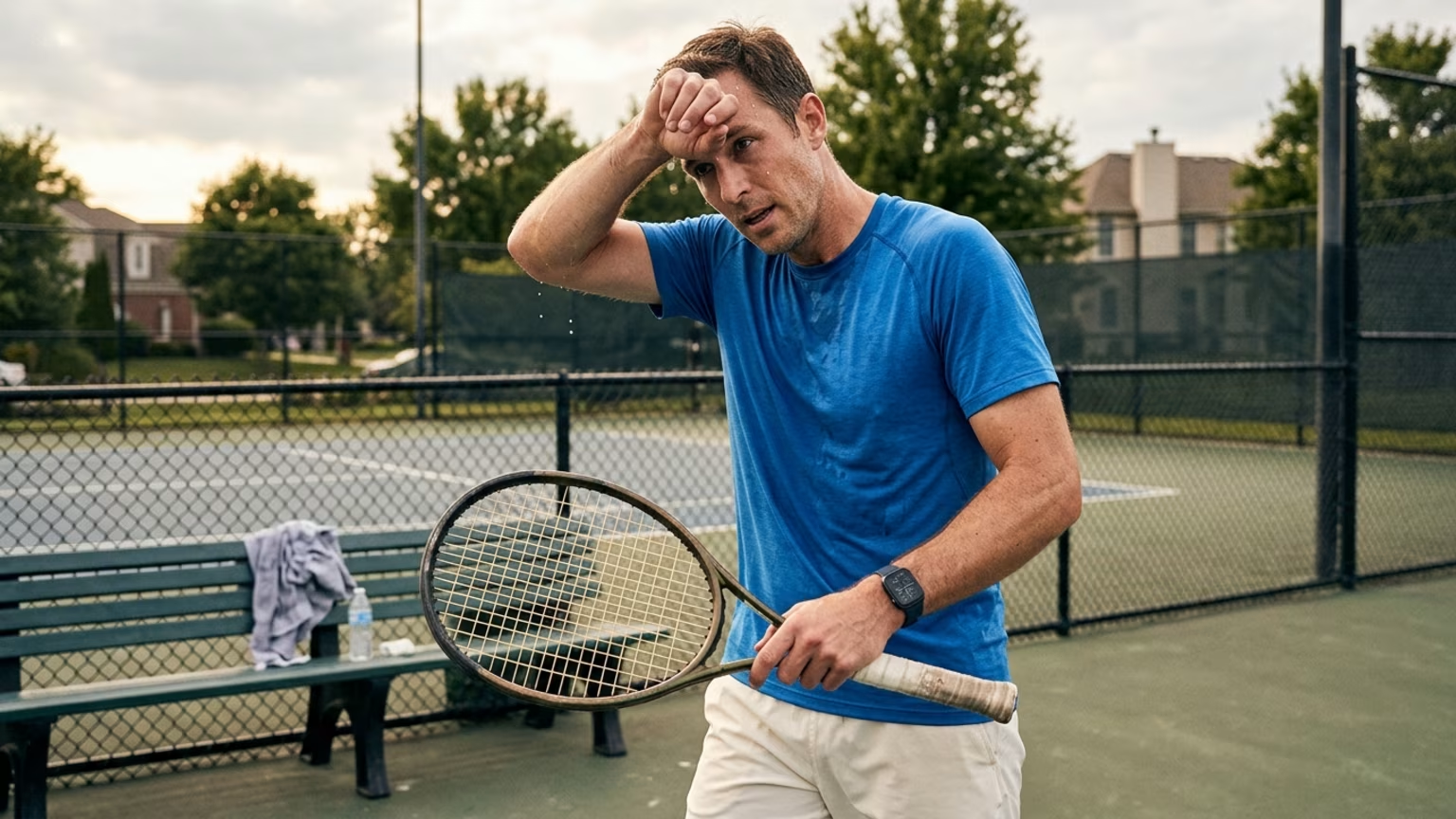
In late 2026, Oura analyzed wearable data to see how recreational tennis impacts heart health and recovery. Learn what this means for your athletic longevity.
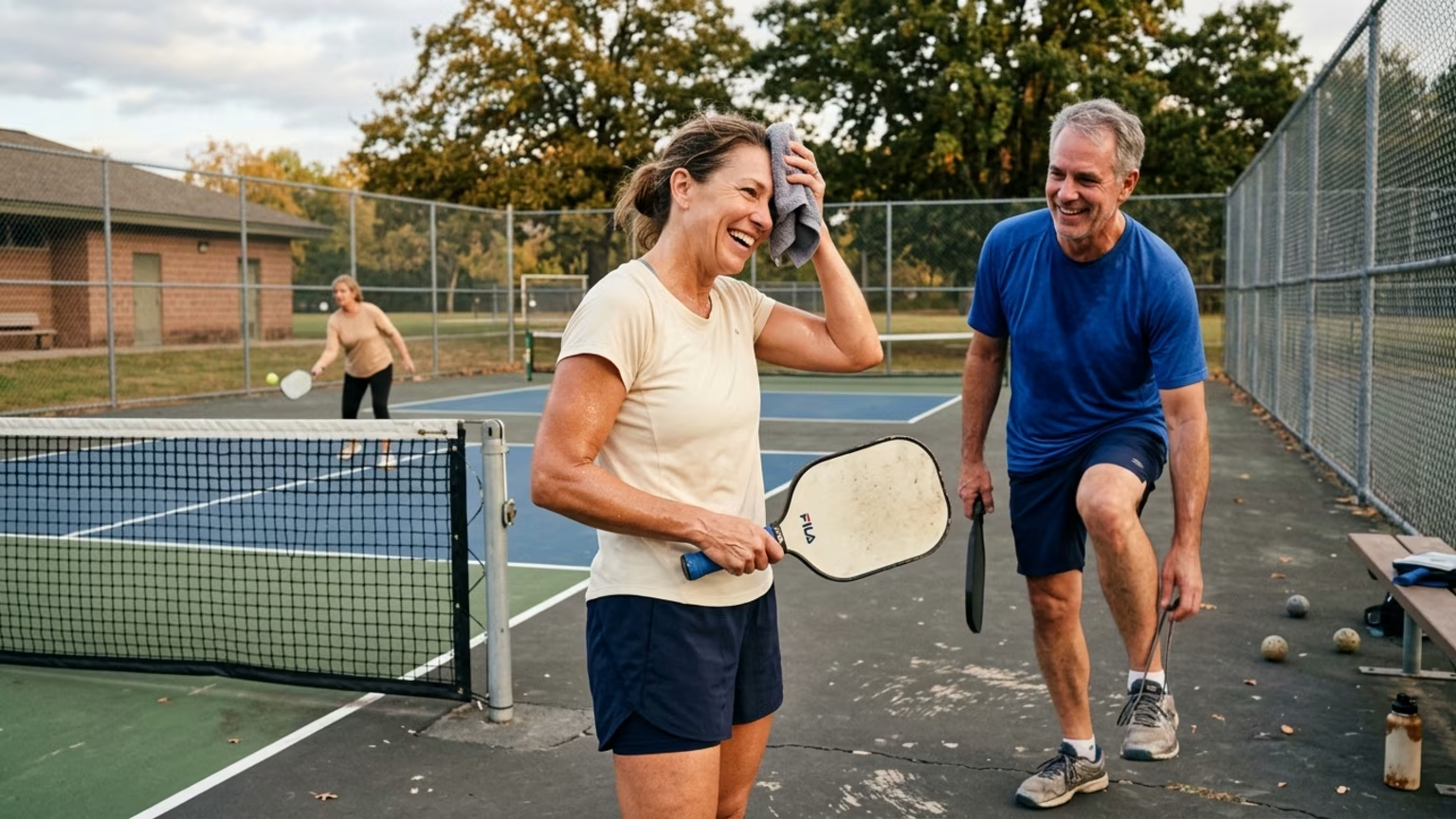
Recent guidelines emphasize gradual progression, dynamic warm-ups, and scheduled recovery to help adult racquet sports players maintain athletic longevity.
Read practical guidance for better movement, smarter preparation and a game that keeps working for you.
explore the Blog
