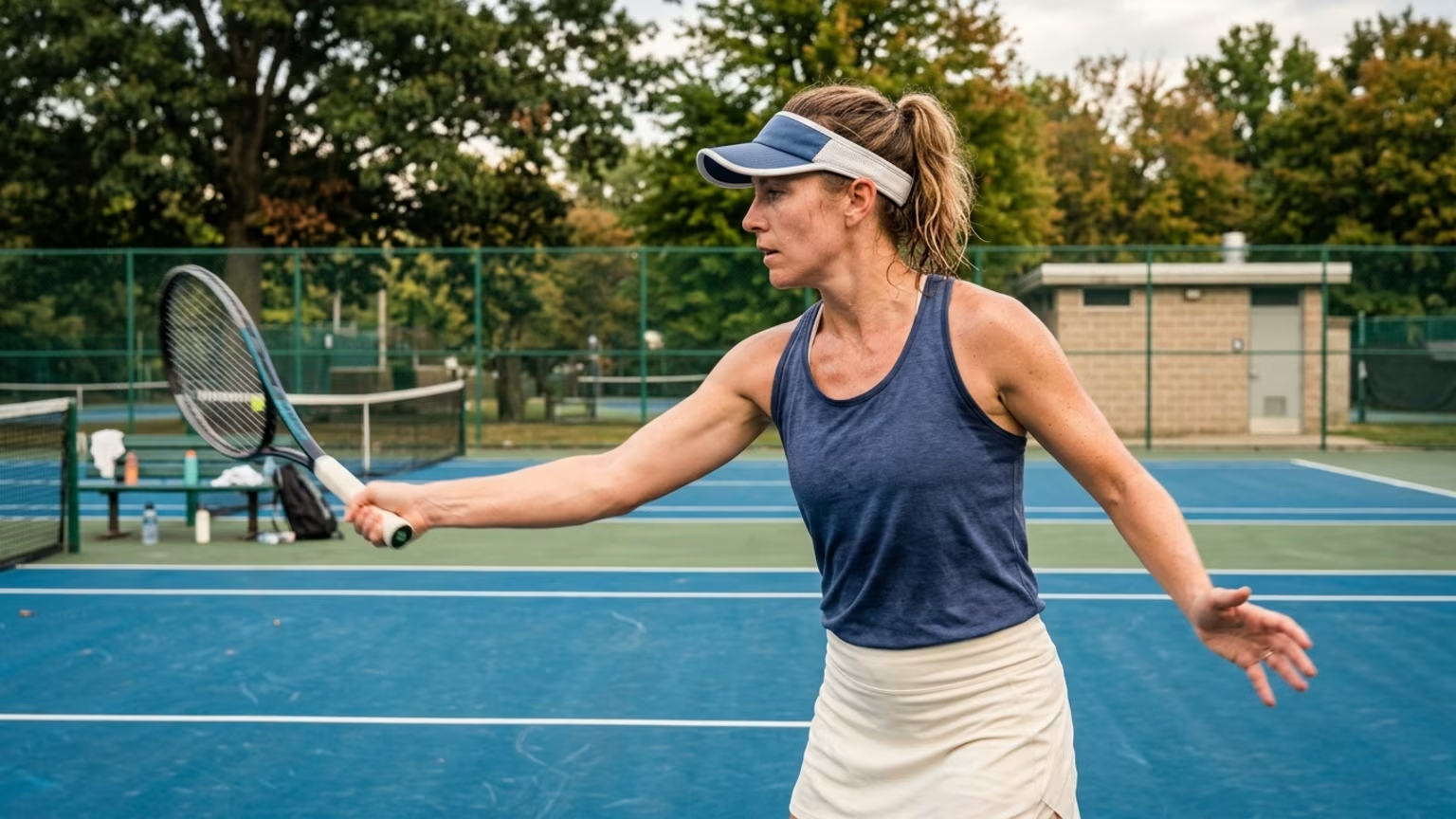

An analysis of the structural overuse injuries affecting professional tennis players in 2026, and what adult recreational players can learn about physical load.




On September 2, 2026, Carlos Alcaraz won his second-round match at the US Open and immediately warned reporters that a packed tennis calendar was contributing to player fatigue and injuries. His comments arrived right as the professional tour faced a stark reality check regarding player health. Ubitennis reports that Jack Draper will not return before the beginning of 2027 after recurring problems involving his left serving arm and knee. Meanwhile, Reuters reported that Jannik Sinner was also among the players forced to miss the 2026 US Open.
These high-profile absences highlight a broader physical toll across the professional circuit. Reuters noted that Holger Rune and Joao Fonseca also missed the 2026 US Open. An analysis published by Ubitennis identifies an even wider group of affected players, including Taylor Fritz dealing with knee tendinopathy and Arthur Fils experiencing a lengthy absence involving a back injury.
The publication describes this modern injury pattern as a crisis of structural overload rather than a series of isolated accidents. Claudio Zimaglia told Ubitennis that current tennis biomechanics transmit extreme force through the spine, shoulder, and wrist in extreme postures. Zimaglia associates these physical demands with specific clinical mechanisms across the entire body. He points to rotator-cuff damage resulting from violent deceleration and lumbar stress fractures tied to serve hyperextension.
He also notes that Achilles and patellar tendinopathies are frequently driven by explosive changes of direction and repeated hard-court impact. The professional scheduling structure magnifies these exact physical stresses. Reuters reported that seven of the nine ATP Masters 1000 tournaments have been expanded to 12 days since 2025. Mandatory obligations across Grand Slams and Masters events can require elite competitors to be active for roughly 40 weeks each year.
The ATP maintains that players control their own schedules and says it is working to encourage appropriate match loads during the season. Still, Alcaraz expects to take planned breaks of one or two months moving forward to avoid repeating the four-month wrist absence he endured earlier this year. Lapo Becherini, the physical trainer for Arthur Fils, noted that physical work combined with better tournament planning is intended to reduce forced stoppages. Becherini emphasized that evaluating feedback with medical staff is a crucial part of surviving the modern calendar.
Adult recreational players do not face a 40-week global travel mandate, but we still encounter similar mechanical stresses on the local courts. Our team consistently sees amateur players treat heavy serving and aggressive hard-court sliding as casual activities rather than high-load actions requiring dedicated physical preparation. A weekend league player might not hit the ball with the same force as Alcaraz, but sudden spikes in match volume or rapid surface changes can easily trigger similar tendon irritations. Understanding how wrist injuries affect court readiness requires acknowledging that every joint absorbs heavy deceleration forces during aggressive baseline rallies.
We have experienced this mechanical reality firsthand during our own evening matches. Following a challenging padel session on a cold Tuesday night recently, one of our editors woke up with profound lower back stiffness. Instead of accepting the pain as an inevitable reality of getting older, adopting a quick ten-minute routine of targeted hip mobility before heading to the club drastically reduced that lingering stiffness. The lesson is that we must actively manage repeated acceleration and rapid volume increases across every court sport.
Learning how to structure your tournament calendar is a critical step for preventing sudden physical overload. Recovery remains just as important as active court time for the adult athlete. Our team previously tracked sleep patterns to understand late-match stamina drops and concentration issues. On nights with fewer than six hours of rest, our reaction times at the net were noticeably sluggish and endurance plummeted by the second set.
Prioritizing consistent rest proved far more effective for match stamina than adding extra conditioning sessions to our weekly schedule. Getting adequate sleep is vital for managing demanding match schedules safely. When we fail to recover properly between sessions, minor tissue irritations can rapidly become chronic problems. Adults must remember that warm-up serves, basket drills, private lessons, and consecutive days of play all contribute to the total physical load.
The central warning from sports physiotherapists is that multiple stresses can accumulate across training and competition to create more wear than any single session appears to impose. Players should treat serving as a particularly high-load activity when adding heavy first serves or repeated kick serves to their game. Building volume progressively instead of moving abruptly from casual hitting to long tournament weekends provides the body with necessary time to adapt.
Recent reporting highlights exactly how much the sport has changed physically for competitors at every level. Ubitennis, citing research reported by La Gazzetta dello Sport, says tennis injuries have risen by 25% over the past 20 years. This reported estimate notes that the increase is particularly significant for upper-limb problems involving the shoulder and serving arm. Marco Panichi told Ubitennis that the average distance covered during a match has increased by 50% due to baseline-heavy tactics and fewer net approaches.
The publication also estimates that professionals spend 75% of the year traveling, competing, and preparing for tournaments. Even on smaller courts, the physical demands of sudden directional changes remain surprisingly high. When our team first started playing pickleball, we noticed many people stepping straight from their cars to the kitchen line without any physical preparation. Trying that exact approach once resulted in an immediately pulled calf muscle for one of our writers.
Now, spending five minutes on dynamic lunges and ankle rolls provides a noticeable difference in confidence when pushing off the baseline. Pickleball requires just as much explosive lateral movement as tennis within a tighter space. Taking the time to properly warm up is the most practical defense against sudden structural injuries.
Looking ahead to the 2027 season, we expect more players to prioritize structured physical preparation over relentless tournament point chasing. The sport is clearly demanding a more sophisticated approach to load management, personalized recovery, and careful surface transitions. Marco Panichi recommends collecting individualized data about metabolic activity and heat responses so that training demands can be adjusted precisely. Adult players should adopt this professional mindset by building match volume progressively and tracking their own physical responses to heavy sessions. By recognizing the profound physical toll of modern playing styles, racquet athletes at every level can adapt their routines and stay healthy for years to come.
Follow Evercourts for practical insights on tennis, pickleball and padel performance, movement, recovery and healthy ageing. Stay connected for new articles, research-led guidance and ideas to help you play well and keep playing for years.


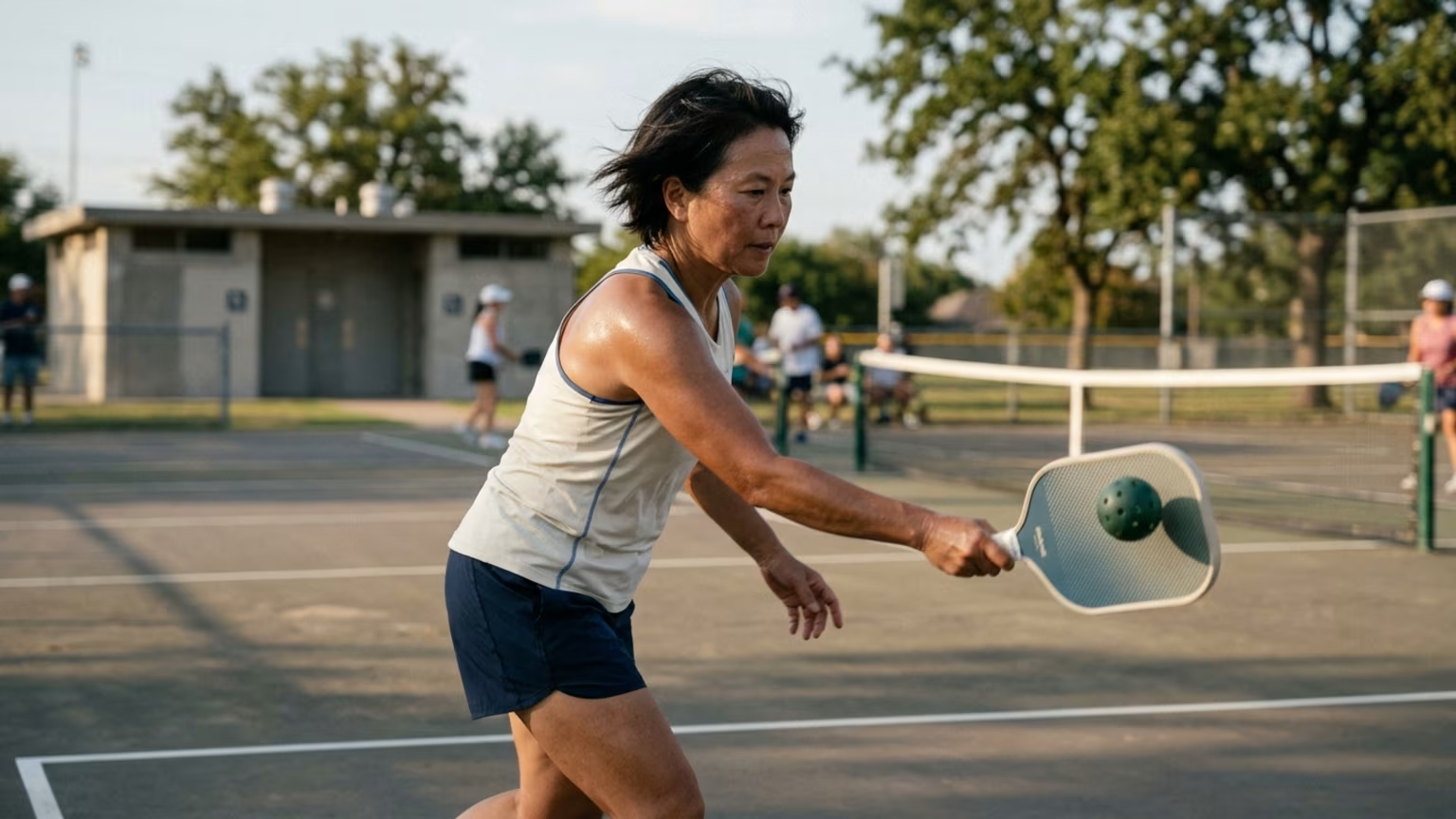
A recent live-play test of a silent pickleball highlights its value for practice, but standard balls still perform better for match play and power control.

An evidence check on sports supplements like tart cherry juice. Learn why racquet sports players should prioritize core nutrition over functional foods.
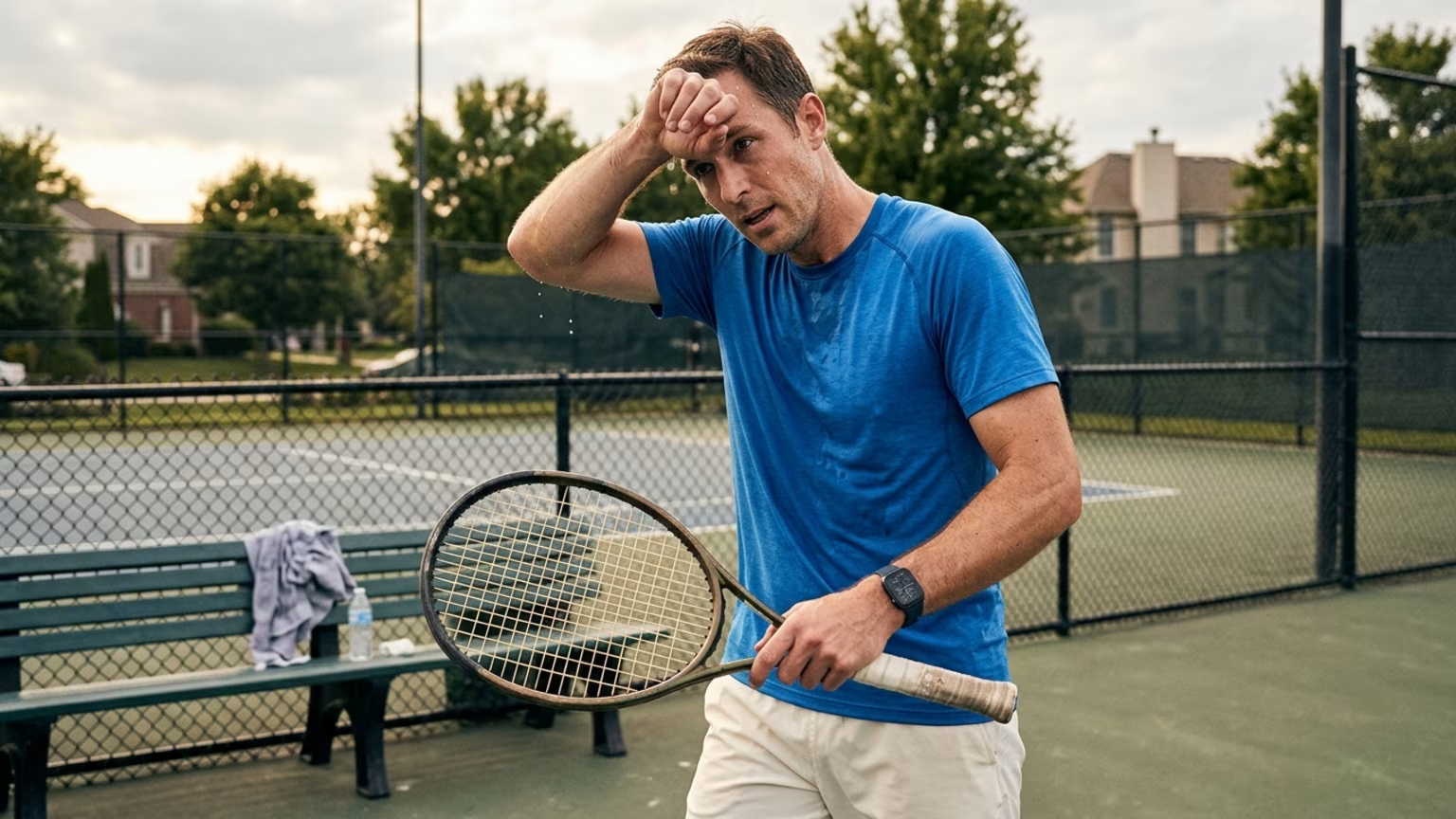
In late 2026, Oura analyzed wearable data to see how recreational tennis impacts heart health and recovery. Learn what this means for your athletic longevity.
Read practical guidance for better movement, smarter preparation and a game that keeps working for you.
explore the Blog
