

Novak Djokovic's 2026 China Open return highlights why recreational players must separate practice readiness from true match fitness for athletic longevity.




On September 29, 2026, Novak Djokovic stated he felt physically good ahead of his return to competition at the China Open in Beijing. The ATP Tour reported that he arrived a few days early to spend time on court and play practice sets. However, the world number 11 stressed that feeling well during training does not automatically translate to official match readiness. This announcement marked his first competitive appearance since a difficult opening round exit at the US Open the previous month.
Djokovic was scheduled to face Portugal's Nuno Borges in the first round of the Beijing tournament. His return follows a challenging loss to Mariano Navone in New York. During that US Open match, Reuters reported that Djokovic struggled with shoulder and back problems and vomited on court. Now aged 39, he has become much more selective about his tournament schedule.
The severity of his US Open exit highlights why this measured approach is necessary. During that match, the physical distress was severe enough to halt his tournament run early. For adult players, experiencing sudden distress should prompt a full review of Critical On-Court Safety Guidelines for Responding to Sudden In-Match Physical Distress. Pushing through severe pain or illness rarely results in victory, and it often extends the timeline required for a full recovery.
The ATP noted his remarks that he felt good so far in his preparations. He described his positive history in China as a major source of confidence for this comeback. He noted that Beijing was on his priority list, adding that he felt welcomed by the fans there. Despite the optimism, Djokovic maintained a grounded perspective on his physical status.
He explicitly distinguished official matches from practice sessions. There was no formal medical clearance or clinical return protocol released to the public. His update was a self reported assessment of his current comfort rather than a guaranteed clean bill of health. This distinction is vital for understanding how elite athletes manage their bodies during uncertain periods.
For the adult recreational player, Djokovic's cautious framing offers a highly relevant lesson in physical management. It is easy to step onto the court for a light hit, feel no pain, and assume you are fully recovered from a recent strain. Djokovic actively avoided making this assumption. He recognized that practice sets lack the unpredictable, explosive demands of competitive play.
When we evaluate our own physical capacity, we often let a good warm up trick us into overcommitting. I remember finishing a tough two hour padel match on a cold Tuesday night and waking up the next morning feeling like my lower back was locked in concrete. For a long time, I just accepted this as the price of playing hard in my forties. But once I started spending just ten minutes on targeted hip mobility before heading to the club, the stiffness almost completely vanished.
It taught me that we do not have to accept pain as a default state of aging. We simply have to prepare better for the specific demands of the sport. That preparation requires honesty about the difference between controlled movement and match intensity. A controlled practice set allows you to dictate the pace and avoid awkward lunges.
An official match forces you to react, stretch, and load your joints in unpredictable ways. This is why learning How to Assess Physical Readiness and Adjust Court Sport Intensity is so important for athletic longevity. You must test your body incrementally. If you return from a shoulder tweak, a smooth baseline rally is a good start, but it is not proof of full match readiness.
When I first started playing pickleball, I noticed how many people skipped warming up entirely. They would jump straight out of their cars and right up to the kitchen line. I tried doing that and immediately pulled a calf muscle. Pickleball requires just as much explosive lateral movement as tennis, just in a tighter space.
Since then, I always spend five minutes doing dynamic lunges and ankle rolls. It changes everything about how confident I feel pushing off the baseline. Djokovic understands that competition is the only true test of recovery, and recreational athletes should adopt this exact mindset. Treat your first match back as an assessment rather than a return to peak performance.
I used to think a tough conditioning block was the only way to improve my court endurance. Then I started tracking my sleep. I noticed that on days I slept less than six hours, my reaction time at the net was noticeably sluggish, and I felt gassed by the second set. Prioritizing consistent rest did more for my late match stamina than any extra sprints ever did.
Recovery is the true foundation of performance. Elite athletes have teams of physiotherapists to manage their recovery management protocols. Amateur players only have their own restraint. If you feel tightness during a competitive point, that is your signal to step back.
The choice of Beijing for this return is not a coincidence, and the historical data explains why Djokovic prioritized it. Reuters reported that Djokovic had won the China Open six times. He claimed the title in 2009 and 2010. He then won four consecutive titles between 2012 and 2015.
Over that span, he built a flawless 29 and 0 match record at the ATP 500 tournament. This perfect historical win rate offers him a familiar, successful environment to test his body. Returning to competition at a venue where you have never lost provides a massive psychological cushion. It allows a player to focus entirely on physical execution and tactical feel.
When dealing with lingering questions about match readiness, minimizing environmental variables is a very smart strategy. For an aging athlete, managing the schedule is just as vital as managing the body. Choosing a historically dominant tournament to test fitness is a calculated risk. It offers high potential for a deep run if the body holds up, and a comfortable setting if it does not.
How Djokovic responds physically during his early round matches will set the tone for the remainder of his season. If his shoulder and back hold up against competitive resistance, it will validate his selective scheduling approach. If the physical issues resurface, it may signal a need for an even longer competitive break. We expect to see more top tier athletes prioritizing specific tournaments to gauge their bodies.
This cautious approach to match readiness will likely become the standard for players extending their careers into their late thirties. Understanding Why Strategic Adaptation and Mental Composure Outperform Raw Speed in Modern Competition is essential for anyone wanting to play for decades. Testing yourself cautiously in competition is the smartest way to manage risk. The true measure of recovery is always found in the match, not the practice session.
Looking ahead, recreational players can apply this exact lesson to their own weekly schedules. If you are returning from an injury, pick a friendly doubles match instead of a high stakes singles tournament for your first test. Control the variables you can, such as the court surface and the time of day. Let the match itself tell you if your body is truly ready for more demanding competitive challenges.
Follow Evercourts for practical insights on tennis, pickleball and padel performance, movement, recovery and healthy ageing. Stay connected for new articles, research-led guidance and ideas to help you play well and keep playing for years.


An evidence check on sports supplements like tart cherry juice. Learn why racquet sports players should prioritize core nutrition over functional foods.
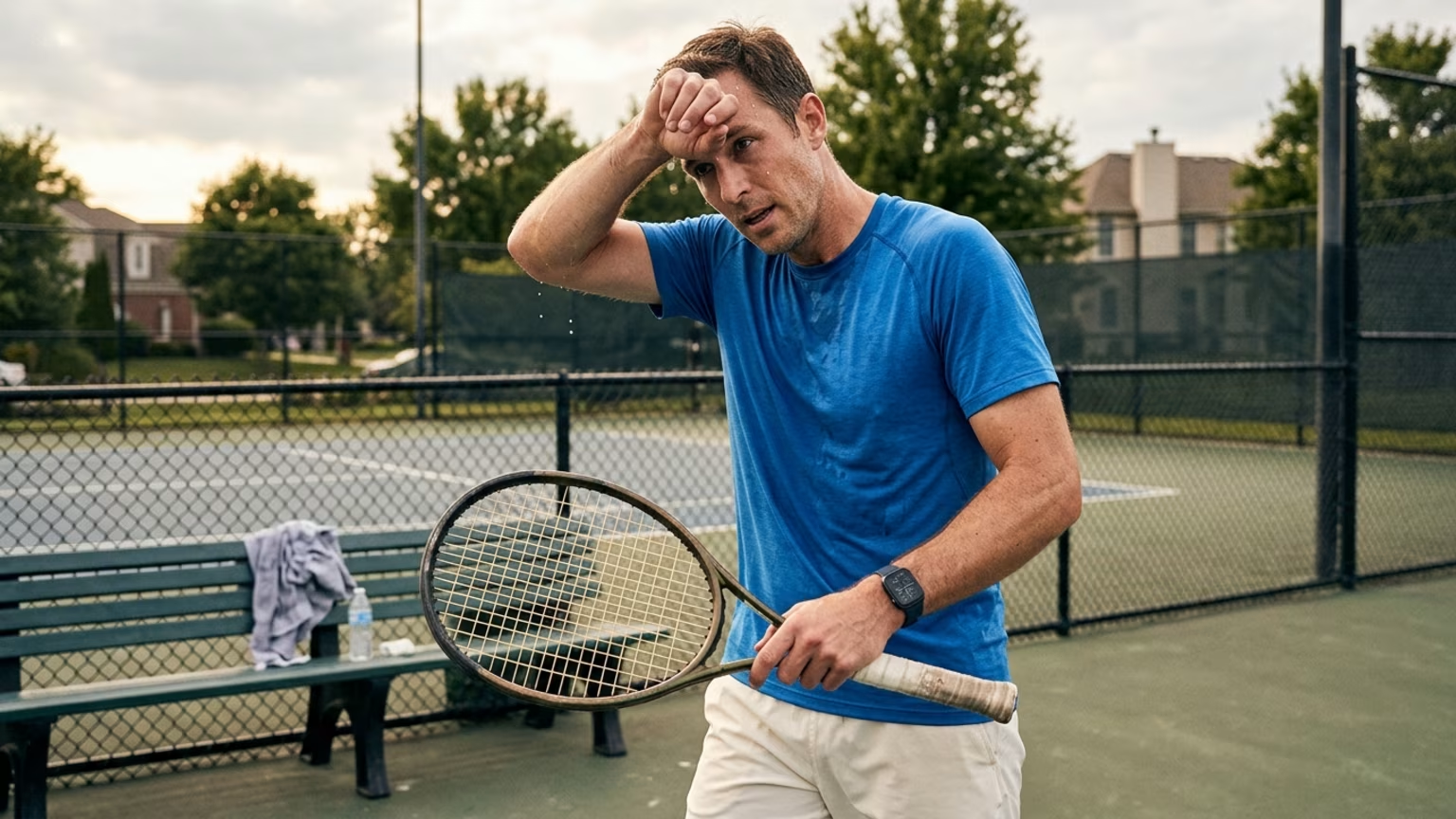
In late 2026, Oura analyzed wearable data to see how recreational tennis impacts heart health and recovery. Learn what this means for your athletic longevity.
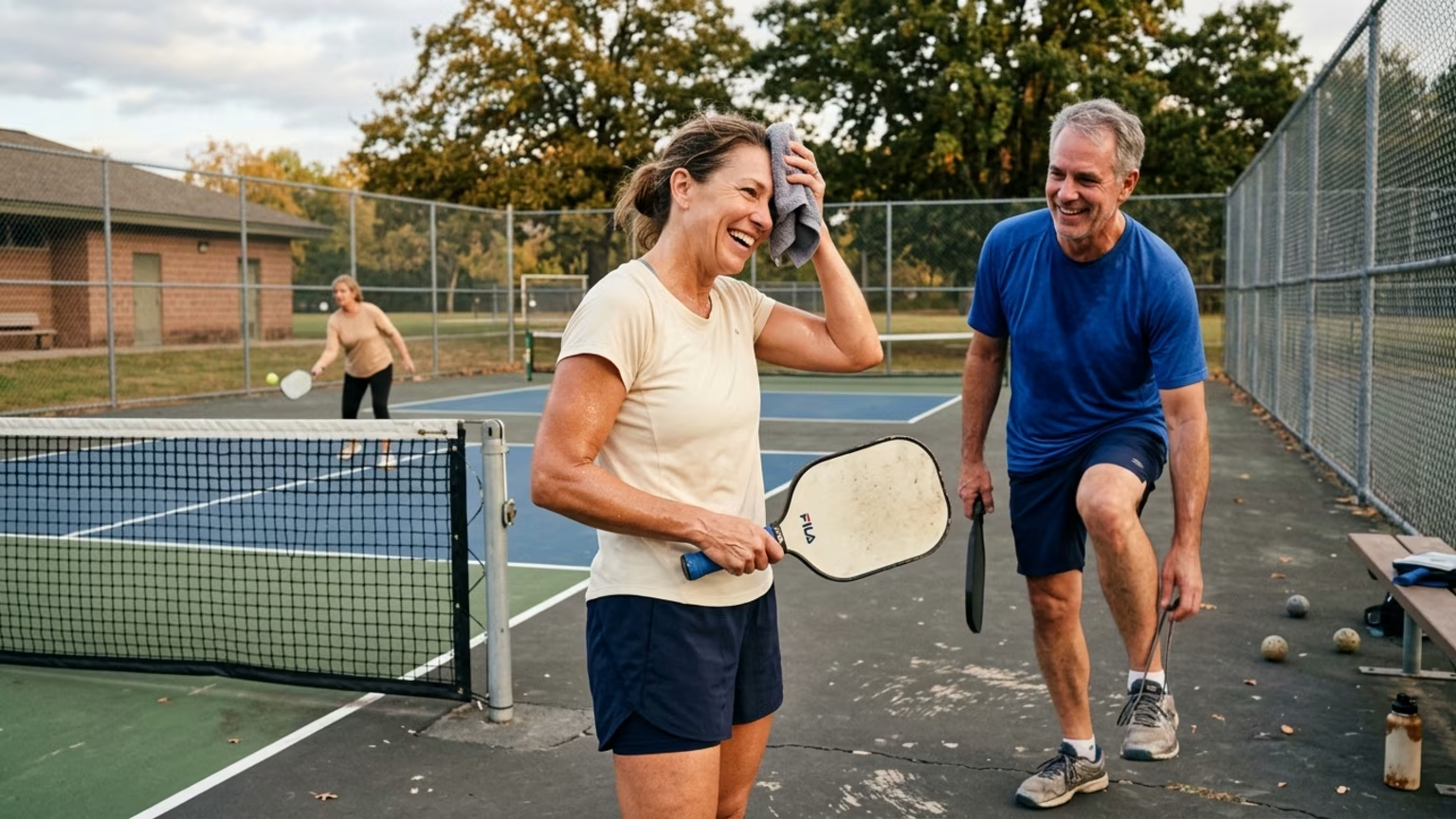
Recent guidelines emphasize gradual progression, dynamic warm-ups, and scheduled recovery to help adult racquet sports players maintain athletic longevity.
Read practical guidance for better movement, smarter preparation and a game that keeps working for you.
explore the Blog
