

Off-court strength and balance training helps players safely brake and change direction. Learn how gradual physical preparation builds capacity for racquet sports.




Off-court strength and balance training is the specific physical preparation required to safely brake, change direction and reach during a match. It is the structured conditioning that happens away from the court to build capacity for the physical demands of the game. Rather than trying to simulate a forehand with heavy weights, practical training focuses on building general strength and total body control. This measured preparation helps players move confidently and supports athletic longevity across tennis, pickleball and padel.
Many players incorrectly assume that playing the sport itself is enough to maintain the required physical conditioning for competitive play. However, court movement often reinforces existing movement patterns without addressing underlying physical weaknesses or muscular imbalances. A dedicated off-court routine provides the controlled environment needed to isolate and strengthen vulnerable areas safely. By focusing on fundamental movement quality, players can build a resilient physical foundation for long rallies.
The goal is not to perform complicated tricks on an unstable surface. Instead, the focus should be on mastering simple movements like controlled lunges, single-leg stands and steady reaching exercises. These basic building blocks translate directly to better physical stability when lunging for a wide volley or backpedaling for an overhead shot. When players invest consistent time in these foundational elements, they equip themselves to handle the unpredictable nature of competitive match play.
Incorporating strength that transfers to the court is about consistency rather than exhaustion. Even a modest weekly routine can yield noticeable improvements in court coverage and overall physical balance. The most effective programs are those that fit seamlessly into a busy adult schedule without causing excessive fatigue. This practical mindset is what ultimately keeps players active and thriving on the court.
Tennis, pickleball and padel share a unique set of physical requirements that challenge the body from head to toe. Experts from Cleveland Clinic Canada state that tennis demands repeated serving and swinging alongside constant sprinting and changing direction. These continuous explosive efforts place significant demands on the shoulders and elbows as well as the knees, ankles and lower back. Pickleball and padel require similar explosive lateral movements and rapid braking, often in much tighter spaces.
The constant need to accelerate rapidly and then immediately stop requires massive eccentric muscle strength. Every time you plant your foot to reverse direction, your lower leg and hip muscles must absorb the force of your momentum. Without adequate off-court conditioning, these repetitive stresses can easily overwhelm the joints and soft tissues over time. Building targeted strength is essential for handling the repeated impacts of unpredictable court movement.
Racquet sports also involve repetitive asymmetrical movements that can create physical imbalances. Players predominantly use one side of their body to swing, which can lead to strength disparities between the dominant and non-dominant sides. This asymmetry further taxes the core and lower back as they work to stabilize the body during powerful rotations. Developing smarter footwork for better court coverage requires a strong and balanced physical foundation.
Furthermore, the start-and-stop nature of these games forces the body to constantly manage rapid transitions from standing still to sprinting. This places immense pressure on the Achilles tendon and the stabilizing muscles of the ankle. Off-court training must account for these specific demands to effectively prepare the body for competition. A thoughtful approach ensures that players are physically prepared for every sudden change in direction.
The conversation around sports conditioning is often clouded by extreme fitness claims, but the current research offers a much more grounded perspective. Experts from Cleveland Clinic Canada recommend resistance training as a fundamental way to prepare for court sports. They identify the legs, core, shoulders and upper body as primary areas for tennis players to strengthen. The focus is firmly on building general physical capacity rather than following a rigid, guaranteed exercise protocol.
While no published intervention trial guarantees that a specific routine will prevent injuries, structured preparation undeniably builds physical tolerance. A practical routine organizes exercises around lower-body strength, lateral control, single-leg balance and controlled reaching. This systematic approach safely introduces the body to the exact stresses it will face during a competitive match. The evidence simply supports that strength and gradual preparation help players build vital capacity for the sport.
Preparation directly before play is just as important as long-term strength training. The expert guidance recommends a few minutes of dynamic movement before activity, giving arm circles, leg swings and controlled lunges as examples. They clearly distinguish these active movements from static stretches, which they say are generally better suited to a cool-down phase. Preparing properly requires actively warming up the tissues that will handle the high-speed demands of the game.
Implementing a 12-minute court-ready warm-up can help ensure you are physically prepared before the first serve. Dynamic movements increase blood flow to the muscles and prime the nervous system for explosive actions. This short investment of time pays off by improving early match movement and reducing initial joint stiffness. It is a highly practical step that any player can easily integrate into their pre-match routine.
Understanding how to manage workload and build strength helps adult players maintain their capabilities for years. One of the most critical factors in healthy aging for court athletes is managing the return to play after time away. Cleveland Clinic Canada experts advise allowing the body time to adapt when returning after a break. They specifically caution against making large increases in both activity intensity and duration at the exact same time.
Returning gradually allows the muscles and tendons to safely rebuild their tolerance to the unique forces of the sport. Longevity also relies heavily on what happens off the court between tough matches. The experts highly recommend prioritizing proper nutrition and adequate sleep alongside regular rest days. Hydration and varied physical activities are also essential recovery measures that support healthy aging.
Balancing time on the court with simple two-day strength workouts ensures that the body has adequate time to rebuild and adapt. Our team has learned firsthand how vital these off-court habits become as we age.
"I remember finishing a tough two hour padel match on a cold Tuesday night and waking up the next morning feeling like my lower back was locked in concrete. For a long time, I just accepted this as the price of playing hard in my forties. But once I started spending just ten minutes on targeted hip mobility before heading to the club, the stiffness almost completely vanished. It taught me that we do not have to accept pain as a default state of aging."
When we treat rest and mobility work as active parts of our training, we build a foundation that supports continuous play. Managing fatigue through better sleep and nutrition directly translates to improved on-court focus and sharper reaction times. This pragmatic approach allows players to enjoy their favorite racquet sports without constantly battling excessive stiffness or exhaustion. Sustainable habits are the true drivers of long-term performance.
While a progressive strength and balance routine supports physical capacity, it is not a substitute for professional medical care. Players must listen to their bodies and respond appropriately to warning signs rather than ignoring them. The article presenting Cleveland Clinic Canada recommendations specifically advises against repeatedly pushing through pain or persistent discomfort. Unrelenting pain, unusual fatigue or a sudden decline in physical performance often signals a clear need to reduce activity.
Expert early assessment may help prevent a minor issue from becoming a longer-term problem that keeps you sidelined. A professional physical therapist can help identify specific deficits in strength, balance or mobility and create an individualized plan to address them. The published guidance does not supply a universal clearance framework or modifications for specific medical conditions. Therefore, personalized advice from a healthcare provider remains the safest approach for managing any recurring physical complaints.
Players should be proactive about their health rather than waiting for an injury to become entirely debilitating. Seeking professional guidance allows you to train smarter and address small mechanical issues before they compound over time. The goal is always to keep you moving well and enjoying your time on the court safely.
Today, pick one persistent, minor discomfort you have been ignoring during your recent matches and schedule a consultation with a local physiotherapist to address it before it worsens.
Follow Evercourts for practical insights on tennis, pickleball and padel performance, movement, recovery and healthy ageing. Stay connected for new articles, research-led guidance and ideas to help you play well and keep playing for years.


An evidence check on sports supplements like tart cherry juice. Learn why racquet sports players should prioritize core nutrition over functional foods.
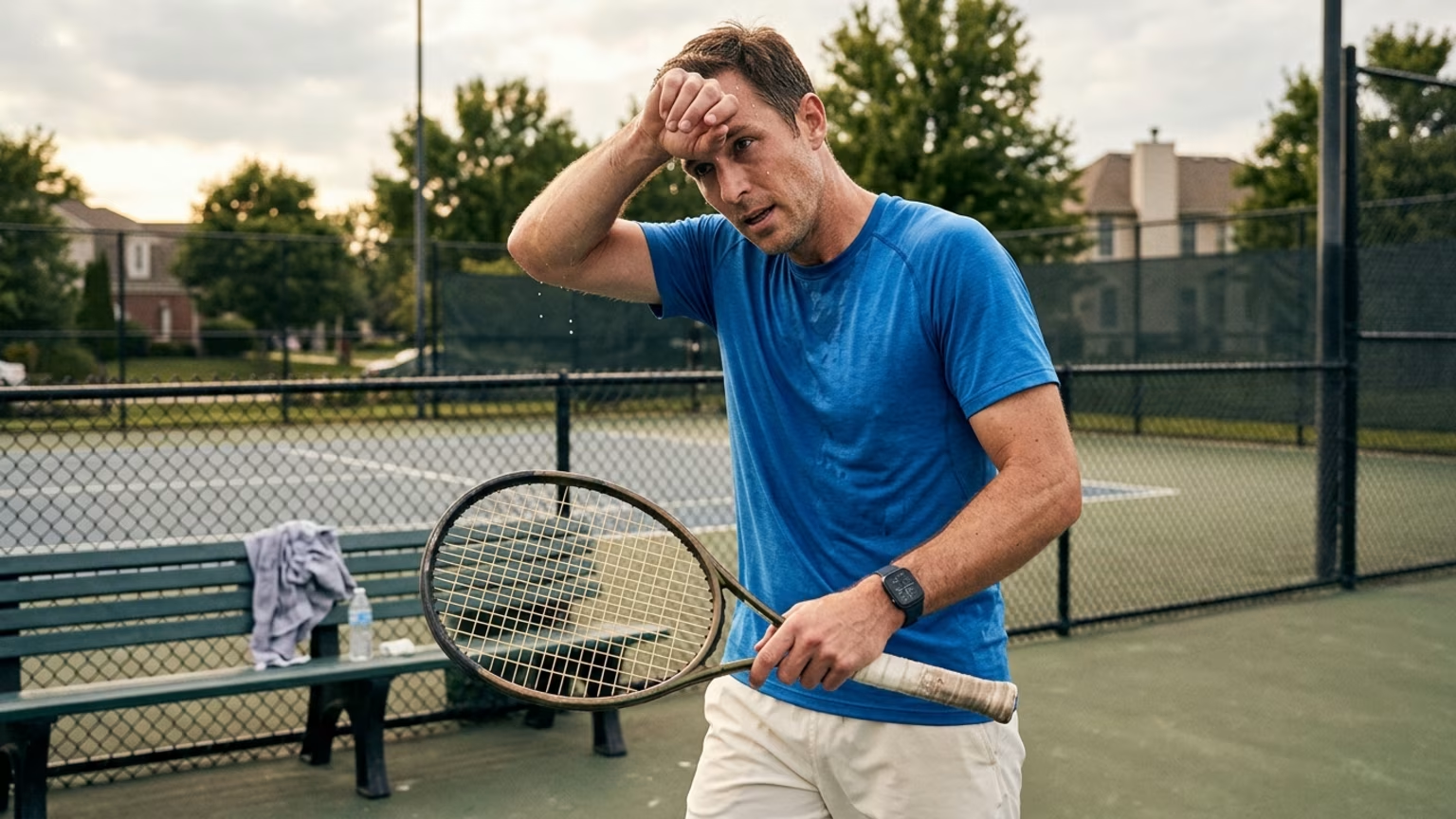
In late 2026, Oura analyzed wearable data to see how recreational tennis impacts heart health and recovery. Learn what this means for your athletic longevity.
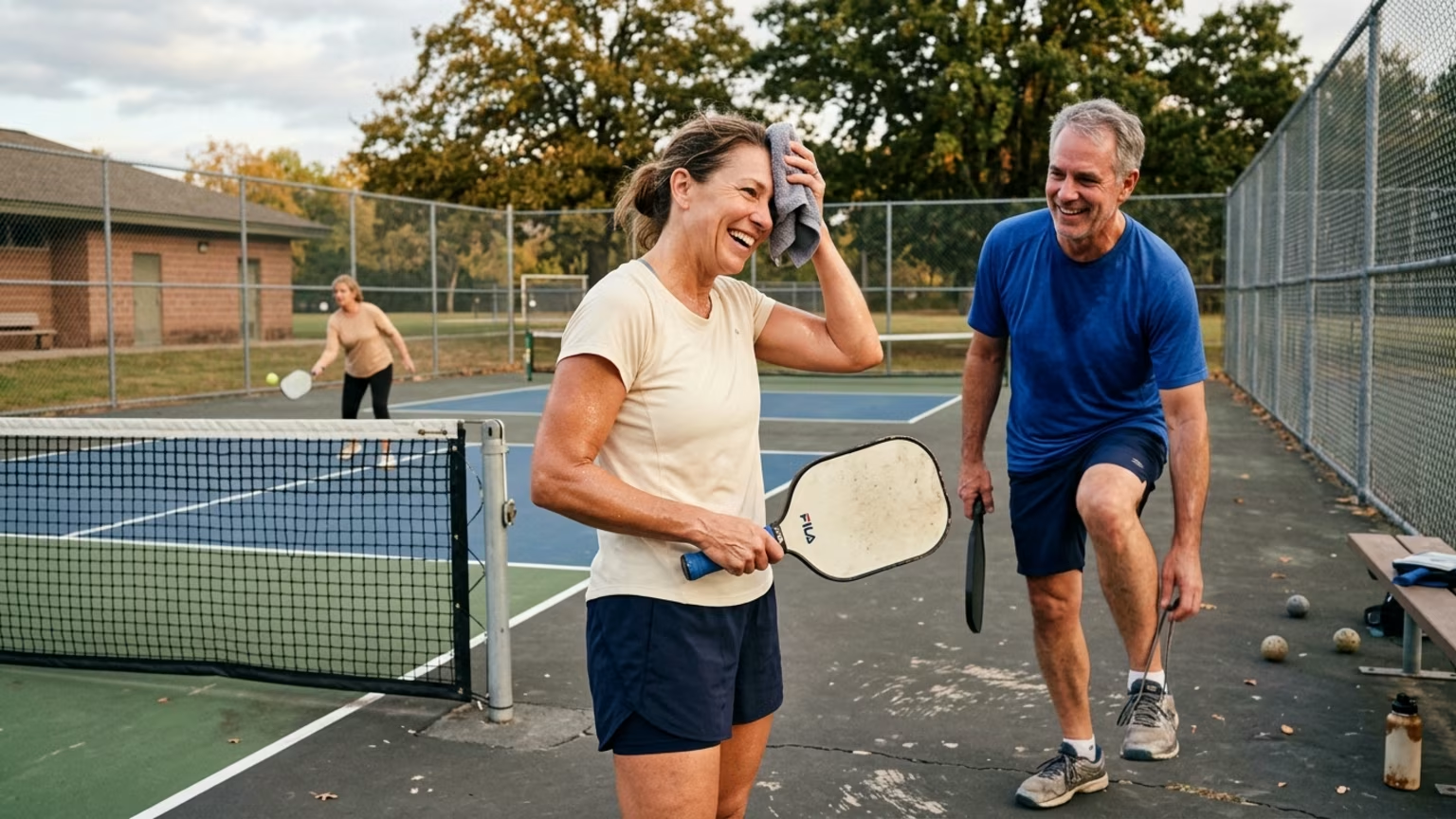
Recent guidelines emphasize gradual progression, dynamic warm-ups, and scheduled recovery to help adult racquet sports players maintain athletic longevity.
Read practical guidance for better movement, smarter preparation and a game that keeps working for you.
explore the Blog
