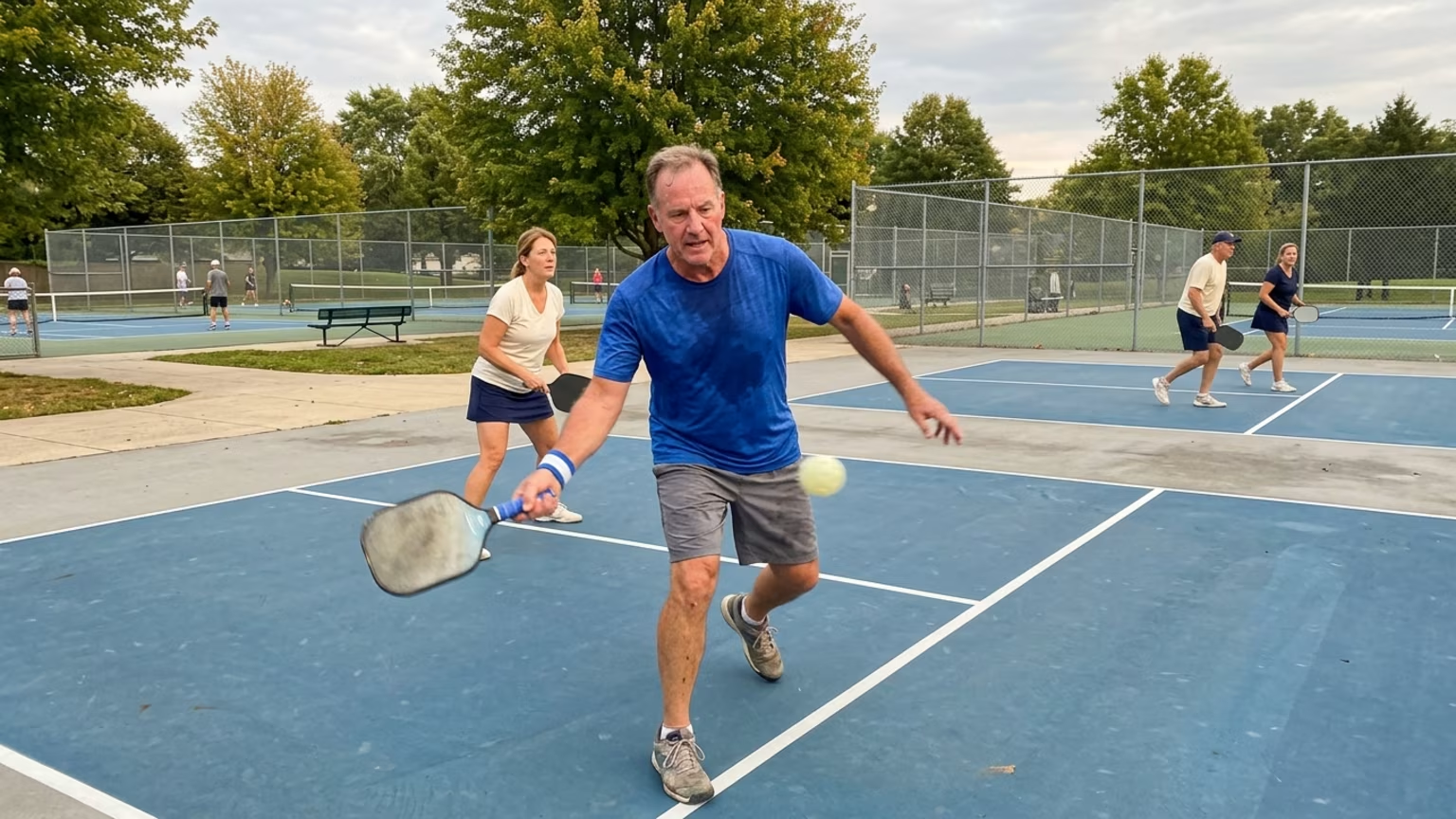

A newly reported 24-year study reveals pickleball injuries carry a 2.57-times higher hospitalization risk than other racquet sports due to falls and fractures.




A newly reported study in The American Journal of Emergency Medicine analyzed U.S. National Electronic Injury Surveillance System data covering 24 years, from 2000 through 2024. The research found that pickleball now leads all racquet sports in rates of emergency-department visits that result in hospitalization. The findings highlight a growing medical burden linked to the popular sport.
The research team, led by Kit Ferguson and Gary A. Smith, examined an estimated 792,773 emergency-department visits. These cases involved tennis and pickleball along with badminton and table tennis. The study also included paddleball, squash, and racquetball. The central finding of the analysis was the severe nature of the recorded injuries.
The data showed that 18.6% of pickleball-related injury cases resulted in hospitalization. This compares with just 8.7% across the racquet-sport group overall. After statistical analysis, pickleball injuries carried a reported 2.57-times higher risk of hospitalization than injuries in the other racquet sports examined. The severity of these cases sets the sport apart in emergency settings.
The data also showed a clear shift over the past few years. Pickleball surpassed tennis as the sport with the highest hospitalization rate in the study group beginning in 2021. By 2023, pickleball-related hospitalizations reached 1.8 cases per 100,000 Americans aged six and older. This compared with 0.9 cases per 100,000 for tennis during the same year.
Professional racquet sports demand peak athletic output and specialized medical support. Adult recreational players often approach the court with a different mindset entirely. For the weekend player, this newly reported study highlights the real importance of preparation. The findings indicate that players need specific prevention strategies to maintain their athletic longevity.
When I first started playing pickleball, I noticed how many people skipped warming up entirely. They would jump straight out of their cars and right up to the kitchen line. I tried doing that and immediately pulled a calf muscle. Pickleball requires just as much explosive lateral movement as tennis, just in a tighter space.
Since then, I always spend five minutes doing dynamic lunges and ankle rolls. It changes everything about how confident I feel pushing off the baseline. This personal realization aligns with the broader safety trends we see on public courts. Recreational players must treat fall prevention as a performance skill rather than an afterthought.
This means building court movement around a stable base instead of constantly reaching. Players should practice stopping under control rather than turning every defensive shot into an awkward lunge. Proper footwork helps players support healthy aging without fitness hype. It allows older adults to stay active and competitive on the court.
Players also need to give special attention to backward movement and recovery. Retreating safely to track a deep ball requires proper footwork and balance. Adults who play regularly should work on controlled weight transfer and recovering from off-balance positions. Incorporating effective court warm-up strategies is a simple way to build better habits.
Adult players should also evaluate their equipment before stepping onto the court. Wearing suitable footwear is an important step in supporting lateral movement and preventing slips. Players must verify that their shoes provide adequate grip and stability for hard courts. Inspecting the playing surface for hazards adds another layer of simple injury prevention.
Beyond equipment, players benefit greatly from targeted strength work. Including resistance exercises for the lower body and trunk creates a more resilient athlete. This physical preparation provides the stability needed for sudden stops and directional changes. Building muscular endurance helps players maintain their form when fatigue sets in late in a match.
The study provided detailed context regarding the types of injuries landing players in the hospital. The research team called for prevention measures tailored to specific sports, age groups, and injury mechanisms. The newly reported comparison found that people older than 64 were 6.32 times more likely to require hospitalization after a racquet-sport injury than younger patients across the sports studied. This statistic underscores the importance of strength and balance for older adults.
The mechanics of these injuries point clearly toward stability issues. Falls accounted for more than half of pickleball injuries in the analysis. These falls occurred at a higher rate than in tennis, badminton, or table tennis. When older players lose their balance, the consequences often require serious medical attention.
Fractures were the leading diagnosis among pickleball emergency-department visits. They represented approximately 26% of cases in the newly reported comparison. Taking fracture risk seriously is an important part of playing safely. Players need to focus on lower-body stability to help prevent these severe outcomes.
These injury statistics exist alongside massive shifts in sports participation. The comparison coverage reported that the number of U.S. pickleball players increased from approximately 3.5 million in 2019 to 19.8 million in 2024. This represents a reported 466% increase in players over that five-year window. The sheer volume of new participants naturally brings more incidents to hospital waiting rooms.
Examining everyday exercise habits can help explain some of this physical vulnerability. The earlier national analysis reported that pickleball-related emergency-department injury estimates increased by 1,480% between 2014 and 2023. The incident rate jumped from 0.5 to 7.9 cases per 100,000 population. This data highlights a growing burden on emergency departments nationwide.
It is a stark reminder that understanding the demands of various racquet sports is necessary for safe participation. The rapid growth of the sport amplifies the need for targeted conditioning. Players cannot rely solely on the small court size to protect their joints. They must prepare their bodies for the specific demands of the game.
The rising visibility of pickleball injuries will push the industry to rethink adult player education over the next season. Facilities and coaches will need to move beyond simply organizing matches. They will have to integrate practical movement coaching into their baseline programming. This transition will help players adapt to the physical demands of racquet sports safely.
A proactive approach to balance and strength will become standard practice for players focused on long-term participation. The focus must shift toward comprehensive preparation and safe movement patterns. Better education will ensure that adults can enjoy the sport for years to come. Court safety will soon matter just as much as shot technique.
Follow Evercourts for practical insights on tennis, pickleball and padel performance, movement, recovery and healthy ageing. Stay connected for new articles, research-led guidance and ideas to help you play well and keep playing for years.


Understand how coverage, playing format and wall rebounds shape tennis, pickleball and padel movement, with research context for long-term play.

Plan the move from league night to tournament weekend with practical answers on practice, recovery, travel, meals and match-day arrangements.

Put tennis point timings in context, track court and strength work, and compare your activity without borrowing workload targets from other sports.
Read practical guidance for better movement, smarter preparation and a game that keeps working for you.
explore the Blog
