

Orthopedic guidance suggests adult tennis, pickleball, and padel players can prevent transition injuries using short, targeted seasonal strength routines.




On September 24, 2026, The Gazette published "Prepare Now, Perform Later: Fall and Winter Sports Guide." The article quoted Michael Holmboe, D.O., an orthopedic surgeon at CommonSpirit Health, on preparing for seasonal increases in physical activity. Holmboe detailed how adults can transition safely into heavier activity periods. His advice centers on building strength, control, and balance rather than just cardiovascular endurance.
The publication provides a highly practical approach to athletic conditioning. Holmboe recommends just 20 to 30 minutes of strength work two or three times per week. This guidance rejects the idea that preseason preparation requires lengthy or exhausting gym sessions. A focused routine is entirely sufficient to prepare the muscular system for sudden demands.
The article highlights lateral movements alongside controlled downhill walking, step-downs, and single-leg squats as useful preparation exercises. These specific choices emphasize deceleration and joint stability. By focusing on single-leg control, players can better manage the shifting forces of their chosen activity. Such exercises actively reinforce the muscles responsible for absorbing impact.
Another major theme in the report is the risk of seasonal transition injuries. The Gazette article notes that transition injuries can occur when people move from one seasonal activity to another. Lower-back, knee, and ankle problems become particularly apparent when physical activity rises quickly. To combat this risk, Holmboe emphasizes gradual progression alongside adequate sleep, hydration, and nutrition.
Sleep is highlighted as a fundamental pillar of this seasonal preparation phase. Holmboe describes sleep as "one of the most important recovery tools we have." This directly aligns with the broader principles of optimizing rest routines for court sports. For post-exercise nutrition, the article recommends eating a meal or snack containing both carbohydrates and protein.
Professional players rely on structured training blocks to peak for the competitive season. For the adult recreational player, returning to a fall tennis league or an active indoor pickleball schedule looks very different. Amateurs often rush from sedentary office work straight into highly competitive league matches. This sudden spike in intensity creates the exact conditions for transition injuries.
When I first started playing pickleball, I noticed how many people skipped warming up entirely. They would jump straight out of their cars and right up to the kitchen line. I tried doing that and immediately pulled a calf muscle. Pickleball requires just as much explosive lateral movement as tennis, just in a tighter space.
Since then, I always spend five minutes doing dynamic lunges and ankle rolls. It changes everything about how confident I feel pushing off the baseline. That experience completely reshaped how our team views preseason preparation. It proved that we cannot ignore basic conditioning and expect our bodies to perform perfectly on demand.
The 20 to 30 minutes of strength work recommended by Holmboe fits easily into a busy schedule. Adding short, targeted strength sessions is a vital component of how our bodies adapt to court demands over time. These brief sessions can be completed at home with minimal equipment. The consistency of doing them two or three times weekly matters far more than the intensity.
The exercise selection in the seasonal guide is particularly relevant to racquet sports. Tennis and padel require constant stops, rapid starts, and heavy single-leg loading. Single-leg squats and step-downs train the lower body to handle this massive deceleration. These movements are essential for supporting the lower joints during heavy loading.
Players often focus their training on moving forward or improving cardiovascular endurance. However, lateral movements are just as critical for long-term court health. Racquet sports are inherently side-to-side activities that require exceptional agility. Including lateral lunges in your weekly preparation directly supports these unique movement requirements.
Controlled downhill walking might seem unrelated to court sports at first glance. Yet, the physical mechanism behind it is entirely applicable to tennis and padel. Walking downhill forces the muscles to lengthen under tension, which builds powerful eccentric strength. Mastering this control reduces the jarring impact sent up through the knees and lower back.
Environmental adjustments are also crucial as players shift between indoor and outdoor courts. The primary article warns that players may lose substantial fluid without noticing sweat in cold or dry air. This is an important detail to remember when managing shifts in playing environments safely. Even if the autumn weather feels crisp and cool, the physical exertion of a long match still requires deliberate hydration.
Many amateur players mistakenly believe that hydration is only a concern during the hot summer months. This misconception can lead to fatigue, cramping, and sluggish reaction times on the court. Carrying water or an electrolyte beverage remains essential during fall and winter league play. Monitoring your fluid intake actively protects your physical capacity in late-match scenarios.
Similarly, nutrition demands consistent attention during transitional periods. Combining carbohydrates and protein after a tough practice session accelerates the recovery process. The carbohydrates restore the primary fuel source used during rapid rallies. Meanwhile, the protein repairs the micro-tears created by heavy lunging and sprinting.
A safe return to heavy court time requires strategic patience. Players must resist the temptation to increase their playing frequency, match intensity, and session duration all at once. The gradual progression recommended by orthopedic experts prevents the joints from becoming overwhelmed. Changing just one variable at a time is the safest way to build stamina.
For example, if you increase the number of days you play, keep the sessions short. If you participate in a long weekend tournament, prioritize extra recovery days the following week. This measured approach allows the connective tissues to adapt to the stress without failing. Patience during the early weeks of a new season is a powerful tool for athletic longevity.
Using the quieter weeks to build a physical foundation pays massive dividends during tournament season. Short strength workouts prepare the muscular system to handle the abrupt stops and starts of competitive play. Prioritizing rest ensures the nervous system is sharp and ready for action. These simple habits form the bedrock of long-term court performance.
As we move deeper into the fall and winter seasons, practical preparation will remain the dividing line between healthy players and sidelined athletes. We expect more recreational programs to emphasize structured warm-ups and short strength protocols before league play begins. The focus in adult athletics is steadily shifting away from purely skill-based coaching toward holistic physical readiness. Players who adopt these brief, consistent strength habits now will maintain their capabilities well into the future.
Follow Evercourts for practical insights on tennis, pickleball and padel performance, movement, recovery and healthy ageing. Stay connected for new articles, research-led guidance and ideas to help you play well and keep playing for years.


An evidence check on sports supplements like tart cherry juice. Learn why racquet sports players should prioritize core nutrition over functional foods.
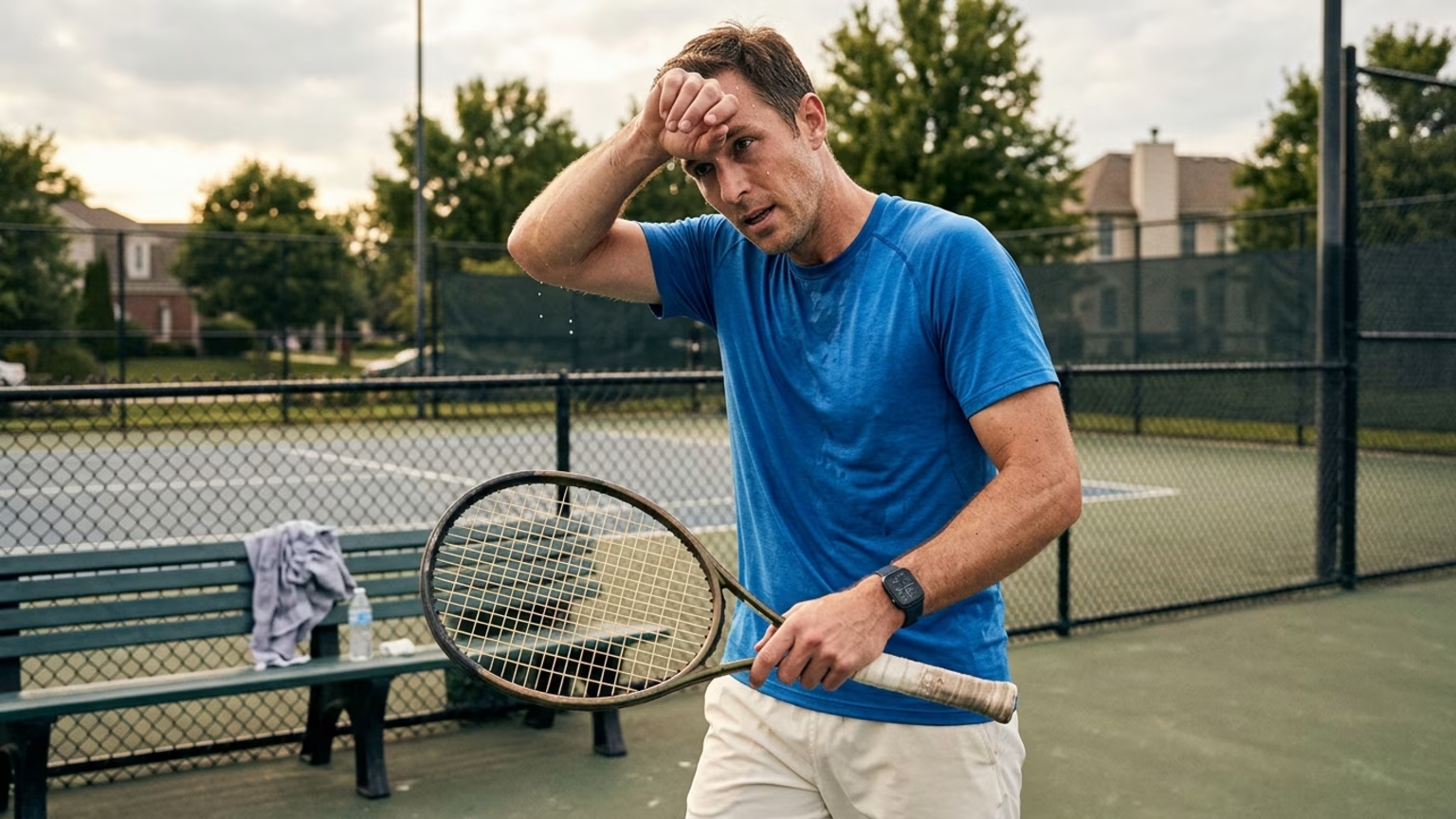
In late 2026, Oura analyzed wearable data to see how recreational tennis impacts heart health and recovery. Learn what this means for your athletic longevity.
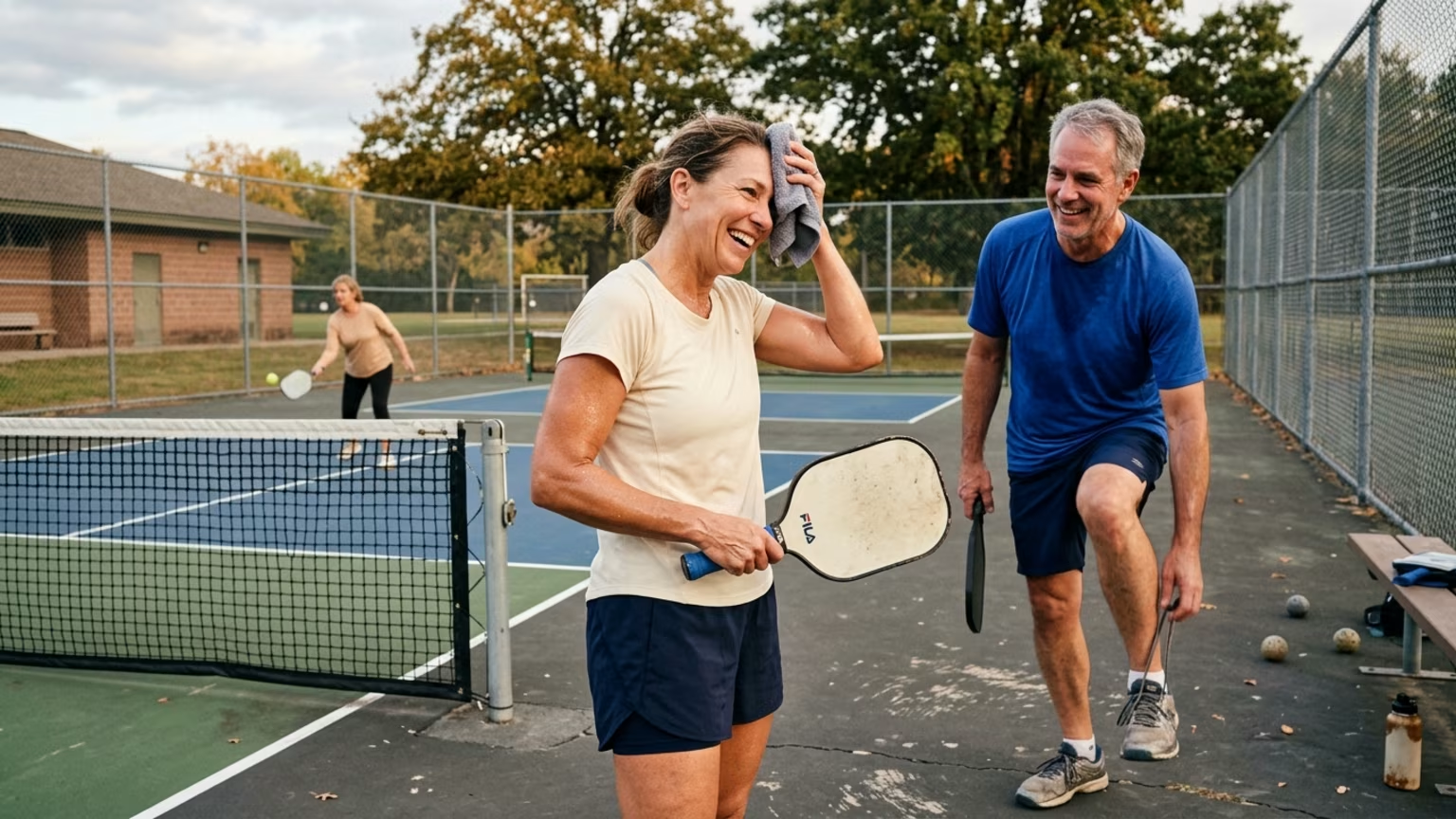
Recent guidelines emphasize gradual progression, dynamic warm-ups, and scheduled recovery to help adult racquet sports players maintain athletic longevity.
Read practical guidance for better movement, smarter preparation and a game that keeps working for you.
explore the Blog
