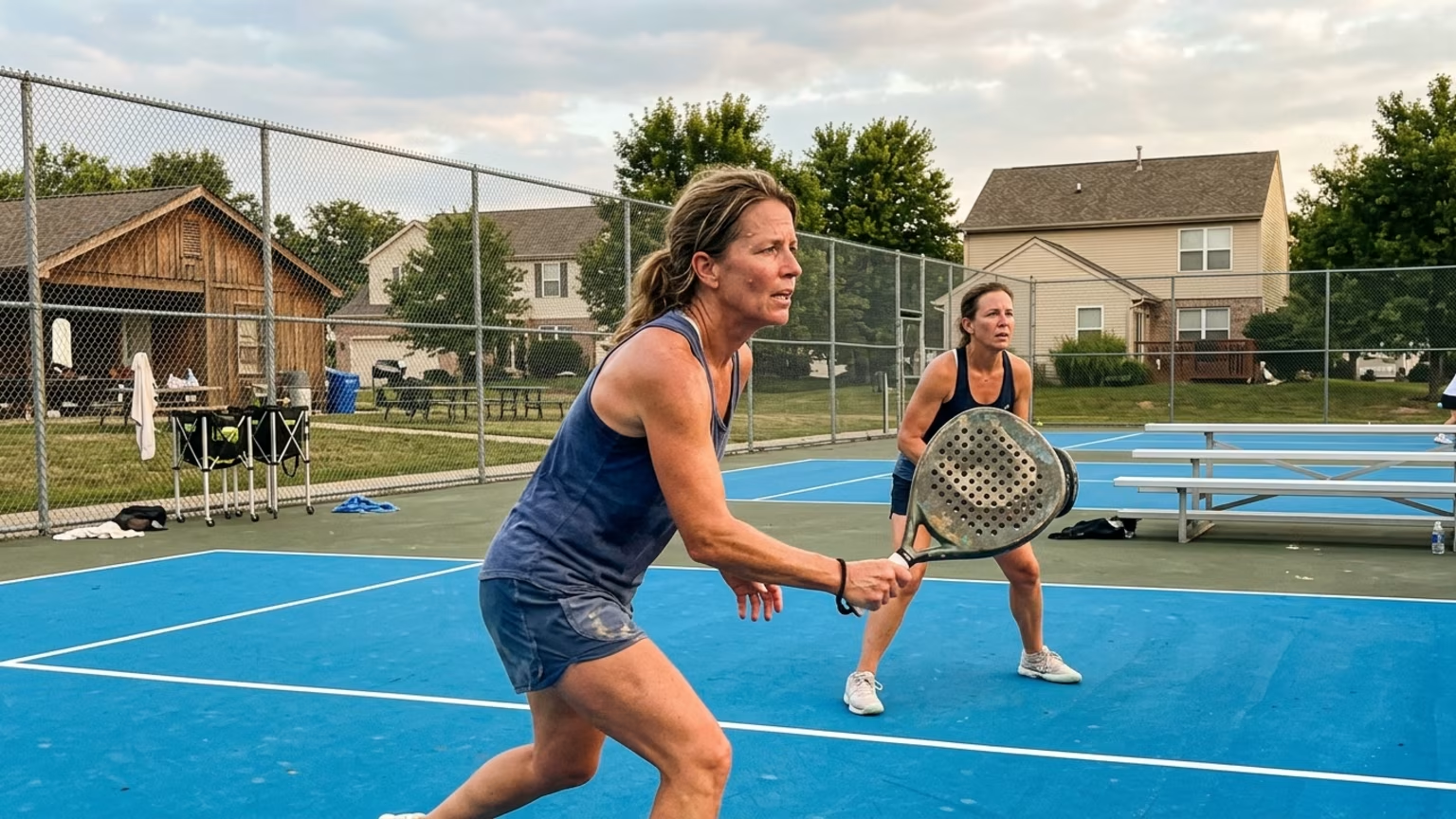

The Sanremo Padel Experience Finals pair FIP Promises youth draws with Over-40 and Over-50 amateur competition, offering a model for adult tournament planning.




From September 18 to September 20 in 2026, the Sanremo Padel Experience Finals are taking place in Sanremo, Italy. The weekend event brings international youth competition alongside amateur adult finals in a unified tournament setting. The competition marks the final stop of a five-city tour organized in collaboration with the International Padel Federation. This gathering combines developmental youth brackets with dedicated age-group tournaments for adult players.
The weekend schedule features two distinct competitive pathways designed for different player demographics. The international youth circuit operates under the official FIP Promises banner. Meanwhile, local coverage describes the adult component as the FIP Beyond circuit. This amateur-oriented pathway covers a wide range of age groups from Over-18 through Over-50.
The adult competition is scheduled to culminate on Sunday, September 20, 2026. Matches start at 9:00 a.m. with the Over-40 and Over-50 FIP Beyond finals taking the court before the youth FIP Promises finals. Matches are being held at a temporary Padel Stadium in Piazza Cristoforo Colombo and the permanent Sanremo Padel Academy. Local reports describe public access to the spectator areas as completely free.
The official FIP report confirms that Sanremo is one of three international FIP Promises Tour venues operating during this September weekend. The other two developmental events are taking place in Paredes in Portugal and Campo in Paraguay. FIP listed seven Sanremo youth draws for the weekend. The draws feature boys divisions from Under-12 up to Under-18 along with girls divisions covering Under-12 through Under-16 brackets.
The event program also includes technical clinics and training sessions with prominent padel figures. Organizers scheduled appearances by Gaby Reca and Marcela Ferrari. Reca coaches the Argentina men's national team while Ferrari coaches the Italy men's and women's national teams. Reporting indicates that these coaches are working directly with the young FIP Promises players during the weekend. Coverage does not indicate that the Over-40 and Over-50 amateur finalists receive the same direct coaching access.
The inclusion of Over-40 and Over-50 divisions in a large multi-generational event provides a helpful framework for adult recreational players. Structured age-group brackets allow masters-level competitors to play meaningful matches against opponents at a similar life stage. This setup is often more sustainable than entering open-age draws where the physical demands can exceed a recreational player's conditioning. At Evercourts, our team focuses on helping athletes maintain this exact kind of practical athletic longevity.
A weekend format that pairs youth development clinics with adult amateur finals highlights the need to separate match goals from instructional goals. Professional clinics are excellent for technical improvement, but they demand significant physical output on the court. Attempting to learn new mechanics during a competitive tournament weekend can easily overload an adult player. Older competitors should consider separating their high-intensity tournament schedules from their demanding technical coaching blocks.
I remember finishing a tough two hour padel match on a cold Tuesday night and waking up the next morning feeling like my lower back was locked in concrete. For a long time, I just accepted this as the price of playing hard in my forties. But once I started spending just ten minutes on targeted hip mobility before heading to the club, the stiffness almost completely vanished. It taught me that we do not have to accept pain as a default state of aging.
Tournament weekends require this kind of intentional physical preparation from amateur competitors. Players competing in multi-match events need a complete injury prevention framework that prioritizes warmup routines and scheduled post-match rest. Understanding the padel movement profile can help older players manage the sharp changes of direction required on the court. While young prospects might recover quickly from heavy court time, adult players must manage their tournament workload proactively.
Adult players should always verify the official status of a tournament before adjusting their competitive calendar. The available Sanremo coverage distinguishes the official FIP Promises youth circuit from the amateur FIP Beyond program. Understanding whether an event offers federation ranking points or is purely recreational helps players set appropriate physical expectations. This clarity prevents older athletes from overcommitting physically to events that do not align with their actual season goals.
Focusing on proper rest between these targeted amateur events is the absolute foundation of long-term play. Dedicated recovery for injury prevention allows athletes to enjoy the competitive atmosphere without risking their availability for the following week. Amateurs should treat workload sustainability as a highly individual decision based on their personal fitness history. Rather than copying the heavy schedules of junior players, masters athletes should consult medical or coaching professionals to set sustainable match limits.
Traveling to a destination event like Sanremo offers adult amateurs a chance to watch high-level youth prospects while enjoying their own competitive bracket. This shared experience creates a strong club culture that goes beyond simply playing weekly ladder matches. Building a seasonal calendar around a few destination events can keep older athletes highly motivated during routine practice sessions. Maintaining mobility, stability, and joint health is much easier when you have a clear tournament target on the schedule.
The reported figures from the tour illustrate the scale of this combined multi-generational event format. According to organizers and event coverage, the first four tour stops involved more than 1,000 athletes from 14 countries and three continents. These preceding stops took place in Perugia, Grosseto, Rome, and Turin prior to the Sanremo finale. The organizers presented the padel tour as an international participation property rather than a single localized tournament.
Audience metrics reported by the event also highlight the strong local interest in this inclusive model. The first four stops averaged more than 2,000 spectators per appointment. Additionally, organizers stated that related content exceeded 3 million social-media views by the end of August 2026. The event communications team also reported that the digital content reached more than 1.8 million users ahead of the finals.
These figures originate from event organizers and local news coverage rather than independent audience audits. However, they clearly demonstrate the promotional value of pairing international youth prospects with regional amateur players. Bringing different segments of the padel community into a single venue effectively supports broader event visibility. This scale shows that age-group padel competitions can draw substantial community attention when properly integrated into larger festivals.
Looking ahead to the next competitive season, adult padel players will likely see more events adopting this combined tournament structure. As the sport matures globally, event organizers will continue to pair elite youth pathways with structured amateur categories like the Over-40 and Over-50 divisions. This specific model keeps local clubs highly engaged while providing older adult players with structured competition. Players should evaluate these multi-tiered events as prime opportunities to anchor their seasonal schedules while protecting their physical longevity.
Follow Evercourts for practical insights on tennis, pickleball and padel performance, movement, recovery and healthy ageing. Stay connected for new articles, research-led guidance and ideas to help you play well and keep playing for years.


An evidence check on sports supplements like tart cherry juice. Learn why racquet sports players should prioritize core nutrition over functional foods.
In late 2026, Oura analyzed wearable data to see how recreational tennis impacts heart health and recovery. Learn what this means for your athletic longevity.
Recent guidelines emphasize gradual progression, dynamic warm-ups, and scheduled recovery to help adult racquet sports players maintain athletic longevity.
Read practical guidance for better movement, smarter preparation and a game that keeps working for you.
explore the Blog
