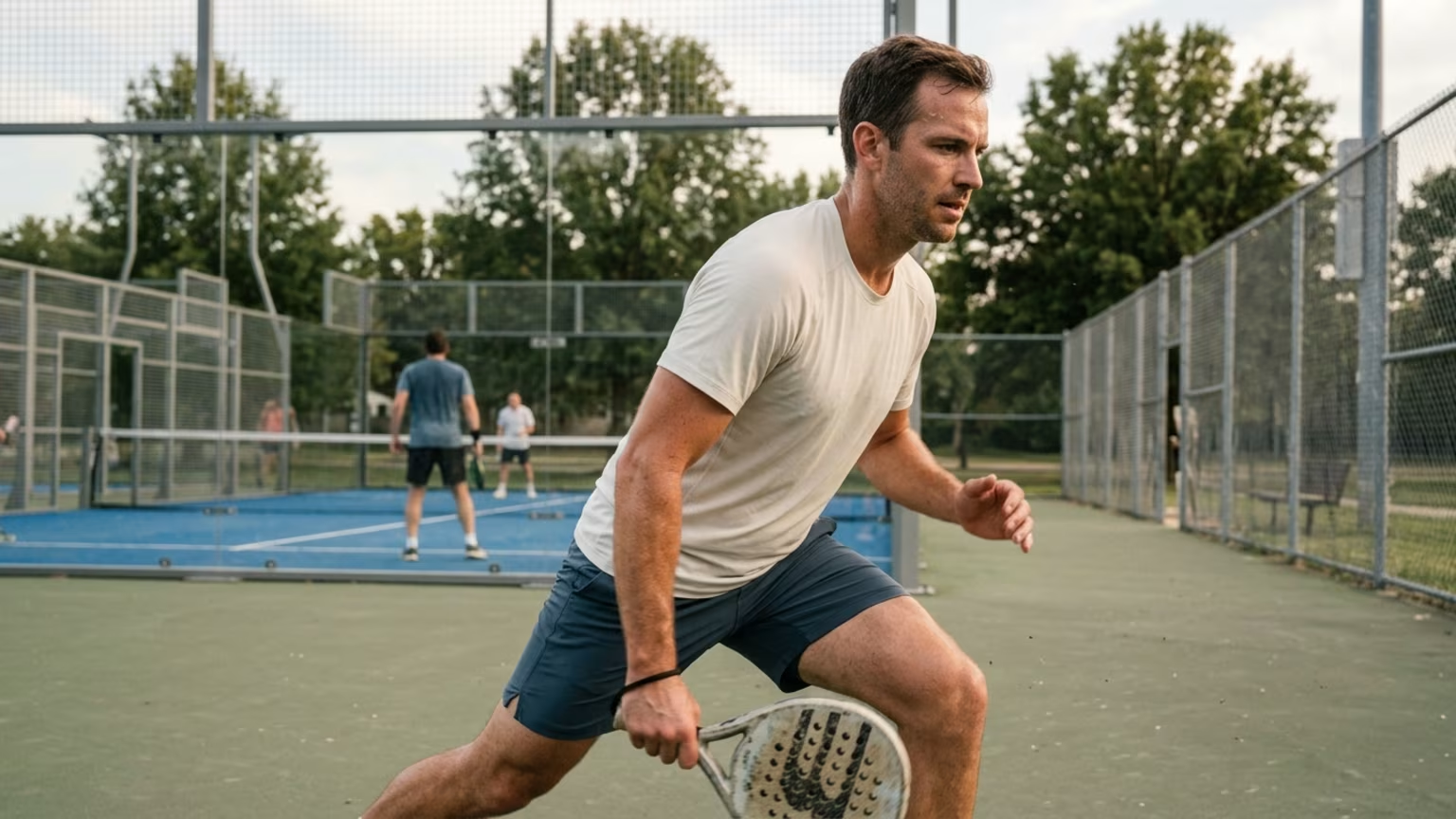

Prepare for your next padel match with a structured warm-up routine. Learn how to progress from mobility drills to court hitting for better athletic longevity.




Stepping onto a padel court without adequate preparation leaves you vulnerable to the sport's sudden lateral shifts and overhead demands. This adaptable routine systematically readies your joints and nervous system so you can start the first point moving with complete confidence.
The primary objective of a pre-match routine is not to provide absolute injury prevention. Instead, it serves as a reliable physical bridge between a sedentary workday and the explosive demands of match play. As we prioritize athletic longevity, a structured warm-up helps maintain joint capability and prepares the body for sudden directional changes. Many recreational players misunderstand the true purpose of this preparation phase.
Too often, amateur players step straight from their cars to the baseline. They expect their bodies to seamlessly transition into high-intensity athletics without any intermediate steps. This approach frequently leads to poor movement during the opening games of a set. A structured warm-up eliminates that slow start by actively waking up your nervous system.
When looking at how racquet sports support healthy ageing, consistent movement preparation stands out as a foundational habit. A Singapore physiotherapy clinic, Intergative Physio, cautions against misinterpreting specific survey data that once associated warm-ups with higher injury rates. They clarify that this correlation often reflects players managing existing stiffness or playing longer sessions, rather than indicating that the warm-up itself causes harm.
Your sequence should serve as adaptable preparation rather than a rigid checklist. Published recommendations vary in length depending on the source and the individual player's specific needs. Some players may require more time to manage stiffness, while others feel completely ready after a shorter sequence. You must adjust the amount and intensity of the movements to what feels appropriate for your own body.
The most effective routines progress logically from general movement to highly specific court actions. Intergative Physio recommends a five-part warm-up sequence that moves from easy activity to progressively harder strokes. A separate resource, SCUD, publishes a ten-minute example routine divided systematically into movement, mobility, activation, and game-like hitting. Here is how to structure those steps.
Before you pick up a racquet, your body needs a general increase in blood flow and core temperature. Intergative Physio suggests starting with three to four minutes of simple activity like jogging, skipping, or shadow footwork. If you have limited space behind the glass, simply perform these movements in place. SCUD allocates about two minutes specifically for this light movement phase.
Once your heart rate has increased, shift your focus to the major joints that will absorb the heaviest impact. The suggested joint movements include arm circles, trunk rotations, hip openers, and ankle rocks. These actions directly address the complex rotational requirements of striking a ball on the run. SCUD designates three minutes for this dedicated mobility work.
Padel requires constant rapid repositioning within a confined area. To prepare your nervous system for this intensity, Intergative Physio advises adding side shuffles, split steps, and short accelerations to your routine. Similarly, SCUD suggests spending two minutes on activation and shadow strokes before you begin striking an actual ball. This phase is about essential footwork skills, waking up the fast-twitch muscle fibers required for sharp directional changes.
When you finally step onto the court with a partner, resist the urge to start hitting hard immediately. The cited physiotherapy guidance recommends progressing systematically from soft ground strokes to volleys. This controlled approach allows your shoulders and elbows to adapt to the impact forces gradually. SCUD allocates three minutes for this phase of progressively more game-like hitting.
Overheads place an immense strain on the shoulder joint and the lower back. Therefore, Intergative Physio explicitly recommends leaving overheads until the very end of the progression. Start with controlled smashes before attempting any full-power shots. Treating overheads as the final stage of your pre-match routine ensures that your muscles are fully responsive.
While this foundational sequence works exceptionally well for general racquet sports, you should adjust the specific emphasis based on your chosen game. The biomechanical demands shift significantly depending on whether you are stepping onto a tennis court, a pickleball court, or a padel court. Understanding these nuances helps you tailor your preparation for the exact stresses you will face.
Padel demands constant use of the glass and repetitive overheads, making arm circles and trunk rotations critical. I remember finishing a tough two hour padel match on a cold Tuesday night and waking up the next morning feeling like my lower back was locked in concrete. For a long time, I just accepted this as the price of playing hard in my forties.
But once I started spending just ten minutes on targeted hip mobility before heading to the club, the stiffness almost completely vanished. It taught me that we do not have to accept pain as a default state of aging. This personal realization reinforces why prioritizing hip openers is vital for anyone playing a wall-based sport.
When transitioning to pickleball, the focus shifts slightly toward lower-body readiness. Pickleball requires rapid lateral movements and constant bending within a highly confined space. Therefore, players should emphasize side shuffles, ankle rocks, and deep hip openers to prepare for prolonged kitchen-line exchanges. The overhead volume is generally lower than in padel, but the demands on the calves remain high.
Tennis players face a different set of physical challenges entirely. A tennis match requires players to cover much larger distances and generate significant rotational power from the baseline. A tennis warm-up should prioritize longer short accelerations and extensive shoulder preparation to support heavy serving. Whether you are focused on better racquet sport warm-ups for tennis or reading padel articles, adjusting your lateral movement drills to match the court dimensions is essential.
Follow Evercourts for practical insights on tennis, pickleball and padel performance, movement, recovery and healthy ageing. Stay connected for new articles, research-led guidance and ideas to help you play well and keep playing for years.


An evidence check on sports supplements like tart cherry juice. Learn why racquet sports players should prioritize core nutrition over functional foods.

In late 2026, Oura analyzed wearable data to see how recreational tennis impacts heart health and recovery. Learn what this means for your athletic longevity.
Recent guidelines emphasize gradual progression, dynamic warm-ups, and scheduled recovery to help adult racquet sports players maintain athletic longevity.
Read practical guidance for better movement, smarter preparation and a game that keeps working for you.
explore the Blog
