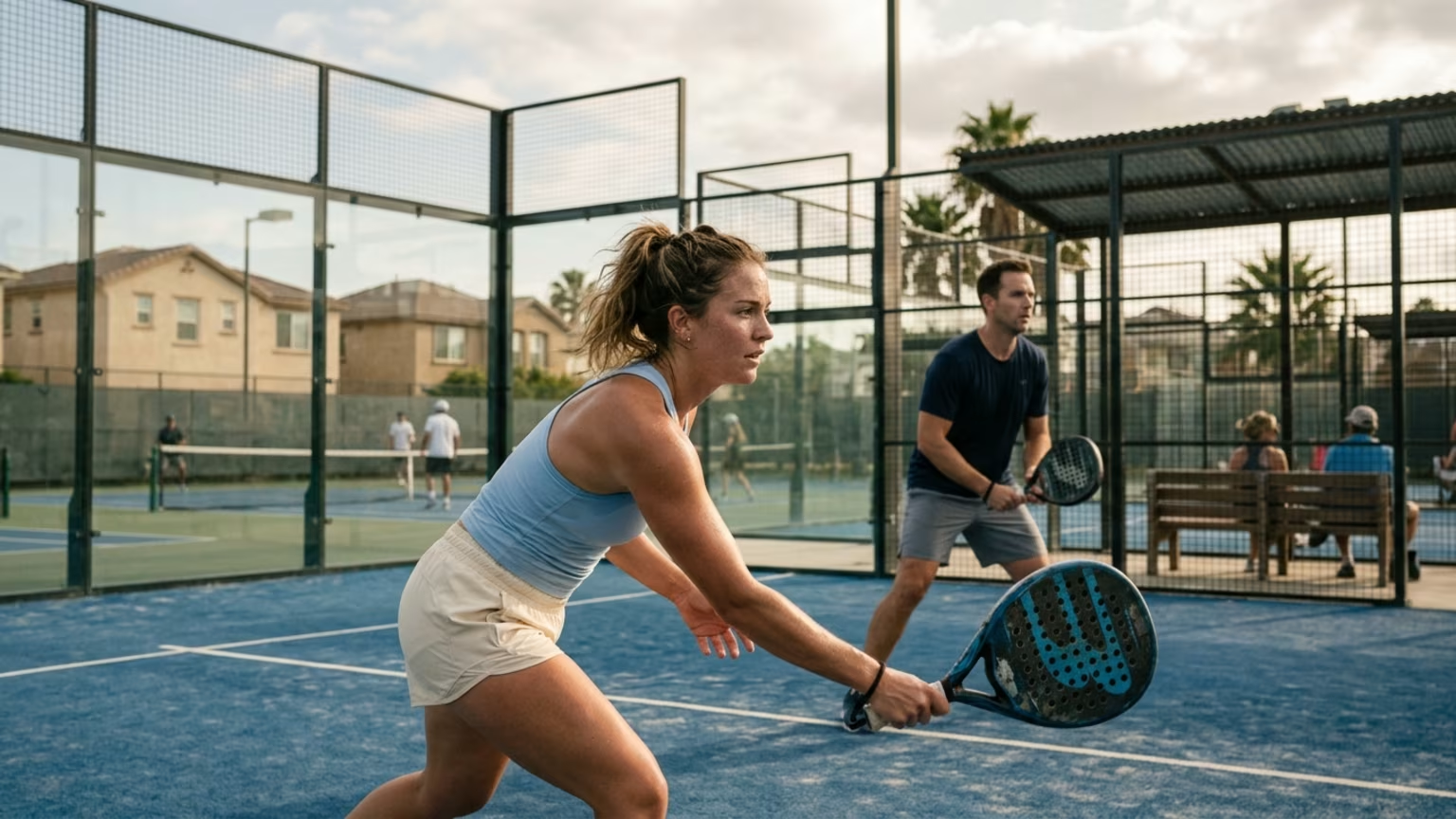

Padel made its Asian Games debut as a medal sport in 2026. Here is what this international milestone means for recreational players and local court access.




Padel made its Asian Games debut as a medal sport at the Aichi-Nagoya 2026 Games, with competition scheduled from September 28 to October 3. The inaugural event took place at the Nagoya City Higashi Sports Center. Olympics.com reports that padel and teqball were added to the programme in March, bringing the sports total to 43. This introduction establishes a new benchmark for competitive padel in the Asia-Pacific region.
The International Padel Federation, or FIP, calls the Asian Games debut a milestone. This development directly follows padel earning a spot as a medal sport in both the Mediterranean Games and the South American Games. According to Times Now, the Nagoya competition features dedicated men's and women's pairs events. The official draw includes 16 pairs in each respective event.
In reporting ahead of the Games, Japanese player Kazuki Tomita said he hoped the Asian Games exposure would help grow padel's popularity. FIP president Luigi Carraro has framed participation in multi-sport events as part of progress toward eventual Olympic inclusion, according to remarks reported by Francs Jeux. FIP official Donatella Del Gaudio stated that the federation is actively working toward Olympic inclusion while emphasizing patience and the Olympic timeline. These statements indicate that while federations are optimistic, formal Olympic admission is a long-term project.
For international competitors and federations, the Asian Games represent a highly visible, structured stage. Elite athletes gain the rare opportunity to represent their nations under a recognized multi-sport banner, which can lead to stronger funding. However, adult recreational players should view this milestone with a practical perspective. An Asian Games medal event does not automatically mean that local access to the sport will change immediately for everyday players.
While global visibility increases, recreational players will still rely heavily on independent club developments, local coaching availability, and private investment. The leap from regional multi-sport events to local municipal court access often takes years of steady community effort. Adult players who are considering the sport can use this increased visibility to seek out beginner sessions. We regularly discuss how players can handle physical demands when cross-training across courts, ensuring a smooth transition without overloading the joints.
Recreational players should also remember that elite competition formats rarely reflect the daily reality of weekend league play. The professionals competing in Nagoya arrive with dedicated coaching staffs, physical therapists, and strictly managed recovery protocols. Everyday players must manage their own court time and personal physical conditioning. Taking the time to properly prepare before stepping onto the court is essential, which is why we emphasize practical routines like the 10-minute padel warm-up.
The sheer scale of the sport provides necessary context for its inclusion in these major games. Asharq Al-Awsat and RFI report officials' estimates of 38 million players worldwide. These same officials estimate that the sport currently utilizes 85,000 courts globally. Furthermore, the footprint of the game now spans an estimated 170 countries and territories.
While these statistics are reported estimates rather than an independently audited census, they demonstrate significant momentum. International sporting bodies are clearly responding to this documented surge in player participation. The swift adoption rate across various continents provides strong backing for federation bids. It also signals to adult recreational athletes that the sport is building a lasting foundation.
Tracking participation numbers provides a baseline for understanding how the sport is evolving globally. The reported estimate of 170 countries and territories highlights how quickly the game is spreading beyond its traditional strongholds. For players adapting to new community courts, understanding court movement is as vital as picking the right racket. Players should focus on mastering the basics of positioning, such as learning the first three steps for better court coverage.
As more adults pick up a racket and head to the courts, understanding the physical requirements of the sport becomes essential for long-term health. Selecting the right equipment can play a major role in how your arm and shoulder handle the specific demands of a growing sport. We often recommend learning about forgiving padel racket geometries to help prevent early fatigue and improve consistency during your matches. Good gear choices complement smart movement, allowing players to compete comfortably week after week.
Looking ahead to the next competitive season, the success of the Nagoya event will likely serve as a reference point for future federation bids. Padel will continue to push for entry into other regional and global multi-sport programs to build its resume. Governing bodies will closely monitor viewer engagement, physical attendance, and event logistics to strengthen their case for eventual Olympic inclusion. This systematic approach shows that the sport is building credibility step by step, rather than expecting immediate Olympic status.
At the local level, players should watch to see if this international legitimacy encourages regional sports authorities to fund public court construction. Until municipal funding catches up to international momentum, the sport remains on a deliberate path toward widespread public access. Everyday athletes should focus on maintaining their bodies for the long term, much like structuring a padel training week to avoid burning out. Preparing your body to enjoy the sport for years to come remains the smartest strategy.
Follow Evercourts for practical insights on tennis, pickleball and padel performance, movement, recovery and healthy ageing. Stay connected for new articles, research-led guidance and ideas to help you play well and keep playing for years.


An evidence check on sports supplements like tart cherry juice. Learn why racquet sports players should prioritize core nutrition over functional foods.
In late 2026, Oura analyzed wearable data to see how recreational tennis impacts heart health and recovery. Learn what this means for your athletic longevity.
Recent guidelines emphasize gradual progression, dynamic warm-ups, and scheduled recovery to help adult racquet sports players maintain athletic longevity.
Read practical guidance for better movement, smarter preparation and a game that keeps working for you.
explore the Blog
